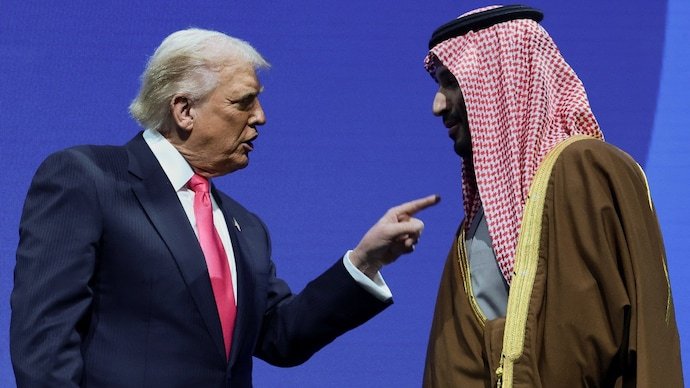
As negotiations around a possible US-Iran peace framework continue to evolve, US President Donald Trump appears to be pursuing a much larger ambition behind the scenes building an entirely new political order in the Middle East.
According to reports emerging from high-level diplomatic conversations, Trump recently urged leaders from several Arab and Muslim-majority nations to consider recognising Israel and joining the Abraham Accords once the Iran War ends. The proposal reportedly surprised multiple leaders on the call, especially countries that still do not maintain formal diplomatic ties with Israel.
While much of the global focus has remained fixed on ceasefire talks, uranium negotiations and the Strait of Hormuz crisis, Trump’s latest move signals that Washington may now be thinking far beyond temporary conflict resolution.
The real objective appears far more strategic: creating a new regional alliance structure where Israel and key Arab powers cooperate openly against shared geopolitical threats, especially Iran.
If successful, the plan could become one of the most transformative diplomatic shifts in modern Middle Eastern history.
What Trump Told Gulf and Muslim Leaders
During a reported conference call involving leaders from Saudi Arabia, the United Arab Emirates, Qatar, Bahrain, Jordan, Egypt, Turkey and Pakistan, Trump allegedly argued that the end of the Iran conflict should open the door for wider regional normalisation with Israel.
The proposal reportedly created an awkward silence among several participants.
That reaction itself revealed the enormous political sensitivity surrounding the issue.
While countries like the UAE and Bahrain already normalised relations with Israel under the Abraham Accords in 2020, many major Muslim-majority nations still face deep domestic opposition to formal recognition of Israel, especially while the Palestinian issue remains unresolved.
Trump’s argument, however, reflects a growing school of strategic thinking inside Washington: that the Middle East is entering a new geopolitical era where economic interests, technology cooperation, security partnerships and anti-Iran alignment increasingly outweigh traditional diplomatic barriers.
What Are the Abraham Accords?
The Abraham Accords were one of the biggest diplomatic achievements of Trump’s first presidency.
Brokered in 2020 with American support, the agreements normalised relations between Israel and several Arab countries, including:
- United Arab Emirates
- Bahrain
- Morocco
- Sudan (partially through later processes)
For decades, most Arab states had refused formal ties with Israel until a Palestinian state was established.
The Abraham Accords changed that formula.
Instead of waiting for a final Israeli-Palestinian peace settlement, participating countries prioritised:
- Trade cooperation
- Technology partnerships
- Defence coordination
- Investment opportunities
- Tourism growth
- Regional security alignment
The agreements effectively created a new US-backed regional bloc.
That bloc was quietly united by one shared concern: Iran’s growing regional influence.
Why Trump Wants to Expand the Accords Now
Trump’s timing is not accidental.
The ongoing Iran conflict has fundamentally reshaped Middle Eastern Geopolitics.
Several regional governments now face overlapping concerns:
- Energy security risks
- Shipping disruptions in the Strait of Hormuz
- Economic instability
- Growing defence costs
- Regional proxy conflicts
- Uncertainty over long-term American military commitments
Trump appears to believe that this moment of instability also creates a rare diplomatic opening.
His broader strategy seems built around three major objectives:
| Strategic Goal | Purpose |
|---|---|
| Expand Abraham Accords | Create wider Arab-Israeli cooperation |
| Contain Iranian influence | Build stronger regional alignment |
| Reduce future US military burden | Encourage regional security partnerships |
From Washington’s perspective, a larger coalition involving Israel and Sunni Arab powers could create a more stable balance of power in the region.
At least, that is the theory.
Saudi Arabia Remains the Biggest Prize and the Biggest Obstacle
No country matters more to Trump’s vision than Saudi Arabia.
If Riyadh eventually normalises ties with Israel, it would completely transform Middle Eastern Diplomacy.
Saudi Arabia is not just another Arab country. It is the political and religious heavyweight of the Sunni Muslim world.
Its decisions carry enormous symbolic importance.
But Saudi Crown Prince Mohammed bin Salman faces a deeply complicated political reality.
While Saudi Arabia has quietly expanded indirect cooperation with Israel in areas such as security and intelligence, formal recognition remains politically explosive.
The biggest obstacle remains the Palestinian issue.
Saudi Arabia has repeatedly insisted that any future relationship with Israel must include:
- A credible path toward Palestinian statehood
- Protection of Palestinian rights
- Stability in Gaza and the West Bank
- Regional diplomatic guarantees
Israel’s current leadership, however, remains deeply divided over Palestinian statehood.
That creates a major deadlock.
Could Pakistan Ever Join the Abraham Accords?
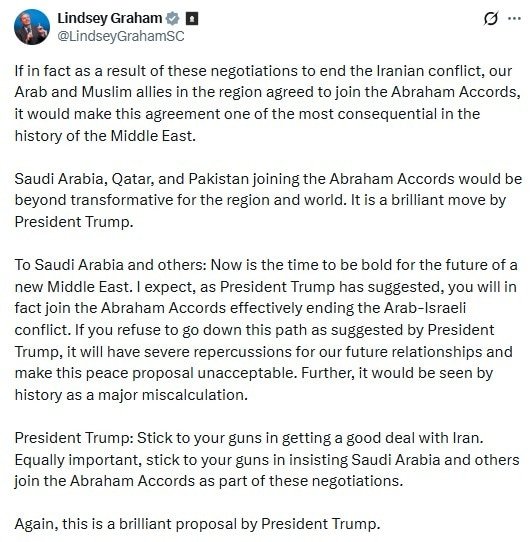
Trump’s comments reportedly included countries like Pakistan a highly sensitive idea politically.
Pakistan has historically supported the Palestinian cause and does not recognise Israel diplomatically.
Domestically, any move toward recognition would trigger intense political backlash.
However, some analysts believe long-term geopolitical pressures could slowly shift regional calculations.
Factors influencing future debate may include:
- Economic pressures
- US diplomatic leverage
- Changing Gulf alliances
- Regional security concerns
- Trade opportunities
Still, for now, the idea remains highly controversial and politically difficult.
Trump’s Most Unrealistic Idea: Iran Joining the Accords
Perhaps the most astonishing part of Trump’s comments was his suggestion that even Iran could one day join the Abraham Accords.
Under the current Iranian regime, that idea appears almost impossible.
Iran has refused to recognise Israel since the 1979 Islamic Revolution and continues to describe Israel as an occupying power.
Iranian officials have repeatedly rejected any possibility of normalisation.
Still, Trump’s suggestion reveals something important about his broader diplomatic style.
He often frames negotiations around maximum transformation rather than limited compromise.
Supporters see this as visionary thinking.
Critics see it as unrealistic political theatre.
But even unrealistic proposals can shape future negotiations by expanding the boundaries of discussion.
The Iran Deal Is Still Extremely Fragile
Despite all the discussion around regional transformation, the actual Iran agreement itself remains far from complete.
Major disagreements continue over:
- Iran’s uranium stockpile
- Sanctions relief
- Release of frozen Iranian assets
- Future enrichment restrictions
- Security guarantees
- The timeline for implementation
Trump has repeatedly claimed progress while simultaneously warning that negotiations should not be rushed.
That contradiction has become a defining feature of the entire diplomatic process.
One day, a breakthrough appears close.
The next day, new obstacles emerge.
Financial markets have reacted dramatically to every shift in tone.
Why Gulf Countries Are Nervous
Many Gulf governments support de-escalation with Iran but remain cautious about becoming trapped between Washington, Tehran and Israel.
The region has already endured years of instability involving:
- Proxy wars
- Drone attacks
- Oil infrastructure strikes
- Shipping disruptions
- Economic uncertainty
Countries like Qatar, Saudi Arabia and the UAE increasingly prioritise economic diversification, investment and regional stability.
That means they want security but not necessarily permanent confrontation.
Trump’s vision of a broader anti-Iran alignment may appeal strategically to some governments while simultaneously creating domestic political risks.
Israel’s Domestic Politics Complicate Everything
The situation is equally complicated inside Israel.
Prime Minister Benjamin Netanyahu faces growing political pressure after prolonged conflicts involving Gaza, Lebanon and Iran.
Public frustration over security failures, economic costs and prolonged military operations has intensified political divisions.
Upcoming elections could reshape Israeli Politics significantly.
That uncertainty matters because any major diplomatic breakthrough involving Saudi Arabia or the broader Arab world would likely require difficult political concessions from Israel.
Those concessions may become harder during an election cycle.
The Economic Stakes Are Massive
Behind the diplomatic drama lies a huge economic story.
A more stable Middle East could unlock enormous opportunities:
| Potential Opportunity | Regional Impact |
|---|---|
| Stable oil shipping | Lower global energy volatility |
| Expanded trade routes | Stronger regional commerce |
| Technology partnerships | Faster economic diversification |
| Tourism growth | Cross-border investment expansion |
| Defence cooperation | Reduced regional military uncertainty |
For investors and global markets, the long-term geopolitical implications may be even bigger than the immediate ceasefire negotiations.
Trump’s Real Goal: A Historic Legacy
Trump’s broader ambition increasingly appears centered on reshaping his global legacy.
Ending the Iran conflict alone would already represent a major diplomatic achievement.
But expanding the Abraham Accords into a wider regional realignment would elevate the outcome far beyond a traditional peace deal.
It would allow Trump to argue that he fundamentally transformed Middle Eastern diplomacy.
That helps explain why he keeps linking the Iran negotiations with broader regional normalisation.
He is not simply chasing a ceasefire.
He appears to be pursuing a complete geopolitical reset.
Could the Middle East Actually Be Entering a New Era?
Possibly but the path remains extremely uncertain.
The old Middle Eastern order was largely built around Arab-Israeli hostility and rigid ideological blocs.
The emerging order increasingly revolves around:
- Economic pragmatism
- Technology cooperation
- Energy security
- Regional competition with Iran
- Strategic balancing between global powers
The Abraham Accords were the first major sign of that transformation.
Trump now wants to accelerate it dramatically.
But the obstacles remain enormous:
- The Palestinian issue remains unresolved
- Iranian hostility toward Israel continues
- Domestic political pressures remain intense
- Regional mistrust runs deep
- Wars in Gaza and Lebanon continue affecting public opinion
In other words, the vision may be ambitious, but the region remains deeply fractured.
Conclusion: The Iran War May End, But the Battle Over the Future of West Asia Is Just Beginning
Donald Trump’s latest diplomatic push reveals that the current Iran negotiations are about far more than nuclear enrichment or temporary ceasefires.
They are increasingly becoming part of a much larger struggle over what the future political order of the Middle East will look like.
Trump wants a region where Israel and major Arab powers cooperate openly, where Iran is strategically contained and where America can maintain influence without endless military involvement.
That vision could reshape global geopolitics for decades.
But achieving it will require overcoming some of the deepest political, religious and historical divisions in the modern Middle East.
The Iran conflict may eventually calm down.
The real question is whether the region that emerges afterward will look anything like the one that existed before.
For breaking news and live news updates, like us on Facebook or follow us on Twitter and Instagram. Read more on Latest World on thefoxdaily.com.




COMMENTS 0