- From Diplomatic Paper to Battlefield Reality: The Abraham Accords Under Fire
- The Secret Deployment: What Israel Sent, and Why It Mattered
- The Numbers Behind the Battle
- Why This Is Different From Any Previous Middle East Arms Transfer
- Iran's Strategic Miscalculation
- The Broader Strategic Shift: What This Means for the Middle East
- The Technology Race That Will Define the Next Decade
- A Turning Point Dressed in Quiet Clothes
- Conclusion: The Accords Grew Up - And the Middle East Will Never Be the Same
When Iran launched its largest-ever aerial assault against the United Arab Emirates beginning February 28, 2026, the Gulf nation didn’t just rely on its own defenses. Hidden behind the scenes – and only now coming to light – was one of the most consequential covert military deployments in recent Middle Eastern history. Israel, in a remarkable show of alliance solidarity, quietly rushed its most advanced air defense assets to UAE soil, including a version of its newly operational Iron Beam laser interception system, a cutting-edge drone-detection platform called Spectro, and an Iron Dome battery – along with the Israeli soldiers to operate them.
Who did it? Israel’s military and defense establishment, acting under direct orders from Prime Minister Benjamin Netanyahu. What happened? A secret, rapid deployment of prototype and near-operational defense systems to a foreign ally under active missile fire. When? Starting from the outbreak of hostilities on February 28, 2026. Where? The United Arab Emirates – specifically targeting Iranian missile and drone swarms. Why? To honor the spirit of the Abraham Accords and protect a critical strategic partner. How? By pulling advanced systems – some still in prototype form – off the development bench and rushing them into a live combat environment. The full scope of the operation, first reported by the Financial Times, reveals just how deeply the Israel-UAE alliance has matured since the two nations shook hands on the White House lawn in 2020.
From Diplomatic Paper to Battlefield Reality: The Abraham Accords Under Fire
When the Abraham Accords were signed in September 2020 under U.S. President Donald Trump‘s brokerage, skeptics asked a fair question: were these agreements genuine strategic partnerships, or merely diplomatic optics? The events of early 2026 delivered a definitive answer.
The accords normalized relations between Israel and four Arab states – the UAE, Bahrain, Sudan, and Morocco – motivated in large part by a shared wariness of Iran’s regional ambitions. In the five years that followed, Israel and the UAE quietly built a foundation of defense cooperation, with Israel previously supplying air defense systems like Barak and Spyder, alongside intelligence-sharing arrangements and deepening economic ties.
But no amount of peacetime coordination prepares an alliance for its first war. When the United States and Israel launched a joint offensive against Iran on February 28, 2026, Tehran responded with the kind of fury that puts alliances to the test. The UAE – which Iran viewed as a primary target precisely because of its enthusiastic embrace of normalization with Israel – suddenly found itself in the crosshairs of one of the most sustained aerial bombardments in recent memory.
According to the Emirati defense ministry, Iran fired more than 550 ballistic and cruise missiles and over 2,200 drones at the UAE during the conflict – making it the single most-targeted country in the region. The scale of the assault was staggering, and it demanded an equally extraordinary response.
The Secret Deployment: What Israel Sent, and Why It Mattered
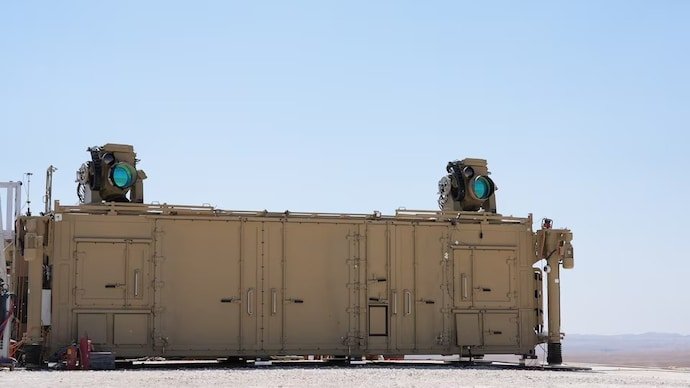
The full picture of what Israel deployed to the UAE is only now being assembled, piece by piece. Here is what is known:
Iron Beam: The Laser That Changes Everything
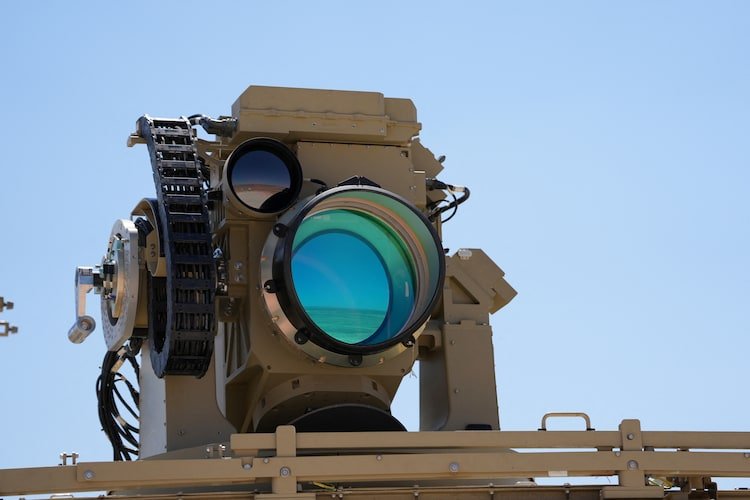
The centerpiece of the disclosure is the Iron Beam – Israel’s ground-based, high-energy laser defense system developed by Rafael Advanced Defense Systems. The system targets short-range rockets, artillery shells, and drones by firing a concentrated laser beam that disables or destroys targets within approximately 4 to 5 seconds. Critically, the Iron Beam had only become fully operational within Israel’s own military array in December 2025 – barely two months before it was quietly packed up and sent to Abu Dhabi.
The significance of this cannot be overstated. A system that Israel itself had only just received was being deployed to defend a foreign partner’s airspace. This was not a case of selling old inventory; this was Israel reaching into its newest, most sensitive military assets and extending them – under live fire conditions – to an ally. According to the Financial Times, some of the systems deployed were still in the prototype stage, pulled “off the bench” to keep pace with the war’s tempo.
Why does the Iron Beam matter so much strategically? Because it solves a problem that the Iran conflict exposed in brutal clarity: traditional missile interceptors are expensive, finite, and slow to replenish. Advanced interceptors can cost millions of dollars per unit, and manufacturing pipelines take months to refill. The Center for Strategic and International Studies estimated that by the time a tenuous ceasefire took hold, the United States had depleted roughly half of its THAAD and Patriot Missile inventories. Laser-based systems like Iron Beam, by contrast, cost pennies per “shot” in terms of electricity. In a sustained high-volume drone war, that economic advantage is decisive.
Spectro: The Drone-Hunter No One Was Talking About
Equally important – and even less discussed – was Israel’s deployment of the Spectro surveillance platform, manufactured by Elbit Systems. This lightweight system is designed to detect incoming drones, particularly Iran’s Shahed-type unmanned aerial vehicles, from distances of up to 20 kilometers. This matters because Shahed drones are notoriously difficult to detect with conventional radar; they are small, fly low, and emit minimal heat signatures. Spectro reportedly addresses this gap by providing passive optical and electro-optical detection that can mark drones for interception.
The Spectro-Iron Beam pairing represents a complete targeting chain: detect with Spectro, eliminate with Iron Beam. Reports suggest the UAE may be exploring retrofitting older missile systems with laser-guided seekers that work in tandem with Spectro, allowing existing platforms to engage drone threats more efficiently.
Iron Dome and Boots on the Ground
Alongside these newer systems, Israel also deployed an Iron Dome air defense battery to the UAE – the first time the system has ever been sent to a third country outside of the United States. Netanyahu ordered the deployment following a direct call with UAE President Mohamed bin Zayed Al Nahyan. Crucially, Israel did not just ship the hardware. It sent people. “Several dozen” Israeli military personnel were stationed in the UAE to operate the Iron Dome. One source described it as “not a small number of boots on the ground.” This represents an extraordinary step: Israeli soldiers, on UAE soil, defending it against Iranian missiles. Five years after the Abraham Accords, that sentence would have seemed science fiction.
Real-Time Intelligence Sharing
Israel also shared live intelligence with the UAE, including advance warnings about preparations for short-range missile launches from inside western Iran. This allowed Emirati air defenses to anticipate incoming threats and position interceptors accordingly – a force multiplier that no hardware transfer alone could replicate.
The Numbers Behind the Battle
| Category | Detail |
|---|---|
| Conflict Start Date | February 28, 2026 (U.S.-Israeli strikes on Iran) |
| Ceasefire Date | April 8, 2026 (tenuous ceasefire) |
| Iranian Ballistic & Cruise Missiles Fired at UAE | 550+ |
| Iranian Drones Fired at UAE | 2,200+ |
| Total Projectiles | ~2,750+ |
| Iron Beam Operational Since | December 2025 |
| Spectro Detection Range | Up to 20 km for drones |
| Iron Beam Target Neutralization Time | ~4–5 seconds per target |
| Israeli Personnel Deployed to UAE | “Several dozen” |
| U.S. Advanced Interceptor Depletion | ~50% of THAAD and Patriot stocks |
| Iron Dome Previous Third-Country Deployments | None (UAE was the first) |
Why This Is Different From Any Previous Middle East Arms Transfer
Israel has sold weapons to many countries. What happened in early 2026 was categorically different, and three distinctions set it apart from any prior transfer.
Speed Over Protocol
Normally, defense exports go through lengthy government-to-government approval processes, technology-transfer negotiations, and end-user agreements that take months or years. Israel bypassed conventional timelines entirely, deploying systems that were not yet fully integrated into its own military networks, under active combat conditions, to a foreign partner. This was wartime improvisation at the highest level of Military Technology.
Personnel, Not Just Hardware
Selling a weapons system is one thing. Deploying your own soldiers to operate it on foreign soil is something else entirely – particularly when Iranian missiles are actively falling nearby. The presence of Israeli military personnel in the UAE signals a depth of commitment that no export contract can convey.
Prototype Technology in a Live Combat Environment
Some of what Israel sent was not yet production-ready by conventional standards. Deploying prototype systems in real combat creates a live testing environment that both accelerates development and, yes, accepts real risk. It also sends an unmistakable message: when the stakes are high enough, Israel will share its most sensitive technology with partners it trusts absolutely.
Iran’s Strategic Miscalculation
There is a painful irony in Tehran’s targeting of the UAE. By making the Gulf nation “one of Iran’s primary targets” – as a Western official confirmed – precisely because of its close relationship with Israel, Iran effectively guaranteed that the UAE would be pulled even deeper into the Israeli security orbit. The missile barrages did not drive a wedge between Abu Dhabi and Jerusalem; they welded them together.
A senior Emirati official reportedly told Axios that the UAE “was not going to forget” the assistance Israel provided during the fighting. That is not diplomatic language. That is the language of an alliance that has been forged under fire – the strongest kind. Iran’s assault on the UAE may ultimately be remembered as one of the strategic blunders of the conflict: an attempt to punish a country for its alliances that ended up deepening those very alliances beyond what anyone anticipated before the war began.
The Broader Strategic Shift: What This Means for the Middle East
The 2026 conflict has accelerated a realignment that was already underway, but its pace now seems irreversible. Several implications deserve close attention.
The Drone War Has Changed Defense Economics Forever
Iran’s use of over 2,200 drones against the UAE was not just tactically significant – it was economically strategic. Shahed-type drones are cheap to produce; the interceptors needed to shoot them down are not. When the U.S. military burned through roughly half of its most advanced interceptor stocks during a conflict that lasted barely six weeks, the vulnerability of traditional missile-defense economics was exposed for the world to see. Israel’s Iron Beam represents the clearest answer yet to this problem: a system whose cost-per-intercept is measured in electricity bills rather than millions of dollars.
Ukrainian Innovation Meets Middle Eastern Warfare
One underreported dimension of the conflict is the role of Ukrainian-developed counter-drone technologies. Ukraine, facing years of Iranian Shahed drone attacks delivered to Russia, has developed sophisticated passive detection and interception techniques specifically tailored to this threat. Reports indicate these innovations were deployed across several countries in the region during the conflict – a fascinating transfer of battlefield knowledge from Europe’s eastern front to the Arabian Peninsula.
The Abraham Accords Are Now a Defense Alliance in Fact, if Not in Name
The Abraham Accords were sold as normalization agreements – economic partnerships, people-to-people ties, and diplomatic recognition. They were never formally structured as a mutual defense pact, unlike NATO‘s Article 5. But what transpired in early 2026 functionally created one. Israel defended the UAE with its own soldiers and its own most advanced weapons systems. The UAE accepted Israeli boots on its soil. When the history of this period is written, February through April 2026 may well be remembered as the moment the Abraham Accords became something more than a diplomatic achievement – they became a functioning security alliance.
What About Bahrain?
A notable gap in the reporting deserves attention. Bahrain also signed the Abraham Accords in 2020 and also came under Iranian attack during the same conflict. Yet there is no confirmed reporting of similar Israeli defense deployments to Manama. Why? Bahrain hosts the U.S. Fifth Fleet and is already deeply embedded in American military infrastructure. Its defense needs may have been met through different channels. But the asymmetry in reported Israeli support raises questions about whether the Abraham Accords create equal security obligations – or whether geography, strategic importance, and proximity to Iranian missile trajectories determined who got what.
The Technology Race That Will Define the Next Decade
The conflict has kicked off what is effectively a technology arms race between Iran’s mass-production Drone Warfare model and Israeli-Western directed-energy defense systems. Iran demonstrated the capacity to launch over 2,750 projectiles in a six-week period – a rate of attack that would overwhelm any defense architecture built around expensive kinetic interceptors. The answer cannot simply be to manufacture more Patriot missiles faster.
Laser systems like Iron Beam, paired with advanced electro-optical detection platforms like Spectro, represent the emerging counter-doctrine. They are cheaper per shot, faster to engage multiple targets, and unaffected by supply chain delays. The limitation today is power supply – laser systems require substantial electrical infrastructure – but that problem is engineering-solvable in ways that manufacturing million-dollar interceptors is not.
The next five years will likely see rapid proliferation of directed-energy air defense systems across the Gulf, driven in part by what the Iran conflict demonstrated. Israel, having validated Iron Beam in live combat – first against Hezbollah in Lebanon, then effectively in the UAE – is now positioned as the world’s leading operational deployer of laser air defense. That is a significant technological and commercial advantage.
A Turning Point Dressed in Quiet Clothes
The deployment of Iron Beam, Spectro, and Iron Dome to the UAE was done quietly, without fanfare, and without official confirmation from any of the parties involved. Elbit Systems, Rafael Advanced Defense Systems, the Israeli Ministry of Defense, and the UAE government all declined to comment or did not respond to press inquiries. The silence itself speaks volumes: what happened was significant enough that all parties preferred it remain undisclosed – at least until it could no longer be contained.
But the story is out, and its implications are substantial. Israel proved it can and will extend its most advanced military capabilities to allies under fire, even when those capabilities are barely operational within its own forces. The UAE proved it can absorb and operate Israeli military technology rapidly, under live combat conditions. And the Abraham Accords proved that peace agreements, when built on genuine shared interests rather than diplomatic convenience, can evolve into something far more durable than their critics predicted.
Conclusion: The Accords Grew Up – And the Middle East Will Never Be the Same
The story of Israel’s secret defense deployment to the UAE during the 2026 Iran conflict is, at its core, the story of an alliance growing up under fire. What began as a diplomatic breakthrough on the White House lawn in September 2020 has transformed, through the pressure of genuine warfare, into an operational military partnership with Israeli soldiers defending UAE skies alongside Emirati forces.
Looking ahead, several developments seem probable. The UAE is almost certain to purchase Iron Beam outright following its proven performance. Defense cooperation between Israel and Gulf states will deepen and likely expand to other Abraham Accords signatories. The laser-versus-drone technological competition will accelerate, with Israel and its partners on one side and Iran’s mass-production drone economy on the other.
And Iran? Its missile and drone campaign against the UAE may have struck some targets, but strategically, it achieved the opposite of what Tehran intended. Rather than driving the UAE away from Israel and toward neutrality, it drove the two countries into the kind of deep military integration that only comes from fighting side-by-side – or, in this case, side-by-laser-beam.
The Middle East’s new security architecture is being built not in conference rooms, but in the skies above Abu Dhabi, one intercepted drone at a time. The Iron Beam did not just defend the UAE from Iranian missiles. In doing so, it may have quietly redrawn the strategic map of the entire region.
For breaking news and live news updates, like us on Facebook or follow us on Twitter and Instagram. Read more on Latest World on thefoxdaily.com.






COMMENTS 0