- Who Was Hamza Burhan?
- The Pulwama Attack That Changed India-Pakistan Relations
- Why Hamza Burhan Was Considered Important
- The Growing Pattern of “Unknown Gunmen” in Pakistan
- Why These Killings Are Raising Strategic Questions
- The Psychological Impact on Terror Networks
- Why Muzaffarabad Matters
- The Radicalisation Challenge in Kashmir
- Could These Killings Escalate India-Pakistan Tensions?
- The “Dhurandhar” Parallel and Pop Culture Influence
- What Happens Next?
- Conclusion
The death of Hamza Burhan in Muzaffarabad is more than another headline in the long and violent history of militancy linked to Jammu and Kashmir. It marks the latest chapter in an increasingly shadowy campaign of targeted killings involving senior operatives tied to groups such as Jaish-e-Muhammad (JeM), Lashkar-e-Taiba (LeT), Hizbul Mujahideen, and Al-Badr.
Burhan, also known by the alias “Doctor,” was accused of playing a critical role in the 2019 Pulwama terror attack one of the deadliest assaults ever carried out against Indian security forces. His killing by unidentified gunmen in Pakistan-occupied Kashmir (POK) immediately triggered speculation, geopolitical debate, and renewed focus on the fragile security architecture across the region.
While no organization has claimed responsibility, the incident fits a broader pattern that has emerged over the past few years: wanted militants and terror commanders being assassinated under mysterious circumstances deep inside Pakistan or POK.
The timing, symbolism, and strategic implications of Burhan’s death could have consequences extending far beyond Muzaffarabad.
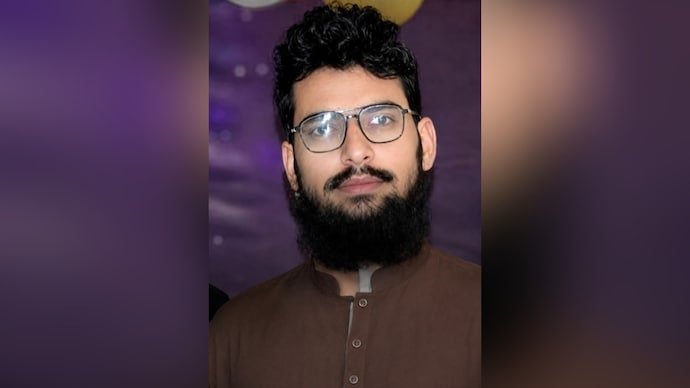
Who Was Hamza Burhan?
Hamza Burhan, whose real name was Arjumand Gulzar Dar, hailed from Pulwama district in South Kashmir. According to security records, he left India in 2017 under the pretext of pursuing higher education in Pakistan.
Instead, investigators allege he joined the banned terror outfit Al-Badr and quickly rose through its ranks.
Security agencies accused Burhan of playing a major role in radicalisation efforts in South Kashmir, particularly in Pulwama and Shopian. Officials alleged that he actively recruited and indoctrinated local youths, helping expand militant networks in the region during a particularly volatile phase of insurgency.
His growing influence eventually placed him on India’s radar as a high-value militant operative.
| Profile of Hamza Burhan | Details |
|---|---|
| Real Name | Arjumand Gulzar Dar |
| Alias | Hamza Burhan / Doctor |
| Native Place | Pulwama, Jammu and Kashmir |
| Terror Outfit | Al-Badr |
| Accused Role | Radicalisation, logistics, terror coordination |
| Linked To | 2019 Pulwama attack |
| Declared Terrorist | By Union Home Ministry in 2022 |
| Killed In | Muzaffarabad, Pakistan-occupied Kashmir |
The Pulwama Attack That Changed India-Pakistan Relations
The Pulwama attack on February 14, 2019, became a defining moment in modern India-Pakistan tensions.
A suicide bomber linked to Jaish-e-Muhammad rammed an explosives-laden vehicle into a convoy of Central Reserve Police Force (CRPF) personnel at Lethpora in Pulwama district.
The blast killed 40 CRPF personnel and injured many others.
The attack shocked India and triggered nationwide outrage. It also dramatically escalated tensions between the two nuclear-armed neighbors.
Within days, India launched airstrikes targeting a JeM training facility in Balakot, Pakistan. Pakistan responded with aerial operations of its own, leading to one of the most serious military confrontations between the two countries in decades.
The Pulwama attack therefore became more than a terror incident it evolved into a geopolitical flashpoint with regional and international implications.
Why Hamza Burhan Was Considered Important
Security officials alleged that Burhan was not merely a foot soldier but a facilitator who played a key logistical role.
According to investigators, he helped arrange explosives and grenades used by militants involved in the Pulwama operation. Authorities also linked him to subsequent grenade attacks targeting CRPF personnel.
Unlike highly visible militant commanders who often appeared in propaganda videos, Burhan reportedly operated with a lower public profile. That made him operationally valuable.
Analysts say individuals involved in recruitment, financing, movement coordination, and explosives supply are often harder to replace than frontline gunmen because they form the backbone of militant infrastructure.
His ability to reportedly move between Kashmir and POK despite security pressure further increased his significance within militant circles.
The Growing Pattern of “Unknown Gunmen” in Pakistan
What makes Burhan’s death particularly significant is the context surrounding it.
Over the last few years, multiple high-profile militants linked to anti-India terror groups have been killed in Pakistan or POK under mysterious circumstances.
In many cases:
- Attackers escaped unidentified.
- Victims were shot at close range.
- Motorcycle-borne gunmen were reportedly involved.
- Local authorities released limited information.
- No group formally claimed responsibility.
This recurring pattern has fueled intense speculation across South Asia’s security community.
| Recent High-Profile Militant Killings | Reported Location | Method |
|---|---|---|
| Hamza Burhan | Muzaffarabad (POK) | Shot by unidentified gunmen |
| Amir Hamza | Lahore | Bike-borne attackers |
| Abu Qatal | Jhelum | Targeted shooting |
| Muhammad Tahir Anwar | Pakistan | Mysterious circumstances |
The trend has drawn comparisons to covert counterterror campaigns historically seen in other conflict zones around the world.
Why These Killings Are Raising Strategic Questions
The repeated targeting of militants inside Pakistan raises uncomfortable questions for Pakistan’s internal security establishment.
If heavily protected terror-linked operatives can be tracked and eliminated inside major Pakistani cities or POK, it suggests either:
- Major intelligence failures,
- Internal factional rivalries,
- Criminal vendettas,
- Foreign intelligence penetration,
- Or a combination of all four.
Pakistan officially denies harboring terrorist infrastructure aimed at India. However, India has long accused Pakistan-based groups of operating with varying degrees of institutional protection.
Each mysterious killing therefore becomes geopolitically sensitive because it indirectly highlights the continued presence of internationally designated militants on Pakistani soil.
The Psychological Impact on Terror Networks
One angle often overlooked in mainstream coverage is the psychological effect of such killings.
Militant organizations traditionally rely on secrecy, safe havens, and internal trust. When senior operatives begin dying unexpectedly in locations once considered secure, it creates paranoia within networks.
That matters strategically.
Counterterrorism experts note that fear and uncertainty can disrupt communication channels, recruitment pipelines, funding routes, and leadership structures even without large-scale military operations.
In insurgent ecosystems, distrust can sometimes become more damaging than direct armed confrontation.
The recent pattern of assassinations may therefore have effects extending far beyond the individuals killed.
Why Muzaffarabad Matters
Muzaffarabad has long occupied a sensitive position in the India-Pakistan security landscape.
Located in Pakistan-occupied Kashmir, the city has historically been viewed by Indian Intelligence Agencies as an important hub for militant Logistics and training activities linked to infiltration across the Line of Control (LoC).
Though Pakistan rejects such allegations, Muzaffarabad’s strategic location has made it central to regional security calculations for decades.
The killing of a Pulwama-linked militant in the city therefore carries symbolic significance beyond the immediate incident itself.
The Radicalisation Challenge in Kashmir
The story of Hamza Burhan also reflects a larger issue that continues to challenge security agencies: youth radicalisation.
Officials alleged that Burhan actively influenced vulnerable young men in South Kashmir and helped draw some toward militancy.
Experts say radicalisation in conflict regions often thrives through a mix of:
- Political grievances
- Online propaganda
- Peer networks
- Religious extremism
- Local recruitment ecosystems
While security operations can eliminate militants, dismantling the ideological infrastructure behind recruitment remains a far more difficult task.
This is why counter-radicalisation programs, economic development, digital monitoring, and local community engagement have become increasingly important alongside traditional counterterror operations.
Could These Killings Escalate India-Pakistan Tensions?
So far, there is no official indication linking any state actor to Burhan’s death.
However, incidents involving high-profile militants almost always carry diplomatic implications between India and Pakistan.
If the pattern of assassinations continues, pressure may grow on Pakistan to explain how internationally wanted militants repeatedly manage to operate within its territory.
At the same time, the opaque nature of these killings creates a gray zone where speculation often overtakes verifiable facts.
That ambiguity itself can become strategically useful in intelligence and counterterror environments.
The “Dhurandhar” Parallel and Pop Culture Influence
The comparison being made online to “Dhurandhar” reflects how covert operations and intelligence warfare have increasingly entered public imagination through films, streaming series, and digital media.
Real-world Geopolitics, however, is usually far more complex than cinematic narratives.
Unlike movies where motives and masterminds are revealed dramatically, actual intelligence-linked events often remain murky for years or forever.
Still, the growing public fascination with shadow operations highlights how counterterrorism today is not only fought on battlefields, but also in information spaces, narratives, and psychological perception.
What Happens Next?
Burhan’s death is unlikely to end militancy-related concerns in the region. Militant ecosystems are rarely dependent on one individual alone.
However, the elimination of experienced operatives can temporarily disrupt organizational coordination and weaken networks.
Security analysts will now closely monitor:
- Possible retaliatory threats
- Changes in infiltration patterns
- Recruitment activity in Kashmir
- Internal shifts within terror outfits
- Pakistan’s official response
The incident may also intensify debates around covert counterterror strategies and cross-border intelligence operations in South Asia.
Conclusion
The killing of Hamza Burhan in Pakistan-occupied Kashmir represents far more than the death of a wanted militant.
It reconnects the region to the enduring legacy of the Pulwama attack, a tragedy that reshaped India-Pakistan relations and transformed regional security dynamics.
At the same time, the incident adds another layer to the increasingly mysterious wave of killings targeting senior terror-linked figures inside Pakistan and POK.
Whether these incidents stem from covert operations, internal rivalries, or other hidden factors, they are reshaping the psychological and operational landscape of militant organizations across the region.
For India, the death of a Pulwama-linked figure may carry symbolic closure for one painful chapter. For Pakistan, it raises difficult questions about security, militancy, and control.
And for the wider region, it is a reminder that the shadow war surrounding South Asian terrorism continues to evolve often far from public view, and rarely with simple answers.
For breaking news and live news updates, like us on Facebook or follow us on Twitter and Instagram. Read more on Latest World on thefoxdaily.com.





COMMENTS 0