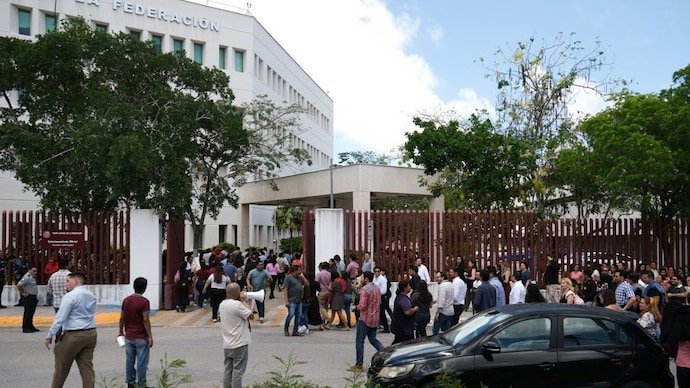
A powerful magnitude 6.1 earthquake struck off the northwest coast of Cuba, sending shockwaves across the Caribbean and reaching parts of Florida, Mexico’s Yucatan Peninsula, and the Gulf of Mexico. While no major casualties or widespread destruction were immediately reported, the event has drawn significant attention from seismologists because of its rarity.
According to geological experts, this was the strongest earthquake recorded in the region in roughly 150 years. The tremor was powerful enough to cause building evacuations, trigger emergency response protocols, and remind millions of people that seismic hazards can emerge even in areas not typically associated with major earthquakes.
The earthquake also occurred during a period of heightened global Seismic Activity, with a separate magnitude 5.0 earthquake striking southern Iran just hours later. Although the two events were unrelated, they once again highlighted how dynamic and unpredictable Earth’s geological systems can be.
What Happened During the Cuba Earthquake?
The earthquake occurred off Cuba’s northwest coast and measured magnitude 6.1 on the Richter scale. The epicenter was located approximately 104 kilometers west-northwest of Mantua, a municipality in Cuba’s Pinar del Rio Province.
The quake originated at a relatively shallow depth, allowing seismic waves to travel efficiently across a wide geographic area.
Residents in western Cuba reported strong shaking, swaying buildings, rattling windows, and sudden evacuations as people rushed outdoors. Tremors were also felt across southern Florida and parts of Mexico’s Caribbean coast.
Fortunately, authorities confirmed there were no immediate reports of significant structural damage, fatalities, or serious injuries.
Why This Earthquake Is Historically Significant
What makes this earthquake particularly noteworthy is not just its magnitude but its location.
Most major earthquakes occur along tectonic plate boundaries where Earth’s massive crustal plates interact. The Cuba earthquake, however, appears to have occurred within a tectonic plate rather than directly along a major plate boundary.
This type of earthquake is known as an intraplate earthquake.
Intraplate earthquakes are relatively rare but can sometimes be felt over much larger distances because the surrounding geological structures allow seismic energy to travel more efficiently.
According to historical records, no earthquake of comparable strength has been documented within approximately 320 kilometers of the area since an estimated magnitude 6.0 event near San Cristobal in 1880.
That makes the latest earthquake one of the most significant seismic events ever recorded in the Gulf of Mexico region.
Understanding Intraplate Earthquakes
Many people associate earthquakes with famous fault systems such as California’s San Andreas Fault or Japan’s subduction zones. However, intraplate earthquakes occur away from major plate boundaries and often surprise both residents and scientists.
These earthquakes can result from:
- Ancient fault lines becoming reactivated
- Stress accumulation within tectonic plates
- Regional geological adjustments
- Changes in crustal pressure over long periods
Because these faults may remain inactive for centuries, communities often have little awareness of their existence.
The Cuba earthquake serves as a reminder that seismic risks are not limited to traditionally active earthquake zones.
How Far Were the Tremors Felt?
One of the most remarkable aspects of the earthquake was the vast area over which shaking was reported.
| Region | Reported Impact |
|---|---|
| Western Cuba | Strong shaking, building evacuations, public concern |
| Havana | Buildings swayed, residents rushed outdoors |
| Florida | Tremors felt in Miami, Fort Lauderdale, and beyond |
| Yucatan Peninsula | Building evacuations in Cancun, Tulum, and Playa del Carmen |
| Gulf of Mexico Region | Seismic waves detected across a wide area |
For many Florida residents, experiencing noticeable earthquake tremors was unusual. Unlike states along the US West Coast, Florida rarely experiences significant seismic activity.
The event sparked widespread discussion on Social Media, with many residents reporting vibrating furniture, shaking walls, and swaying buildings.
Why Cuba Faces Unique Challenges During Natural Disasters
Although the earthquake did not cause widespread destruction, it exposed vulnerabilities that concern disaster management experts.
Cuba has faced significant economic challenges in recent years, affecting infrastructure maintenance, housing quality, and public services.
Several factors increase potential risks during major earthquakes:
- Aging residential buildings
- Limited access to construction materials
- Ongoing power supply issues
- Infrastructure modernization challenges
- Resource constraints during emergency responses
In many regions, older buildings are often more vulnerable to seismic activity because they were not designed according to modern earthquake-resistant standards.
Fortunately, the earthquake’s offshore location helped reduce the potential for severe structural damage.
Why No Tsunami Warning Was Issued
Whenever a strong offshore earthquake occurs, many people immediately worry about tsunamis.
In this case, authorities did not issue a tsunami warning.
Tsunamis generally require significant vertical displacement of the ocean floor. While earthquake magnitude is important, the type of fault movement and seabed displacement are often even more critical in determining tsunami risk.
Experts concluded that the earthquake’s characteristics did not present a substantial tsunami threat to nearby coastlines.
This assessment helped prevent unnecessary panic across the Caribbean and Gulf regions.
The Science Behind Magnitude 6.1 Earthquakes
A magnitude 6.1 earthquake is classified as a strong earthquake capable of causing considerable damage near its epicenter.
To understand the energy involved, it helps to compare magnitudes.
| Magnitude | General Classification | Typical Effects |
|---|---|---|
| 4.0–4.9 | Light | Noticeable shaking, minor damage |
| 5.0–5.9 | Moderate | Potential structural damage near epicenter |
| 6.0–6.9 | Strong | Can cause significant damage in populated areas |
| 7.0–7.9 | Major | Serious destruction over large areas |
| 8.0+ | Great | Catastrophic regional impacts |
Importantly, earthquake scales are logarithmic rather than linear. A magnitude 6.1 earthquake releases substantially more energy than a magnitude 5.1 earthquake.
This explains why the Cuba event was felt across such a wide geographic region.
Southern Iran Earthquake Highlights Global Seismic Activity
Hours after the Cuba earthquake, a separate magnitude 5.0 earthquake struck near Sargaz in Iran’s Hormozgan Province.
Unlike Cuba, Iran is located in one of the world’s most seismically active regions.
The country sits at the collision zone between the Arabian and Eurasian tectonic plates, creating intense geological pressure that frequently generates earthquakes.
Iran has experienced some of the deadliest earthquakes in modern History, making seismic monitoring and preparedness a constant priority.
Authorities reported no major casualties or damage from the latest tremor, but monitoring efforts continued throughout the region.
Could More Aftershocks Occur?
Aftershocks are a normal part of the earthquake process.
When a significant earthquake occurs, surrounding faults often adjust to the redistribution of geological stress. These adjustments can produce smaller earthquakes that continue for days, weeks, or even months.
Scientists expect western Cuba could experience aftershocks following the magnitude 6.1 event.
However, experts believe any aftershocks are likely to be substantially weaker than the main earthquake and unlikely to produce widespread impacts in distant locations such as Florida.
Residents in affected regions are nevertheless encouraged to remain aware of official updates and emergency guidance.
What This Earthquake Teaches About Disaster Preparedness
One important lesson from the Cuba earthquake is that natural disasters often occur in places where people least expect them.
Many communities across the Caribbean and Gulf of Mexico focus heavily on hurricanes, flooding, and tropical storms. Earthquakes receive far less attention.
Yet preparedness principles remain similar:
- Maintain emergency supplies
- Know evacuation procedures
- Identify safe locations inside buildings
- Stay informed through official channels
- Develop family emergency plans
Even rare events can have significant consequences when communities are unprepared.
Future Outlook: Are More Large Earthquakes Likely?
Scientists cannot accurately predict the exact timing of earthquakes. However, the latest event is likely to trigger renewed geological research into fault systems beneath the Gulf of Mexico and surrounding regions.
The earthquake may also encourage governments and emergency agencies to reassess preparedness plans for low-frequency but high-impact seismic events.
As monitoring technology improves, researchers continue to discover previously unknown faults and better understand the complex geological forces operating beneath the Earth’s surface.
Conclusion
The magnitude 6.1 earthquake off Cuba’s northwest coast was far more than a routine seismic event. As the strongest earthquake in the area in roughly 150 years, it demonstrated how rare geological events can affect multiple countries and millions of people within minutes.
While the absence of major casualties and widespread damage was a fortunate outcome, the earthquake highlighted important lessons about seismic risk, infrastructure resilience, and disaster preparedness.
Combined with the separate earthquake in Iran, the event serves as a reminder that Earth’s tectonic forces remain active and unpredictable. For scientists, policymakers, and residents alike, the focus now shifts from immediate response to understanding what these tremors reveal about the evolving geological risks facing different regions of the world.
For breaking news and live news updates, like us on Facebook or follow us on Twitter and Instagram. Read more on Latest World on thefoxdaily.com.


COMMENTS 0