- Why the Strait of Hormuz Matters More Than Almost Any Other Waterway
- IEA Warns Oil Markets Are Entering the “Red Zone”
- Why This Crisis Is Different From Previous Oil Shocks
- The Political Risks Europe Is Beginning to Fear
- Why India Is Especially Vulnerable
- India’s Push Toward Energy Self-Reliance
- Green Hydrogen Could Become a Strategic Game Changer
- The Economic Impact Could Last Longer Than the Conflict
- The Hidden Global Shift Happening Behind the Crisis
- Conclusion
The Global Economy is entering dangerous territory.
What initially appeared to be a regional disruption linked to escalating conflict in West Asia is now evolving into a full-scale energy emergency with worldwide consequences. The closure of the Strait of Hormuz one of the most critical oil chokepoints on Earth has already removed millions of barrels of crude oil from global markets, rattled stock exchanges, intensified inflation fears, and forced governments into crisis planning.
Now, the International Energy Agency (IEA) is sounding an alarm that policymakers cannot afford to ignore.
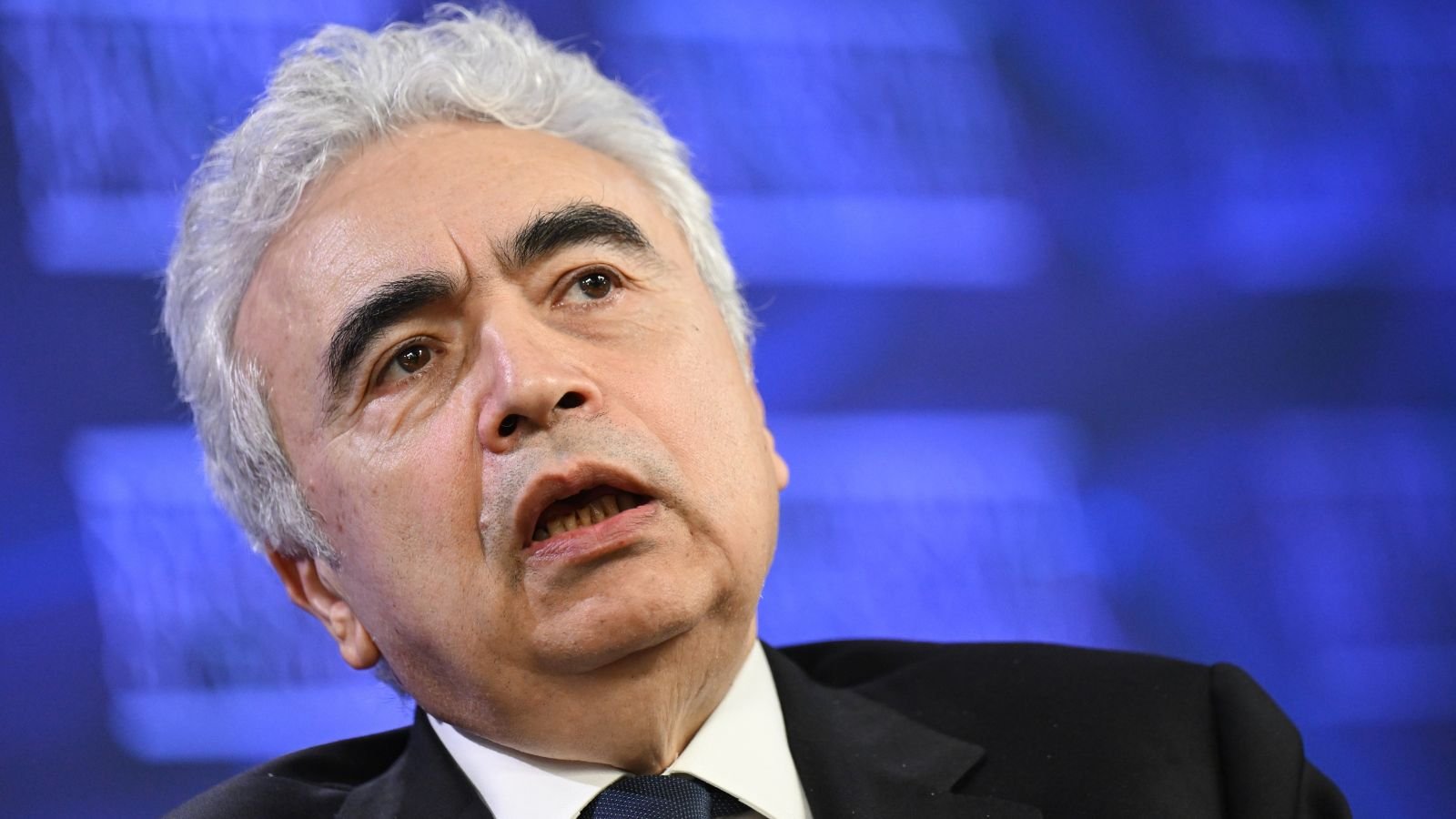
Fatih Birol, executive director of the IEA, warned that global oil markets could enter the “red zone” by July and August as shrinking energy supplies collide with rising summer demand. His warning reflects growing concern that the world may be heading toward an energy shock more disruptive than previous crises seen in 1973, 1979, or even after Russia’s invasion of Ukraine in 2022.
For India, one of the world’s largest crude importers, the crisis is becoming both an economic challenge and a strategic wake-up call.
Prime Minister Narendra Modi has already directed multiple government departments to accelerate alternative energy planning, reduce dependence on imported fossil fuels, and prepare for the possibility of a prolonged geopolitical Energy Crisis.
The message from New Delhi is becoming increasingly clear: India can no longer treat energy security as a secondary policy issue.
It has become central to national stability, economic resilience, and long-term strategic independence.
Why the Strait of Hormuz Matters More Than Almost Any Other Waterway
The Strait of Hormuz is not simply another maritime route. It is arguably the single most important oil transit corridor in the global economy.
The narrow passage between Iran and Oman connects Gulf oil producers to international markets, carrying a massive share of global crude oil and liquefied natural gas shipments every day.
Under normal circumstances, approximately one-fifth of the world’s oil supply passes through the strait.
That means any disruption instantly affects:
- Global crude Oil Prices
- Jet fuel supplies
- Shipping insurance costs
- Industrial production
- Transportation expenses
- Inflation rates worldwide
The closure of the Strait of Hormuz since March 4 has therefore created a shockwave far beyond West Asia.
Energy traders, governments, airlines, manufacturers, and financial markets are all reacting to the same fear: what happens if the disruption lasts months instead of weeks?
IEA Warns Oil Markets Are Entering the “Red Zone”
Fatih Birol’s warning at Chatham House in London represented one of the strongest public alerts issued by the International Energy Agency in recent years.
According to Birol, global oil inventories are steadily declining while demand continues rising due to peak summer travel and industrial consumption.
That combination creates the perfect conditions for an energy market crisis.
The IEA estimates that roughly 14 million barrels of oil per day are currently missing from global markets because of disruptions linked to the Strait of Hormuz crisis.
To understand the scale of that number, it is important to recognize that even relatively small supply disruptions can trigger major price volatility in oil markets.
A sustained shortfall of this magnitude threatens to destabilize entire economies.
| Impact of the Strait of Hormuz Crisis | Global Consequences |
|---|---|
| 14 Million Barrels Per Day Disrupted | Major global supply shortage |
| Rising Summer Demand | Increased pressure on shrinking inventories |
| Higher Fuel Prices | Inflation across transport and manufacturing sectors |
| Refinery Disruptions | Potential long-term supply bottlenecks |
| Shipping Instability | Higher logistics and insurance costs |
| Geopolitical Uncertainty | Investor panic and market volatility |
Birol also warned that even if tensions ease tomorrow, restoring full production and refining capacity across the region could take months possibly more than a year.
That means the economic consequences may persist long after military tensions decline.
Why This Crisis Is Different From Previous Oil Shocks
Comparisons to the oil crises of 1973 and 1979 are not being made lightly.
Those events reshaped global economies, caused inflation spikes, triggered recessions, and permanently altered energy policy across the industrialized world.
But there are several reasons why the current crisis may prove even more complex.
1. The Modern World Uses Far More Energy
Today’s global economy is vastly more interconnected and energy-intensive than it was during earlier oil shocks.
Modern supply chains, aviation systems, digital infrastructure, manufacturing networks, and global logistics all depend heavily on stable fuel access.
2. Global Supply Chains Are Already Fragile
The world is still recovering from supply chain disruptions caused by the Covid-19 pandemic and geopolitical conflicts. Many industries remain vulnerable to transportation shocks and cost surges.
3. Inflation Is Already a Political Problem
Unlike earlier periods where inflation was relatively controlled before oil shocks hit, many countries are already dealing with high living costs and political dissatisfaction.
Another major fuel-driven inflation wave could intensify social and political instability.
4. Energy Transition Pressures Complicate Investment
Oil producers face growing pressure to invest in renewable energy while simultaneously maintaining traditional fossil fuel production. This creates uncertainty around long-term investment in new oil infrastructure.
The Political Risks Europe Is Beginning to Fear
Birol’s warning extended beyond economics.
He cautioned that prolonged energy inflation could fuel political extremism in parts of Europe, where rising living costs are already placing pressure on governments.
This is a critical point often overlooked in energy discussions.
Oil prices affect nearly every part of daily life:
- Food transportation
- Electricity costs
- Air travel
- Public transport
- Industrial production
- Consumer goods pricing
When fuel prices surge, political frustration usually follows.
History repeatedly shows that energy crises do not remain confined to economics. They eventually become political crises.
Birol specifically warned that extremist political movements could exploit public anger by portraying existing governments and institutions as ineffective.
That concern reflects broader fears that prolonged energy instability could reshape political landscapes across Europe.
Why India Is Especially Vulnerable
India imports the overwhelming majority of its crude oil requirements, making it highly exposed to Global energy disruptions.
Every sharp increase in crude prices affects:
- Fuel costs
- Inflation
- Transport expenses
- Manufacturing competitiveness
- Trade deficits
- Foreign exchange reserves
The impact extends beyond economics.
Energy security is directly connected to National Security, industrial growth, and social stability.
This is why Prime Minister Narendra Modi has reportedly instructed government departments to aggressively explore alternative fuel strategies and reduce unnecessary energy consumption.
The comparison to the Covid-19 pandemic is particularly significant.
During the pandemic, governments learned how quickly global disruptions could affect supply chains, public behavior, and economic stability. The current energy crisis is producing similar concerns except this time the pressure point is fuel rather than healthcare.
India’s Push Toward Energy Self-Reliance
The current crisis is accelerating India’s long-term push toward energy diversification and self-reliance.
New Delhi is now actively examining multiple alternatives designed to reduce dependence on imported oil.
These include:
- Solar energy expansion
- Green hydrogen development
- Nuclear energy investments
- Higher ethanol blending
- Domestic oil and gas production
- Electric mobility infrastructure
This strategy reflects a broader recognition that relying too heavily on imported fossil fuels creates strategic vulnerability.
India’s renewable energy ambitions are no longer driven only by climate goals. They are increasingly tied to national resilience.
Green Hydrogen Could Become a Strategic Game Changer
One of the most important long-term developments in India’s energy strategy is green hydrogen.
Green hydrogen is produced using renewable electricity and has the potential to reduce dependence on imported fossil fuels in sectors like heavy industry, shipping, and transportation.
India has already announced ambitious plans to become a major global green hydrogen producer.
The Strait of Hormuz crisis may now accelerate those ambitions dramatically.
When geopolitical disruptions repeatedly threaten oil supplies, alternative fuels stop being futuristic experiments and start becoming strategic necessities.
The Economic Impact Could Last Longer Than the Conflict
One of the most alarming aspects of the current crisis is that energy systems do not recover instantly.
Even if geopolitical tensions ease, several challenges remain:
- Damaged infrastructure
- Refinery disruptions
- Shipping bottlenecks
- Insurance complications
- Production delays
- Investor uncertainty
Birol warned there is no realistic scenario in which full oil production returns to normal quickly.
That means the world may face an extended period of elevated fuel prices and economic instability.
For developing economies, prolonged energy inflation can slow growth significantly.
For advanced economies, it risks political backlash and recession fears.
The Hidden Global Shift Happening Behind the Crisis
The deeper story behind the Strait of Hormuz disruption is that it may permanently change how countries think about energy security.
For decades, globalization encouraged nations to depend on interconnected supply chains and international trade efficiency.
Now, governments are increasingly prioritizing resilience over efficiency.
Countries are asking difficult questions:
- Can critical industries survive long disruptions?
- Should nations rely so heavily on vulnerable shipping routes?
- How quickly can alternative energy systems scale?
- What happens if another geopolitical shock emerges next year?
The answers to those questions could reshape global energy investment for decades.
Conclusion
The closure of the Strait of Hormuz has evolved from a regional security problem into one of the most serious global energy crises in recent memory.
With the International Energy Agency warning that oil markets are approaching the “red zone,” governments across the world are being forced to confront a harsh reality: modern economies remain deeply vulnerable to geopolitical disruptions.
For India, the crisis represents both a challenge and a turning point.
Prime Minister Narendra Modi’s push for alternative fuels, energy conservation, and reduced fossil fuel dependence reflects growing recognition that energy security must become a central pillar of national strategy.
The world may eventually reopen the Strait of Hormuz and stabilize oil markets.
But the deeper consequences of this crisis are likely to last much longer.
Countries are now entering a new era where resilience, diversification, and energy independence may matter more than ever before because in a world shaped by geopolitical uncertainty, the nations that control their energy future will ultimately control their economic future as well.
For breaking news and live news updates, like us on Facebook or follow us on Twitter and Instagram. Read more on Latest World on thefoxdaily.com.






COMMENTS 0