Wars often test alliances abroad. Just as frequently, they test alliances at home.
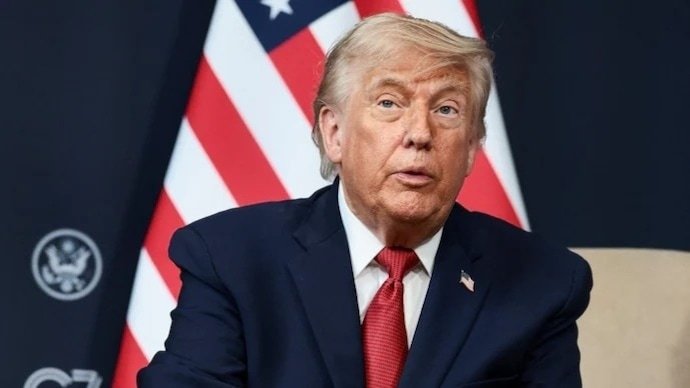
That reality was on display during a closed-door meeting between US President Donald Trump and Republican lawmakers, where what was supposed to be a private strategy discussion reportedly turned into a heated confrontation over the administration’s handling of the Iran conflict.
According to lawmakers familiar with the meeting, Republican Senator Bill Cassidy challenged the White House‘s approach to the war and questioned whether the administration was being sufficiently transparent about its objectives and progress. The exchange, later described by several attendees to journalists, quickly became one of the clearest signs yet that concerns about the conflict are no longer confined to Trump’s political opponents.
For months, criticism of the war has largely come from Democrats and anti-war activists. Now, some of the toughest questions appear to be coming from within the president’s own party.
That development matters because internal dissent has historically been one of the strongest indicators that public and political patience with a conflict may be beginning to wear thin.
What Triggered the Confrontation?
The reported disagreement centred on the administration’s broader Iran strategy and a framework agreement that has generated debate among lawmakers.
According to accounts from those present, Cassidy questioned whether the administration’s actions were achieving the objectives originally outlined to Congress and the American public. He also reportedly raised concerns about aspects of the agreement that critics argue provide incentives to Iran without delivering clear strategic gains for Washington.
After the meeting, Cassidy stopped short of directly attacking the president but made it clear that he believed lawmakers and voters deserved more information.
“The American people need to know more than we are being told,” Cassidy told reporters.
The comment may sound measured, but in Washington it carries significant weight. Lawmakers rarely call for greater transparency during an active military conflict unless they have concerns about the information they are receiving themselves.
More importantly, Cassidy is not a fringe figure within the Republican Party. His criticism signals that questions about the war are increasingly moving into the political mainstream.
Why This Disagreement Is Different
Presidents routinely face criticism from the opposition party during military conflicts. What makes this episode noteworthy is that the criticism came from a Republican senator during a meeting intended to unite party members behind the administration’s agenda.
Political historians often note that wars become significantly more difficult to sustain once divisions emerge within the governing party.
The reason is simple. Opposition criticism is expected. Internal criticism suggests that doubts are spreading among those WHO would normally be inclined to defend the administration.
For Trump, the timing could hardly be worse.
The Iran conflict is becoming increasingly controversial as costs rise and questions about long-term objectives multiply. At the same time, congressional Elections are approaching, and lawmakers are growing more sensitive to shifts in voter sentiment.
As one veteran political strategist once observed, military conflicts are often judged less by how they begin than by whether leaders can explain where they are heading.
That appears to be the challenge facing the White House today.
The Public Is Becoming Harder to Convince
The political significance of the clash extends far beyond Capitol Hill.
Recent polling suggests that Americans are becoming increasingly sceptical about the conflict. A Reuters/Ipsos survey found that only about one in four Americans believes the war has been worth its cost.
For any administration, those numbers are concerning.
Public support is often the most important strategic asset during a prolonged military operation. When voters begin questioning whether a conflict is delivering meaningful results, lawmakers inevitably start asking tougher questions as well.
That dynamic has shaped nearly every major military engagement in modern American History.
Initially, National Security concerns tend to dominate public debate. Over time, however, voters begin focusing on different issues:
- How much is the conflict costing?
- What progress has been achieved?
- How long will it continue?
- What does success actually look like?
- Is there a clear exit strategy?
The longer those questions remain unanswered, the harder it becomes to maintain broad political support.
The Senate Vote That Exposed Republican Divisions
The confrontation with Cassidy did not occur in isolation.
It followed a symbolic but politically significant Senate resolution calling on Trump to end the conflict. While the measure carried little practical force, it served as a public barometer of congressional sentiment.
What caught observers’ attention was the fact that a small group of Republicans joined Democrats in supporting the resolution.
Cassidy was among them.
That vote sent a signal that concerns about the war were beginning to cross party lines.
Republican leaders responded by scheduling another vote aimed at neutralising the political impact of the earlier resolution. The move was widely interpreted as an effort to demonstrate party unity and reassure the White House.
Yet even that effort produced mixed results.
The subsequent vote passed narrowly, but it failed to completely erase the impression that divisions were emerging within Republican ranks.
Ironically, the late-night manoeuvre appeared to frustrate Trump rather than strengthen his position. The president reportedly argued that such public disagreements could be interpreted by Iran as a sign of American weakness.
Whether that concern is justified or not, it reflects a longstanding belief among many political leaders that visible domestic divisions can complicate foreign policy.
The $70 Billion Question
Just hours after the political drama unfolded, the administration added another layer to the debate by requesting an additional $70 billion in war funding from Congress.
The request comes on top of an existing defence budget of approximately $867 billion, immediately intensifying scrutiny from both fiscal conservatives and war critics.
Funding requests often become defining moments during military conflicts because they force lawmakers to publicly choose between supporting the administration’s strategy or demanding changes.
For Republican lawmakers facing competitive elections, that choice may become increasingly difficult.
Supporting additional funding could expose them to criticism from voters concerned about government spending. Opposing it could invite accusations that they are undermining national security.
As a result, debates over funding frequently become proxy battles over the war itself.
The Bigger Issue Isn’t Money—It’s Strategy
Much of the public discussion has focused on the financial cost of the conflict. Yet the more important issue may be strategic clarity.
Historically, voters are often willing to support expensive military operations if they understand the objectives and believe those objectives are achievable.
The challenge emerges when goals become difficult to define.
Several lawmakers have privately expressed concerns that the administration has not fully explained what constitutes success in the Iran conflict.
Is the objective deterrence?
Regime pressure?
Regional stability?
Long-term containment?
Each objective would require a different strategy and potentially a different timeline.
Without a clearly defined destination, even tactical victories can fail to generate political confidence.
That is why Cassidy’s call for greater transparency resonates beyond a single Senate office.
It reflects a broader concern that Congress and the public need a clearer understanding of where the conflict is heading.
What History Tells Us About Internal Wartime Disputes
Political disagreements during military conflicts are hardly unusual.
From Vietnam and Iraq to Afghanistan, American presidents have repeatedly faced growing resistance from members of their own party as wars became longer, more expensive, or more politically complex.
The pattern is remarkably consistent.
Early debates focus on whether action is necessary.
Later debates focus on whether the strategy is working.
Eventually, discussions turn toward costs, timelines and exit plans.
The current debate surrounding Iran appears to be entering that second phase.
The question is no longer simply whether confronting Iran is necessary. Increasingly, lawmakers are asking whether the administration’s approach is delivering the outcomes it promised.
The Political Stakes for Trump
The Iran conflict is rapidly becoming one of the most consequential political tests of Trump’s presidency.
Unlike domestic policy disputes, foreign policy challenges are difficult to reframe through campaign messaging alone. Events on the ground often shape public perception more powerfully than political rhetoric.
If the administration can demonstrate measurable progress, criticism from within the party may fade.
If uncertainty persists, however, more lawmakers could begin publicly raising concerns similar to Cassidy’s.
That possibility is what makes the confrontation so significant.
The issue is not that one senator challenged the president. It is that the challenge reflects broader questions already circulating among lawmakers, analysts and voters.
The Road Ahead
For now, the White House remains committed to its current strategy, and Republican leaders continue to publicly support the administration.
Yet the events of the past week suggest that the political consensus surrounding the conflict is becoming increasingly fragile.
The coming months are likely to be shaped by three factors: developments on the battlefield, congressional debates over funding, and public opinion.
If all three move in the administration’s favour, the current tensions may prove temporary.
If they do not, the clash between Trump and Cassidy may eventually be remembered as one of the earliest public signs that support for the conflict was beginning to fracture.
Conclusion
The reported confrontation between Donald Trump and Senator Bill Cassidy was about more than a disagreement over policy details. It highlighted a deeper debate taking shape inside Washington about the costs, objectives and future direction of the Iran conflict.
As lawmakers prepare to consider billions of dollars in additional funding and voters grow increasingly sceptical about the war’s value, pressure on the administration is likely to intensify. The central challenge facing the White House is no longer simply managing the conflict itself. It is convincing Congress and the American public that there is a clear strategy for achieving success.
Whether the administration can do that may determine not only the future of the conflict but also its political consequences in the months ahead.
For breaking news and live news updates, like us on Facebook or follow us on Twitter and Instagram. Read more on Latest World on thefoxdaily.com.





COMMENTS 0