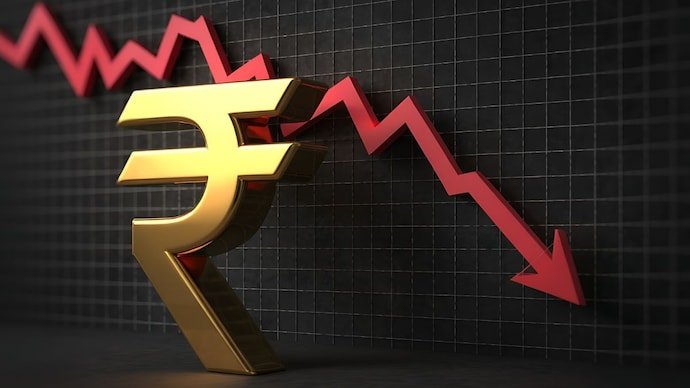
Few things trigger economic anxiety in India as quickly as a falling rupee. The moment the currency weakens sharply against the US dollar, television studios erupt, opposition leaders attack the government, and Social Media fills with predictions of economic collapse.
When the rupee crosses psychological milestones Rs 80, Rs 90, or now even the possibility of Rs 100 per dollar the reaction is often emotional rather than analytical.
But beneath the panic lies a difficult truth many people misunderstand: it is not actually the Reserve Bank of India’s primary job to “save” the rupee from falling.
That statement sounds controversial because Indians have long associated currency strength with national economic strength. A stronger rupee is often seen as a symbol of economic pride, while depreciation is treated like evidence of policy failure.
Modern central banking, however, does not work that way.
The RBI’s actual responsibility is far broader and far more complicated than simply defending a fixed exchange rate.
What the RBI Is Actually Mandated to Do
The Reserve Bank of India’s legal mandate focuses primarily on monetary stability, financial stability, and orderly economic functioning.
The RBI’s foundational mandate states that the central bank exists to regulate currency issuance, maintain reserves, and operate India’s monetary and credit system in a way that supports the broader economy.
Noticeably absent is any promise to permanently maintain the rupee at a specific level against the dollar.
This distinction matters because public expectations often treat the rupee-Dollar Rate like a scoreboard for economic success.
Economists argue that this obsession with symbolic exchange-rate levels can become misleading and even harmful.
The RBI’s real priorities include:
- Controlling Inflation
- Maintaining financial stability
- Managing liquidity in the banking system
- Preventing market panic during crises
- Supporting sustainable economic growth
Exchange-rate stability matters, but only as one part of a much larger economic balancing act.
Why the Rupee Falls in the First Place
Currencies do not weaken randomly. Exchange rates move because of changes in global economic conditions, capital flows, inflation differences, trade balances, and investor sentiment.
India’s recent rupee weakness has been driven by several major global and domestic pressures:
| Factor | Impact on Rupee |
|---|---|
| Rising crude oil prices | Increases India’s import bill |
| Strong US dollar | Pulls capital toward US assets |
| Foreign investor outflows | Reduces dollar inflows into India |
| Global geopolitical tensions | Creates financial market uncertainty |
| Higher US interest rates | Makes emerging markets less attractive |
India is particularly vulnerable to crude oil shocks because the country imports a large share of its energy needs.
When oil prices rise sharply, India needs more dollars to pay for imports. This increases demand for dollars and puts pressure on the rupee.
No central bank can fully offset such global structural forces indefinitely.
The Managed Float System Explained
One of the biggest misconceptions in India is the assumption that the RBI directly controls the rupee’s exact value every day.
India does not operate a fixed exchange-rate system.
Instead, the country follows what economists call a “managed float” regime.
Under this system:
- The rupee is largely allowed to move according to market forces
- The RBI intervenes occasionally to reduce excessive volatility
- The central bank attempts to prevent panic, not freeze the exchange rate permanently
This approach gives India greater flexibility during global economic shocks.
If the RBI tried to rigidly fix the rupee at an artificial level forever, it would require massive intervention that could eventually damage the broader economy.
Why Defending the Rupee Aggressively Can Become Dangerous
At first glance, aggressively defending the rupee may sound like a sensible strategy.
After all, a stronger currency reduces import costs and helps control inflation.
But economists warn that excessive currency defence can create even bigger long-term risks.
To support the rupee, the RBI typically sells dollars from India’s foreign exchange reserves.
However, Forex Reserves are not unlimited.
They function as a financial safety cushion for the economy during periods of:
- Sudden capital flight
- Global financial crises
- Import financing stress
- External debt pressure
If the RBI spends too much of these reserves defending short-term exchange-rate levels, investors may begin questioning India’s ability to handle larger future shocks.
This can actually worsen market confidence rather than improve it.
The Lesson From the 2022 Currency Pressure
The RBI learned this lesson during the global financial turbulence of 2022.
As the US Federal Reserve aggressively raised interest rates, the dollar strengthened globally. Emerging-market currencies, including the rupee, came under intense pressure.
The RBI intervened heavily by selling billions of dollars from its forex reserves to slow the rupee’s decline.
Yet despite those interventions, the rupee weakened anyway.
Meanwhile, India experienced one of the sharpest declines in forex reserves among major emerging economies during parts of that period.
The experience reinforced a key economic reality: central banks can slow panic temporarily, but they cannot permanently overpower global market fundamentals.
The “Impossible Trinity” Problem
Economists often explain currency-management challenges through a concept called the “impossible trinity” or the Mundell-Fleming trilemma.
While the term sounds academic, the core idea is surprisingly simple.
No country can simultaneously maintain all three of the following:
- A fixed exchange rate
- Free movement of capital
- Independent monetary policy
A country can effectively choose only two.
India has largely chosen:
- Relatively open capital flows
- Independent monetary policy
That means the exchange rate must eventually adjust according to economic conditions.
If the RBI tried endlessly defending a rigid rupee level, it would eventually have to sacrifice either monetary flexibility or financial stability.
Inflation Not the Exchange Rate Is RBI’s Main Scoreboard
Since 2016, India’s monetary policy framework has formally revolved around inflation targeting.
The RBI’s primary objective under this system is to maintain retail inflation around 4%, within a tolerance band of plus or minus 2%.
This means the central bank’s success is judged mainly by:
- Price stability
- Inflation management
- Economic stability
Not by whether the rupee trades at Rs 80 or Rs 100 against the dollar.
This shift reflects a broader global consensus among modern central banks that inflation stability matters more for long-term economic health than defending symbolic exchange-rate numbers.
Why a Weak Currency Is Not Always a Disaster
Public debate often treats currency depreciation as proof that an economy is collapsing.
In reality, moderate depreciation is normal for many emerging economies.
Currencies naturally weaken over time because inflation rates differ across countries.
For example:
- If India’s inflation remains consistently higher than US inflation, the rupee will gradually weaken over the long term
- Rapid economic growth can increase imports, putting pressure on the currency
- Global financial cycles often strengthen or weaken the dollar independently of India’s domestic performance
A weaker currency can even create some economic advantages.
| Potential Benefit of Weaker Rupee | Economic Effect |
|---|---|
| Cheaper exports globally | Boosts export competitiveness |
| Higher IT and service earnings | Benefits export-oriented sectors |
| Improved tourism affordability | Can attract foreign visitors |
Of course, excessive depreciation can create inflationary pressure and investor anxiety. The key issue is whether the fall remains orderly.
Why Economists Hate “Psychological Levels” Like Rs 100
Every few years, public debate becomes obsessed with round-number exchange-rate milestones.
First it was Rs 50, then Rs 70, then Rs 80.
Now Rs 100 per dollar has become the latest psychological red line.
But economists repeatedly argue these numbers are emotionally powerful rather than economically meaningful.
Former NITI Aayog vice-chairman Arvind Panagariya recently summarised this perspective bluntly by saying, “100 is just a number, like 99 and 101.”
His point reflects a deeper economic reality:
The economy does not suddenly collapse because the rupee crosses a symbolic round figure.
What matters is whether:
- Inflation spirals out of control
- Capital flight accelerates dangerously
- Markets lose confidence entirely
- Import financing becomes unstable
That is the line the RBI is actually trying to defend.
Why RBI Still Intervenes Sometimes
If the RBI does not target a fixed exchange rate, why does it intervene at all?
The answer lies in the difference between normal adjustment and disorderly panic.
The RBI typically intervenes when currency movements become:
- Too rapid
- Highly speculative
- Driven by panic instead of fundamentals
- Capable of destabilising financial markets
The goal is not to permanently stop depreciation.
The goal is to prevent chaos.
Economists often describe this approach as “smoothing volatility” rather than defending a fixed number.
The Political Optics Problem
Currency weakness also creates political pressure because exchange rates are easy for the public to track.
Most citizens do not follow bond yields, liquidity conditions, or inflation expectations daily.
But they immediately notice when headlines announce the rupee hitting a new low.
This turns exchange rates into politically sensitive symbols.
Opposition parties frequently use currency depreciation to attack governments, while ruling parties attempt to minimise public concern.
The result is that public debate often becomes more emotional than economically nuanced.
The Real Question India Should Be Asking
Instead of asking whether the RBI can permanently stop the rupee from falling, the more important question is whether India’s overall economic fundamentals remain stable.
Key indicators matter far more than symbolic exchange-rate numbers:
- Inflation control
- Economic growth
- Employment generation
- Foreign exchange reserve strength
- Financial system stability
- Investor confidence
If those foundations remain intact, gradual currency depreciation becomes manageable.
But if those fundamentals weaken significantly, even aggressive currency defence may fail.
Conclusion
The Reserve Bank of India was never designed to act as a permanent guardian of any fixed rupee-dollar number.
Its actual responsibility is far more important: protecting monetary stability, managing inflation, preserving financial confidence, and ensuring the economy remains resilient during global shocks.
A falling rupee can certainly create challenges, especially for imports and inflation. But obsessing over symbolic exchange-rate levels often distracts from the broader economic picture.
The real danger is not whether the rupee touches Rs 100 against the dollar. The real danger is whether currency movements become disorderly enough to destabilise inflation, growth, and financial stability.
That is the battle the RBI is truly fighting not for a number on a television screen, but for the long-term stability of the Indian economy itself.
For breaking news and live news updates, like us on Facebook or follow us on Twitter and Instagram. Read more on Latest Business on thefoxdaily.com.






COMMENTS 0