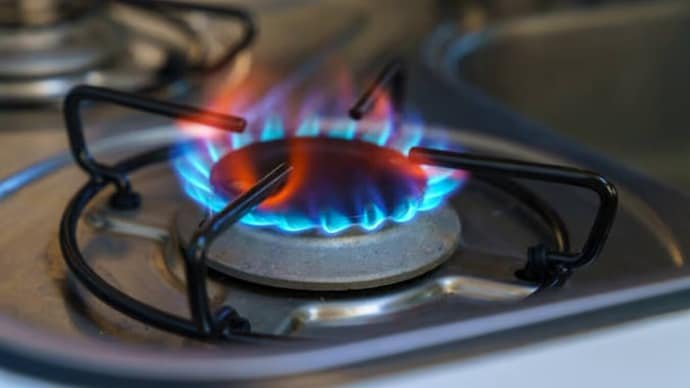
Ethanol is expanding rapidly as a transport fuel in India, but the government has clarified that there is currently no policy to introduce it as a household cooking fuel alongside LPG.
Could ethanol eventually move from India’s fuel pumps into its kitchens? For now, the answer from the government is no.
While India continues to promote ethanol as an alternative fuel for transport, the government has said that ethanol is neither approved nor mandated as a cooking fuel for households. It has also ruled out blending ethanol with diesel after tests raised safety concerns.
Minister of State for Petroleum and Natural Gas Suresh Gopi told the Rajya Sabha on August 10 that there is currently no policy under consideration to introduce ethanol as a mainstream household cooking fuel.
The clarification came in response to a question about whether the government was preparing a policy, expected by September 2026, to promote ethanol for cooking alongside LPG.
No policy yet to bring ethanol into Indian kitchens
The government has made it clear that there is currently no proposal to approve or mandate ethanol as a household cooking fuel.
For Indian households, this means LPG remains the primary cooking fuel within the existing household energy framework. Ethanol has not been added to the list of fuels that households are being encouraged or required to use for cooking.
However, the government’s response leaves open the possibility that ethanol could have a role as an alternative cooking fuel in the future.
According to Gopi, using ethanol for cooking could potentially reduce India’s dependence on imported LPG while providing another cleaner cooking option.
It could also provide an outlet for surplus ethanol production capacity if domestic production continues to expand.
But potential benefits do not amount to an existing policy. As of the latest government clarification, there is no decision to introduce ethanol into Indian kitchens.
Why ethanol cooking fuel is being discussed
The question of ethanol as a cooking fuel comes at a time when India is increasing its use of Biofuels as part of its broader energy strategy.
Ethanol is already widely discussed in the context of petrol blending, where it is used to reduce dependence on fossil fuels and increase the use of domestically produced alternatives.
The government has also been exploring ways to make use of India’s ethanol production capacity.
That has naturally raised the question of whether ethanol could eventually be used beyond transportation, including for household cooking.
One potential advantage would be diversification. If ethanol could safely be used for cooking at scale, it could provide households with an additional fuel option and potentially reduce some dependence on imported LPG.
However, household cooking requires fuel systems that are safe, practical, affordable and easy to distribute. The government’s latest response indicates that these considerations have not yet resulted in a policy to introduce ethanol as a cooking fuel.
Government rules out ethanol-diesel blending
While the government has not approved ethanol for household cooking, it has also ruled out another possible application: blending ethanol with diesel.
Public sector oil marketing companies conducted scientific evaluations of ethanol-diesel blends through their Research and Development centres. The studies were carried out in collaboration with accredited laboratories and automobile manufacturers.
The testing raised a major safety issue related to the fuel’s flash point.
According to Gopi, ethanol-blended diesel did not meet the required flash point because the addition of ethanol drastically lowered it.
A fuel’s flash point is an important safety characteristic because it indicates the temperature at which its vapours can ignite. A lower flash point can increase fire risks during fuel handling and storage.
Based on the findings of the evaluations, ethanol-diesel blending has therefore not been adopted.
What does the flash-point problem mean?
The government’s explanation focuses on fuel safety rather than simply the availability of ethanol.
Even if ethanol is available in sufficient quantities, it cannot automatically be mixed with another fuel for use in vehicles. The resulting blend must meet technical and Safety Standards for storage, transportation and engine operation.
The studies conducted by oil marketing companies indicated that ethanol significantly reduced the flash point of diesel, creating a safety concern.
This is why the government has ruled out ethanol-diesel blending based on the results of its technical evaluations.
The decision illustrates the broader principle guiding India’s fuel strategy: expanding the use of alternative fuels depends not only on production capacity but also on safety and technical compatibility.
No decision to raise petrol ethanol blending beyond 20%
The government has also clarified that there has been no decision to increase ethanol blending with petrol beyond the existing 20% level.
Any proposal to move beyond the current level will first require detailed scientific and technical studies, according to Gopi.
The government also plans to consult automobile manufacturers, oil marketing companies and research institutions before taking any decision on higher blending levels.
This means the next phase of ethanol blending will depend on evidence about vehicle compatibility, fuel performance, Infrastructure requirements and other technical considerations.
How ethanol fits into India’s fuel strategy
Despite the lack of a household cooking policy, ethanol remains an important part of India’s alternative-fuel strategy.
The government continues to promote ethanol primarily as a transport fuel and has highlighted the potential of using surplus production capacity for other energy applications.
Increasing domestic ethanol production can also support the broader objective of reducing dependence on imported fossil fuels.
But the latest government response makes a distinction between expanding ethanol’s role in transportation and introducing it into household energy use.
For now, the two should not be confused.
Could ethanol replace LPG in Indian kitchens?
There is currently no government plan to replace LPG with ethanol for household cooking.
The government has acknowledged that ethanol could potentially offer another cooking option and might help reduce dependence on imported LPG. However, that remains a possibility rather than an approved programme.
Any future move would likely require consideration of fuel safety, cooking equipment, storage, distribution networks, cost and the practical needs of households.
The latest Rajya Sabha response therefore does not announce a new ethanol cooking-fuel policy. Instead, it confirms that the government is not currently pursuing such a policy.
What the government’s latest ethanol decisions mean
The government’s position can be summed up in three points.
- Ethanol as a cooking fuel: There is currently no policy to approve or mandate ethanol for household cooking.
- Ethanol-diesel blending: It has been ruled out after technical evaluations raised concerns over the reduced flash point of the blend.
- Petrol blending above 20%: No decision has been taken to increase ethanol blending beyond the existing 20% level, with further studies and consultations required.
At the same time, the government continues to support ethanol’s role as an alternative transport fuel and sees potential value in using surplus production capacity.
What happens next for ethanol in India?
For now, ethanol’s most established role remains in the transport sector, particularly through petrol blending.
The government has not closed the door on other applications, but the latest statement makes clear that no decision has been taken to bring ethanol into Indian kitchens.
Future expansion will depend on scientific evidence, safety assessments and consultations with industries that would be affected by changes in fuel policy.
For households, that means there is no immediate shift away from LPG. For India’s ethanol industry, however, the government’s comments indicate that alternative uses could remain an area of interest if production capacity grows and technical and safety requirements can be met.
So, can ethanol become a cooking fuel in India? Potentially, but not yet. The government currently has no policy to introduce it for household cooking, and any future move would require further evaluation before ethanol could become a mainstream kitchen fuel.
For breaking news and live news updates, like us on Facebook or follow us on Twitter and Instagram. Read more on Latest Business on thefoxdaily.com.






COMMENTS 0