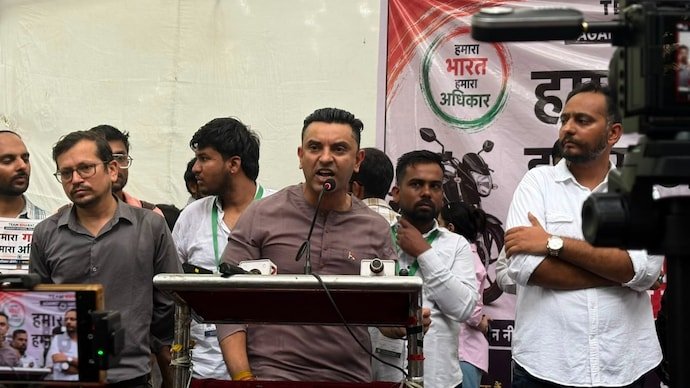
The E20 Petrol controversy in India has moved beyond Social Media discussions into public demonstrations, with motorists gathering at Delhi’s Jantar Mantar to express concerns over the nationwide rollout of 20% ethanol-blended petrol. Protesters alleged that E20 fuel has led to reduced mileage, clogged fuel systems, engine performance issues and expensive repairs in vehicles that were originally designed for lower ethanol blends. Organisers described the event as India’s first street protest specifically targeting the implementation of the ethanol blended petrol (EBP) programme.
However, the claims remain disputed. The Government of India, supported by several automobile and energy experts, maintains that extensive testing has not established that E20 petrol causes damage in vehicles approved to use it. The issue has therefore become less about a single technical question and more about vehicle compatibility, consumer Awareness, transition planning and public trust.
WHO is protesting? Vehicle owners, automobile enthusiasts and consumer groups. What are they alleging? Reduced mileage, higher maintenance costs and compatibility issues with E20 petrol. When did the protest occur? During the first organized public demonstration against the E20 rollout at Jantar Mantar in New Delhi. Why has the issue gained attention? Because Ethanol Blending affects millions of motorists and is a major pillar of India’s energy strategy. How does the government respond? Officials continue to support the Policy, arguing that E20 contributes to Energy Security, lower emissions and reduced dependence on imported crude oil.
What Is E20 Petrol?
E20 refers to fuel containing 20% ethanol and 80% petrol. Ethanol is an alcohol-based renewable fuel produced primarily from sugarcane, maize and other agricultural feedstocks.
The Government of India has expanded ethanol blending under the Ethanol Blended Petrol Programme to:
- Reduce dependence on imported crude oil.
- Support domestic agriculture.
- Lower greenhouse gas emissions.
- Improve India’s energy security.
- Create additional income opportunities for farmers.
India achieved its nationwide E20 rollout significantly ahead of its original timeline, making it one of the world’s fastest large-scale ethanol adoption programmes.
Why Protesters Are Concerned
Participants at the Delhi protest argued that many vehicles currently on Indian roads were designed for E10 petrol or lower ethanol blends rather than E20.
The concerns raised included:
- Reduced fuel efficiency.
- Engine hesitation.
- Fuel filter blockage.
- Fuel line contamination.
- Higher maintenance costs.
- Cold-start issues.
- Loss of engine power.
Several motorists shared personal experiences involving vehicle repairs, although these accounts remain anecdotal and do not by themselves establish a direct causal relationship between E20 fuel and mechanical failures.
Government’s Position on E20 Petrol
The Centre has consistently defended the ethanol blending programme.
According to government agencies and industry experts:
- Vehicles designed or certified for E20 can safely use the fuel.
- Laboratory and field testing has not demonstrated widespread mechanical damage caused solely by E20.
- The policy reduces India’s oil import bill.
- Lower fossil fuel consumption contributes to environmental objectives.
- Ethanol blending strengthens domestic fuel security.
The government also views ethanol blending as an important component of India’s broader energy transition strategy.
Understanding Vehicle Compatibility
One of the most important aspects often overlooked in public discussions is vehicle compatibility.
Automobile manufacturers certify vehicles for specific fuel blends after engineering and durability testing.
Generally:
| Vehicle Type | Typical Fuel Compatibility | Recommendation |
|---|---|---|
| Older vehicles | Usually E10 or lower | Follow manufacturer’s manual. |
| Recent models | Many support E20 | Check official compatibility. |
| Flex-fuel vehicles | Designed for higher ethanol blends | Can safely handle varying ethanol levels. |
Compatibility depends on fuel system materials, engine calibration, seals, hoses and electronic controls.
How Ethanol Differs from Petrol
Ethanol possesses different chemical properties from conventional petrol.
Key characteristics include:
- Higher oxygen content.
- Lower energy density.
- Higher octane rating.
- Ability to absorb moisture.
- Cleaner combustion characteristics.
Because ethanol contains less energy per litre than petrol, some reduction in fuel economy compared with pure petrol is scientifically expected under similar driving conditions. However, the actual difference depends on vehicle design, driving habits, traffic, maintenance and engine calibration.
Scientific Perspective on Fuel Economy
A recurring complaint among protesters involved reduced mileage.
Energy experts note that ethanol contains roughly one-third less energy per litre than petrol. Consequently, increasing ethanol concentration may slightly reduce fuel economy in some vehicles, although the reduction is generally expected to be significantly smaller than dramatic declines reported in anecdotal accounts.
If unusually large mileage losses occur, additional factors such as tyre pressure, driving conditions, maintenance, fuel quality or unrelated mechanical issues may also need investigation.
Can Ethanol Damage Fuel Systems?
The answer depends largely on vehicle design.
In vehicles specifically engineered for higher ethanol blends, fuel system components are manufactured using materials resistant to ethanol exposure.
Older vehicles may experience challenges if components such as:
- Rubber hoses.
- Plastic connectors.
- Fuel pump seals.
- Fuel filters.
- Metal components vulnerable to corrosion.
were not originally designed for prolonged exposure to higher ethanol concentrations.
Whether any particular failure is directly attributable to E20 requires technical diagnosis rather than assumption.
India’s Ethanol Blending Journey
India’s ethanol programme has evolved steadily over the past two decades.
| Year | Development |
|---|---|
| 2003 | Ethanol blending programme introduced. |
| 2014–2020 | Blending levels gradually increased. |
| 2022 | Government accelerated E20 roadmap. |
| 2025–2026 | Nationwide E20 availability expanded. |
How Other Countries Introduced Ethanol
Several countries have implemented ethanol blending, but with varying approaches.
| Country | Approach | Key Feature |
|---|---|---|
| Brazil | Gradual adoption over decades | Large fleet of flex-fuel vehicles. |
| United States | E10 widely adopted | Extensive testing and regulations. |
| Thailand | Phased implementation | Consumer fuel choices available. |
| India | Accelerated rollout | Rapid expansion to E20. |
Benefits of Ethanol Blending
Despite criticism, ethanol blending offers several potential national benefits.
- Lower dependence on imported crude oil.
- Reduced foreign exchange expenditure.
- Additional revenue for farmers.
- Growth of the biofuel industry.
- Potential reduction in certain vehicle emissions.
- Improved energy diversification.
These objectives explain why many countries continue investing in biofuel technologies.
The Consumer Choice Debate
One of the strongest themes emerging from the protest was not outright opposition to ethanol itself, but the demand for greater consumer choice.
Several participants argued that motorists should have access to multiple fuel options depending on their vehicle’s compatibility.
This reflects a broader policy question: should fuel transition prioritize uniform implementation or allow consumers greater flexibility during the transition period?
The Sugar Industry Debate
Some protesters linked the expansion of ethanol production with India’s sugar industry, arguing that ethanol demand benefits sugar mills and associated industries.
India is among the world’s largest sugar producers, and ethanol production from sugarcane has become an important avenue for utilizing surplus production.
While critics raise questions about possible economic interests, supporters argue that ethanol production stabilizes sugar prices, supports rural incomes and reduces agricultural waste.
These competing perspectives continue to be part of the larger policy debate.
A Unique Insight: The Challenge Is Managing the Transition, Not Just the Technology
The controversy surrounding E20 illustrates that large-scale technological transitions depend not only on engineering but also on communication, consumer confidence and implementation.
Even scientifically sound policies can encounter resistance if motorists feel insufficiently informed about vehicle compatibility, maintenance requirements or available fuel choices.
Clearer manufacturer guidance, better labeling at fuel stations, improved public awareness campaigns and transparent long-term monitoring could help bridge the gap between policy objectives and public perception.
What Vehicle Owners Should Do
Experts generally recommend that motorists:
- Check their owner’s manual for approved fuel types.
- Consult authorized service centres before switching fuels.
- Maintain regular servicing schedules.
- Replace fuel filters at recommended intervals.
- Report recurring issues through official service channels.
Following manufacturer recommendations remains the safest approach while the transition continues.
Future Outlook
India’s ethanol blending programme is unlikely to be reversed, as it forms a central component of the country’s long-term energy strategy. However, continued public feedback may encourage improvements in implementation, consumer education and compatibility guidelines.
Future developments may include wider adoption of flex-fuel vehicles, enhanced fuel quality monitoring, expanded research on long-term vehicle performance and greater transparency regarding compatibility across different vehicle models.
Conclusion
The E20 petrol controversy in India highlights the complex balance between national energy goals and consumer concerns. Protesters at Delhi’s Jantar Mantar have raised questions about mileage, maintenance costs and vehicle compatibility, while the government and industry experts continue to defend the policy based on testing and broader economic benefits.
At present, anecdotal accounts alone cannot conclusively establish that E20 fuel is responsible for every reported mechanical issue, just as policy assurances alone may not fully address motorists’ experiences. The path forward lies in evidence-based research, transparent communication, continued technical evaluation and ensuring that consumers have clear information about whether their vehicles are designed to safely operate on higher ethanol blends. As India’s clean energy transition accelerates, maintaining public confidence will be just as important as achieving policy targets.
For breaking news and live news updates, like us on Facebook or follow us on Twitter and Instagram. Read more on Latest India on thefoxdaily.com.






COMMENTS 0