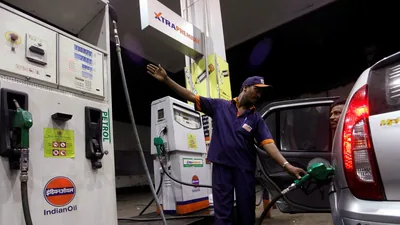
Union Road Transport and Highways Minister Nitin Gadkari recently stated that motorists who do not want ethanol-blended petrol can choose 100% petrol by paying a higher price. The statement has reignited the debate surrounding India’s E20 petrol rollout, with many vehicle owners questioning whether a genuine alternative exists and whether it is accessible to the average driver.
On paper, the option sounds straightforward. In reality, buying near-pure petrol in India is neither easy nor affordable for most consumers. High-octane premium fuels are available only at select fuel stations, cost significantly more than regular petrol, and are primarily designed for performance-oriented vehicles rather than everyday commuting.
As India moves toward cleaner fuels and reduced dependence on imported crude oil, understanding the difference between E20, premium petrol, octane ratings, and ethanol content has become more important than ever. Here’s a detailed look at what Indian drivers should know before their next fuel stop.
What Is E20 Petrol?
E20 petrol is a fuel blend containing 20% ethanol and 80% conventional petrol. Ethanol is a renewable biofuel typically produced from sugarcane, maize, and other agricultural feedstocks.
The Government of India has promoted ethanol blending to achieve multiple objectives, including reducing crude oil imports, lowering carbon emissions, supporting domestic agriculture, and improving energy security.
Compared to conventional petrol, ethanol burns cleaner and produces fewer harmful emissions. However, because ethanol contains less energy per litre than petrol, some vehicles may experience a small reduction in fuel economy.
Why Has E20 Become a Topic of Debate?
The nationwide expansion of E20 has generated mixed reactions among vehicle owners. While many newer vehicles are designed to operate efficiently on higher ethanol blends, owners of older cars and motorcycles remain concerned about long-term compatibility.
The most common concerns include:
- Reduced fuel efficiency.
- Possible impact on engine components in older vehicles.
- Lower resale confidence for non-E20-compatible vehicles.
- Confusion regarding available fuel options.
- Limited awareness about ethanol compatibility.
Automobile manufacturers and government agencies maintain that vehicles specifically designed for E20 should not experience mechanical issues when operated according to manufacturer recommendations.
Can You Actually Buy Pure Petrol in India?
This is where practical reality differs from public perception.
Regular petrol sold across India now contains mandatory ethanol blending. Drivers looking for fuel with minimal or negligible ethanol content generally have only one realistic option: premium 100-octane petrol available at selected fuel stations.
Although often referred to as “pure petrol,” these premium fuels are not always completely ethanol-free. Instead, they typically contain very low ethanol levels compared to standard E20 fuel.
| Fuel Type | Typical Ethanol Content | Primary Users |
|---|---|---|
| Regular Petrol (E20) | Up to 20% | Most passenger vehicles |
| Premium 95-99 Octane | Lower than E20 (varies) | Performance-oriented vehicles |
| 100-Octane Premium Petrol | Very low or trace ethanol | Luxury, sports and high-performance cars |
What Are India’s 100-Octane Petrol Options?
Several oil marketing companies offer premium high-octane fuels for performance vehicles.
- Indian Oil XP100
- HPCL Power100
- Bharat Petroleum Speed100
These fuels were introduced primarily for high-compression engines found in luxury cars, sports cars, imported vehicles, and certain classic automobiles that benefit from higher knock resistance.
Although regular passenger cars can also use these fuels, the performance improvements may be relatively modest because mass-market engines are generally not designed to fully utilize 100-octane petrol.
Understanding Octane Rating vs Ethanol Content
One of the biggest misconceptions among motorists is assuming that higher octane automatically means lower ethanol.
These are two entirely different characteristics.
| Feature | Octane Rating | Ethanol Percentage |
|---|---|---|
| Measures | Resistance to engine knocking | Amount of ethanol blended into petrol |
| Purpose | Supports high-compression engines | Improves emissions and reduces crude oil dependence |
| Higher Value Means | Better knock resistance | More biofuel in the mixture |
Interestingly, ethanol itself has a naturally high octane rating. This means increasing ethanol content can actually raise the overall octane number of fuel even though it contains slightly less energy per litre.
Why Do Some Drivers Notice Better Mileage on Pure Petrol?
The explanation lies in energy density.
Petrol contains more usable energy per litre than ethanol. As ethanol concentration increases, the total energy available from each litre decreases slightly. This is why some motorists observe marginal reductions in mileage when switching to E20.
However, actual fuel economy depends on several factors, including:
- Engine design.
- Driving style.
- Vehicle maintenance.
- Traffic conditions.
- Road quality.
For many modern vehicles, the real-world difference may be relatively small.
Who Should Consider Premium 100-Octane Petrol?
High-octane fuel is most beneficial for vehicles specifically engineered to take advantage of it.
Examples include:
- Luxury sedans.
- Sports cars.
- Performance motorcycles.
- Turbocharged high-compression engines.
- Certain vintage or classic vehicles.
For most hatchbacks, compact SUVs, and family sedans, premium 100-octane petrol is unlikely to provide benefits proportional to its significantly higher cost.
The Biggest Barrier: Price and Availability
Even if motorists wish to avoid E20, practical limitations make that difficult.
Premium 100-octane fuels are typically priced around 60% higher than regular petrol and are sold only at selected outlets, mainly in metropolitan cities and major urban centers.
Drivers living in smaller towns or rural areas may have no access to these fuels at all, effectively leaving E20 as their only practical option.
This limited distribution means Gadkari’s suggestion is technically correct but not equally accessible for every Indian motorist.
What About Older Vehicles?
Owners of vehicles manufactured before widespread E20 compatibility remain cautious. Older fuel systems may contain rubber seals, hoses, or components that were not originally designed for prolonged exposure to higher ethanol blends.
Many automobile manufacturers have since introduced E20-compatible materials in newer vehicles. Owners of older models should consult their vehicle manufacturer’s recommendations before making assumptions about long-term compatibility.
Regular maintenance, timely replacement of worn fuel system components, and using manufacturer-recommended fuel remain the best ways to ensure reliable engine performance.
For most Indian motorists, the real question is no longer whether E20 exists—it is whether affordable alternatives are widely available. Today, for the majority of drivers, they are not.
The Bigger Picture: Why India Is Promoting Ethanol
Beyond individual vehicle performance, India’s ethanol blending programme serves broader economic and environmental objectives. Increasing ethanol use helps reduce dependence on imported crude oil, supports domestic farmers through additional demand for agricultural feedstocks, and contributes to lower tailpipe emissions.
Balancing these national priorities with consumer concerns about mileage, compatibility, and fuel costs will remain one of the biggest challenges as ethanol blending continues to expand.
Conclusion
Nitin Gadkari’s statement that motorists can opt for 100% petrol highlights an option that technically exists but remains difficult for most people to access. Premium 100-octane fuels offer near-pure petrol with very low ethanol content, but their high prices and limited availability mean they are primarily practical for owners of premium or performance vehicles.
For the average Indian driver, E20 petrol is rapidly becoming the standard fuel. While debates over mileage, engine compatibility, and long-term performance are likely to continue, understanding the difference between ethanol content and octane rating can help consumers make more informed decisions. As India’s fuel landscape evolves, improving public awareness and expanding compatibility across the vehicle fleet will be just as important as the fuel itself.
For breaking news and live news updates, like us on Facebook or follow us on Twitter and Instagram. Read more on Latest India on thefoxdaily.com.





COMMENTS 0