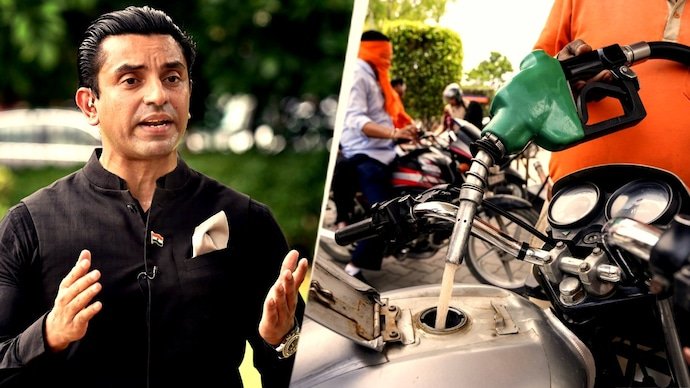
India’s ambitious Ethanol Blending programme has entered a new phase of public debate. Entrepreneur and television personality Tehseen Poonawalla has announced what organisers describe as the country’s first major public protest against the nationwide rollout of E20 petrol. The demonstration, proposed at Delhi’s Jantar Mantar, reflects growing concerns among sections of vehicle owners WHO question the pace of implementation, vehicle compatibility, fuel efficiency, and consumer choice.
The issue is no longer confined to Social Media discussions or automobile forums. It has evolved into a broader Public Policy debate involving environmental goals, fuel economics, automobile technology, consumer rights, and India’s long-term energy strategy.
What Is E20 Petrol?
E20 is a fuel blend consisting of:
- 20% ethanol
- 80% petrol (gasoline)
Ethanol is an alcohol-based renewable fuel primarily produced in India from sugarcane, molasses, damaged Food grains, maize, and other agricultural feedstocks.
The Government of India has been progressively increasing ethanol blending percentages over the past decade as part of its broader clean energy and Energy Security strategy.
Why Is India Promoting Ethanol Blending?
The ethanol blending programme serves multiple policy objectives simultaneously.
| Government Objective | Expected Benefit |
|---|---|
| Reduce crude oil imports | Lower dependence on imported petroleum. |
| Improve energy security | Diversify India’s fuel sources. |
| Support farmers | Create additional demand for agricultural produce. |
| Reduce emissions | Lower carbon emissions from transportation. |
| Promote renewable fuels | Encourage cleaner alternatives to fossil fuels. |
India imports a significant share of its crude oil requirements, making fuel diversification an important strategic objective for long-term economic stability.
Why Are Some Vehicle Owners Opposing E20?
Opposition to ethanol blending is not necessarily directed at ethanol itself. Rather, many critics argue that the transition has moved faster than vehicle readiness and consumer awareness.
Common concerns raised include:
- Reduced fuel efficiency.
- Possible compatibility issues in older vehicles.
- Higher long-term maintenance costs.
- Lack of alternative fuel options.
- Limited public disclosure of technical studies.
- Insufficient consumer consultation.
Many vehicle owners argue they should be free to choose between conventional petrol and different ethanol blend levels depending on their vehicle’s specifications.
What Are the Protest Organisers Demanding?
According to the organisers, the proposed protest is centred on three principal demands.
1. Greater Transparency
Organisers want all government studies, technical reports, testing data, and policy documents related to E20 blending to be made publicly accessible.
2. Consumer Choice
Rather than making E20 the dominant fuel, they argue petrol pumps should offer multiple fuel options such as:
- E0 (ethanol-free petrol)
- E5
- E10
- E15
- E20
This approach, they argue, would allow consumers to select fuel based on vehicle compatibility.
3. Pause Before Higher Blends
Critics are urging the government not to introduce higher ethanol blends such as E25 or E30 until broader consultations with consumers, scientists, and automobile manufacturers are completed.
The Government’s Position
The Government of India maintains that ethanol blending is a carefully planned national programme supported by scientific assessments and phased implementation.
Officials argue that the policy delivers several advantages, including:
- Reduced oil import bills.
- Cleaner combustion.
- Improved energy independence.
- Additional income opportunities for farmers.
- Progress toward environmental commitments.
The government has also stated that automobile manufacturers have progressively introduced vehicles designed to operate on E20 fuel.
Does E20 Reduce Mileage?
This has become one of the most debated questions.
Ethanol contains less energy per litre than conventional petrol. As a result, under comparable driving conditions, vehicles may experience some reduction in fuel economy when using higher ethanol blends.
However, the extent of any mileage change depends on several factors, including:
- Vehicle design.
- Engine calibration.
- Driving habits.
- Road conditions.
- Maintenance.
The government has stated that any reduction in mileage is relatively small, while critics argue that some users have experienced more noticeable differences in real-world conditions.
Understanding Vehicle Compatibility
Not all petrol-powered vehicles were originally engineered for higher ethanol concentrations.
E20-compatible vehicles typically feature components designed to withstand ethanol’s chemical properties, including fuel lines, seals, injectors, and engine calibration.
Older vehicles may differ in design specifications depending on when they were manufactured.
Vehicle owners are generally advised to follow the fuel recommendations provided by their manufacturer.
Why Ethanol Matters for Farmers
One of the central objectives of India’s ethanol policy is to diversify agricultural income.
Demand for ethanol creates additional markets for:
- Sugarcane.
- Molasses.
- Maize.
- Broken rice.
- Other approved agricultural feedstocks.
By creating alternative industrial demand, policymakers aim to improve price stability and reduce surplus production in certain agricultural sectors.
The Economic Perspective
India spends substantial amounts on importing crude oil every year.
Increasing domestic biofuel production can potentially:
- Reduce foreign exchange expenditure.
- Strengthen domestic energy resilience.
- Support rural industries.
- Create employment in biofuel production.
These macroeconomic objectives form a significant part of the government’s long-term Energy policy.
Comparison: Benefits and Concerns Around E20 Petrol
| Potential Benefits | Concerns Raised by Critics |
|---|---|
| Reduced crude oil imports. | Fuel efficiency concerns. |
| Supports renewable energy. | Compatibility of older vehicles. |
| Additional demand for agricultural products. | Higher maintenance costs in some cases. |
| Lower dependence on fossil fuels. | Limited consumer fuel choices. |
| Lower lifecycle emissions. | Need for greater transparency. |
Why the Protest Is Significant
The proposed demonstration represents more than opposition to a specific fuel blend. It signals increasing public engagement with technical policy decisions that directly affect everyday consumers.
Issues such as fuel quality, vehicle performance, environmental sustainability, and government transparency increasingly influence public discourse, making energy policy a matter of wider civic participation.
Expert Insight: Why Consumer Communication Matters
Major technological transitions often succeed not only because of engineering improvements but also because consumers understand and trust the process. Clear communication regarding vehicle compatibility, expected performance, warranty implications, and scientific evidence can help reduce uncertainty and improve public confidence.
Energy experts frequently emphasize that policy acceptance depends as much on transparency and stakeholder engagement as on technical feasibility.
Could India Move Beyond E20?
Several countries continue to expand the use of biofuels, but implementation varies according to local conditions, vehicle fleets, agricultural capacity, and infrastructure.
Any future consideration of higher ethanol blends would likely require:
- Wider vehicle compatibility.
- Expanded fuel infrastructure.
- Comprehensive technical testing.
- Consultation with industry stakeholders.
- Consumer awareness initiatives.
The pace and scale of any future transition will depend on policy decisions and technological readiness.
Future Outlook
The planned protest reflects a broader public conversation about balancing environmental objectives with consumer interests. As India continues its transition toward cleaner and more diversified energy sources, policymakers, automobile manufacturers, fuel companies, researchers, and consumers are likely to remain active participants in shaping the future of transport fuels.
Whether through additional consultations, technical clarifications, or expanded consumer choices, the discussion surrounding ethanol blending is expected to continue as India advances its long-term energy strategy.
Conclusion
India’s E20 petrol programme represents one of the country’s most significant energy policy initiatives in recent years, combining objectives related to energy security, agricultural development, and environmental sustainability. At the same time, the concerns expressed by sections of vehicle owners highlight the importance of transparent implementation, scientific communication, and consumer confidence.
The planned protest underscores how public policy increasingly intersects with everyday experiences of motorists. As the debate evolves, achieving a balance between renewable energy ambitions and practical consumer needs will be essential to ensuring both policy success and public trust.
For breaking news and live news updates, like us on Facebook or follow us on Twitter and Instagram. Read more on Latest India on thefoxdaily.com.






COMMENTS 0