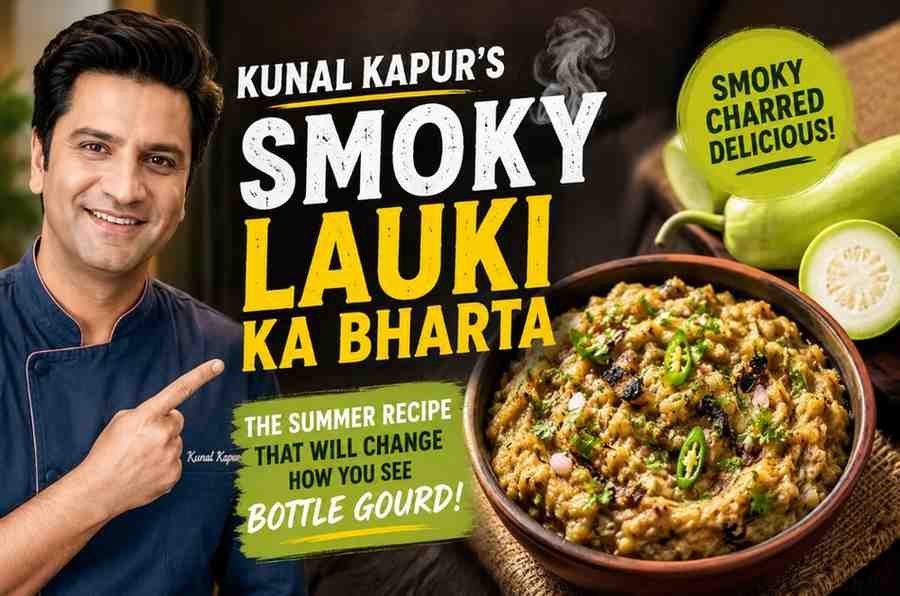
Celebrity chef Kunal Kapur’s open fire roasted lauki ka bharta turns the most underestimated summer vegetable into a deeply smoky, spiced delicacy here is the complete recipe, the technique secrets behind it, and why this dish deserves a permanent place on your summer lunch table.
Mention lauki at the dinner table and watch the room divide. On one side, the devoted fans who swear by its cooling properties and gentle flavour. On the other, practically everyone else. Bottle gourd has a reputation problem one it does not entirely deserve and celebrity chef Kunal Kapur has been quietly dismantling it one recipe at a time. His lauki ka bharta is perhaps his most compelling argument yet: a dish with a smoky, charred depth that you might expect from a baingan bharta but rarely associate with the humble doodhi, paired with a sharp mustard oil masala that makes the whole thing impossible to put down.
Perfectly timed for the Indian summer, when bottle gourd is at its most abundant, most affordable, and most beneficial for the body, this recipe is one of those rare finds that is simultaneously easy to execute, nutritionally smart, and genuinely delicious. If your family currently belongs to the anti-lauki camp, this is the recipe that will bring them across.
Why Lauki Ka Bharta Is the Ideal Summer Recipe
Before we get to the technique, it is worth understanding why bottle gourd lauki or doodhi belongs in the Indian summer kitchen in the first place. Lauki is composed of over 90 per cent water, which makes it one of the most hydrating vegetables available during the hottest months of the year. It is low in calories, easy to digest, rich in dietary fibre, and contains significant amounts of Vitamin C, potassium, and B vitamins. In Ayurvedic tradition, it has been used for centuries as a cooling food that reduces body heat a quality that becomes practically medicinal when temperatures are pushing 40 degrees.
The bharta preparation method adds an extra layer of logic for summer. Roasting the lauki directly over an open flame the same technique used to make baingan bharta does two things simultaneously. It imparts a deep, wood fired smokiness that entirely transforms the vegetable’s mild flavour. And it removes the high water content through char and steam, concentrating the gourd’s natural sweetness into a soft, almost velvety mash that absorbs the spiced masala beautifully.
Chef Kunal Kapur’s version adds one more clever touch: cloves inserted into the lauki before roasting. As the gourd chars over the flame, the cloves release their essential oils directly into the flesh, infusing it with a subtle warmth from the inside out. It is a small detail that makes a significant difference to the final flavour and the kind of considered technique that separates a recipe built on understanding from one built on habit.
Who Is Chef Kunal Kapur? The Man Behind the Recipe
For those unfamiliar, Kunal Kapur is one of India’s most recognisable culinary personalities. Born in New Delhi in 1979 into a Punjabi family, he trained at Dr. Ambedkar Institute of Hotel Management Catering and Nutrition in Chandigarh before beginning his professional career with the Taj Group of Hotels around 2000. He went on to become one of the most celebrated faces on Indian food television, serving as host and judge on MasterChef India and authoring multiple cookbooks including A Chef in Every Home and Kunal Kapur in the Kitchen.
What distinguishes Kapur’s approach is his consistent focus on Indian home cooking not the elaborate, restaurant calibrated dishes that require professional equipment and exotic ingredients, but the everyday recipes that families have cooked for generations, revisited with a chef’s understanding of technique and flavour. His lauki ka bharta is a perfect example: entirely rooted in the Indian home kitchen, but made noticeably better by a few deliberate choices.
Complete Ingredients List for Lauki Ka Bharta
This recipe serves 2 and takes approximately 45 minutes from start to finish. The ingredient list is split into two sections for roasting the lauki and for building the masala base.
For Roasting the Lauki
- Lauki (bottle gourd), medium 1 whole piece
- Tel (oil) 1 tablespoon, for rubbing
- Laung (cloves) 6 to 7 pieces
For the Masala
- Sarso ka tel (mustard oil) 1 tablespoon
- Heeng (asafoetida) ½ teaspoon
- Urad dal vadi, broken into 2 pieces 1 piece
- Jeera (cumin seeds) 1 tablespoon
- Adrak (ginger), finely chopped 1 teaspoon
- Pyaz (onion), chopped 2 tablespoons
- Tamatar (tomato), chopped ½ cup
- Namak (salt) to taste
- Lal mirch (red chilli) powder 1 teaspoon
- Haldi (turmeric) powder 1 teaspoon
- Dhaniya (coriander) powder 1 teaspoon
- Kasoori methi (dried fenugreek leaves) ½ teaspoon
- Dhaniya (fresh coriander), chopped ¼ cup
- Nimbu (lemon) 1 wedge, for finishing
Step-by-Step Method: How to Make Chef Kunal Kapur’s Lauki Ka Bharta
Step 1: Prepare and Roast the Lauki
Take one medium bottle gourd and insert 6 to 7 cloves evenly into the flesh at different points. Pour one tablespoon of oil over the lauki and rub it all over the surface to coat it thoroughly. Place the oiled lauki directly over a live flame a gas burner works well and cook it, turning occasionally, until the outer skin is completely charred and blackened on all sides. The goal is a thorough, even char, not just a surface scorch.
Once fully charred and cooked through, transfer the lauki to a bowl and cover it immediately. This step is important: covering the hot lauki allows it to continue cooking in its own trapped steam, which makes the skin easier to remove and further softens the flesh. Allow it to sit for 5 to 8 minutes.
After resting, use water and your hands or a knife to peel away the burnt outer skin entirely. The flesh underneath should be soft, smoky, and infused with the fragrance of the roasted cloves. Dice the peeled lauki into small pieces and set aside.
Step 2: Build the Masala Base
Heat mustard oil in a pan over medium high heat and allow it to reach smoking point this is essential with mustard oil, as heating it to smoke removes its raw pungency and unlocks its characteristic flavour. Once the oil is hot, add the urad dal vadi pieces and cook them until they turn a deep reddish golden colour.
Add the cumin seeds and let them splutter, then add the asafoetida, chopped ginger, and chopped onion. Cook this mixture for a minute or two until the onions begin to soften. Next, add the turmeric powder, red chilli powder, and coriander powder. Stir the spices into the onion mixture and cook briefly until fragrant about 30 seconds being careful not to burn them.
Add the chopped tomatoes along with salt. The salt helps the tomatoes break down faster and release their moisture. Cook over a high flame, stirring regularly, until the tomatoes are fully broken down and the masala begins to ooze oil from its sides. This is the visual cue that the masala is ready in Indian cooking, this is known as the tel chhootna stage, when the fat separates from the cooked down mixture.
Step 3: Combine and Finish
Add the diced roasted lauki into the masala and mix well. Cook over a high flame, stirring, until the two components are fully integrated and the bharta has a cohesive, slightly dry consistency. If it looks too thick or begins to stick, add a small splash of water to loosen it.
Finish the dish by crumbling in the kasoori methi, adding the freshly chopped coriander, and squeezing in the juice from one lemon wedge. Give it a final stir and taste for salt and seasoning. Your lauki ka bharta is ready.
Serve hot, ideally alongside masala lachha parantha the flaky, layered flatbread is the classic accompaniment and provides the perfect textural contrast to the soft, smoky bharta.
The Technique Details That Make the Difference
A recipe is only as good as the understanding behind it, and there are several specific choices in Chef Kapur’s method that are worth examining more closely.
Why Cloves in the Lauki?
Inserting cloves into the gourd before roasting is a technique borrowed from tandoor and live fire cooking traditions. Cloves contain eugenol a compound with a warm, spicy-sweet aroma which is released under high heat. When the cloves are embedded inside the lauki and the whole piece is exposed to direct flame, the heat drives those aromatic oils into the surrounding flesh rather than allowing them to dissipate into the air. The result is a lauki that tastes roasted from the inside out, not just on the surface.
Why Mustard Oil Specifically?
Mustard oil is not interchangeable with neutral cooking oil in this recipe. Its sharp, slightly pungent quality particularly when heated to smoking point creates a flavour foundation that holds up against the smoky lauki and the assertive spices. Using refined oil would produce a noticeably blander result. If mustard oil is not available, a small amount of cold-pressed groundnut oil can work as a substitute, but the character of the dish will be different.
Why the Urad Dal Vadi?
The urad dal vadi a sundried lentil dumpling common in North Indian cooking adds a layer of textural interest and a subtle nutty depth to the masala. When fried in hot oil until reddish-gold, it softens slightly in the final dish while retaining a gentle bite that contrasts the smooth bharta. It is not a commonly seen ingredient in modernised recipe versions of this dish, and its inclusion is a mark of Chef Kapur’s commitment to authentic North Indian home-cooking sensibility.
The High Flame Finish: Why It Matters
Cooking the combined lauki and masala over a high flame at the end is not just a timing instruction it is a flavour building step. High heat at the finish helps evaporate residual moisture rapidly, intensifies the smokiness, and creates slight caramelisation at the edges of the mixture. Low or medium heat at this stage would produce a wetter, steamed texture. The bharta should be cohesive and slightly dry, not soupy.
Nutritional Benefits: Why This Recipe Works for Summer Health
| Ingredient | Key Summer Benefit |
|---|---|
| Lauki (Bottle Gourd) | Over 90% water content; deeply hydrating, aids digestion, cools body temperature |
| Mustard Oil | Rich in MUFA and PUFA; heart friendly fat with antibacterial properties |
| Ginger | Aids digestion, reduces bloating common in summer heat |
| Cumin | Improves iron absorption, supports digestive enzymes |
| Turmeric | Anti-inflammatory; supports liver function during heat stress |
| Kasoori Methi | Lowers blood sugar levels; adds digestive support |
| Lemon Juice | Vitamin C boost; enhances iron absorption from lentils and spices |
Tips, Variations and Common Mistakes to Avoid
Choose the Right Lauki
For bharta, a medium sized, firm bottle gourd works best. Avoid very large, overripe lauki the seeds become hard and the flesh turns spongy rather than smooth when roasted. Press the skin gently: it should give slightly but not feel hollow or mushy. A younger, denser lauki holds up better to direct flame roasting and produces a cleaner, more concentrated flavour after charring.
Do Not Skip the Smoking Step
The entire identity of this dish depends on the open flame char. Boiling or pressure-cooking the lauki as a shortcut produces a completely different result waterlogged, flat, and devoid of the smokiness that makes this recipe special. If you do not have a gas burner, an outdoor grill or barbecue can work. An oven broiler set to its highest setting, while not identical, can approximate the char in a pinch.
Adjust the Water Carefully
Since lauki contains a high amount of natural moisture, it will release liquid into the masala as it cooks. Add additional water only if the bharta looks genuinely too dry or is sticking badly. Overwatering dilutes the masala and undermines the high flame finish. Less is more here you can always add, but you cannot take away.
Serving Suggestions Beyond Parantha
While masala lachha parantha is the classic pairing, lauki ka bharta is also excellent with plain rotis, bajre ki roti, or makki di roti. It works well as a side alongside dal and steamed rice for a complete summer thali. Leftover bharta, refrigerated overnight, actually deepens in flavour as the spices settle making it one of those rare dishes that tastes even better the next day, served at room temperature with fresh bread.
Why This Specific Recipe Stands Out Among Lauki Bhartas
There are dozens of lauki ka bharta recipes circulating online, and many of them share a basic template: roast, peel, chop, cook with tomatoes and spices. What distinguishes Chef Kapur’s version is the accumulation of small but meaningful decisions the cloves embedded before roasting, the mustard oil taken to smoking point, the urad dal vadi for texture and depth, the high-flame finish, and the triple garnish of kasoori methi, fresh coriander, and lemon that brightens the entire dish at the end.
None of these are dramatic or difficult steps. All of them are purposeful. And that purposefulness is precisely what elevates a simple weekday vegetable dish into something that people talk about. This is, in essence, what Chef Kunal Kapur does consistently well: he takes the Indian home kitchen seriously, treats its ingredients with respect, and produces results that remind you why these recipes have survived in Indian households for generations.
Conclusion: One Recipe, One Vegetable, One Changed Perspective
Lauki ka bharta will not win any awards for glamour. It is not a dish you photograph for a restaurant menu or serve at a dinner party trying to impress. It is something more valuable: a genuinely satisfying, seasonally intelligent, nutritionally sound meal that takes less than an hour to make and converts skeptics on the first bite.
Chef Kunal Kapur’s version with its live-fire char, clove infused smokiness, sharp mustard oil base, and crunchy urad dal vadi is the best argument available for giving bottle gourd the attention it deserves this summer. Try it once with the method exactly as described. The second time, you will make it from memory.
For breaking news and live news updates, like us on Facebook or follow us on Twitter and Instagram. Read more on Latest Lifestyle on thefoxdaily.com.






COMMENTS 0