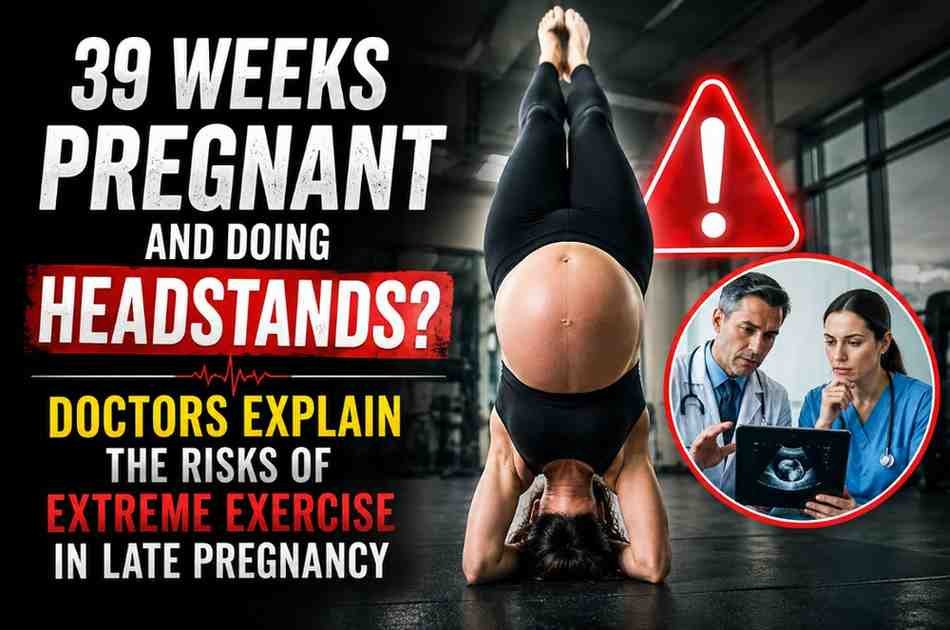
Social media is filled with impressive displays of strength during pregnancy, from weightlifting and marathon training to advanced yoga poses. Recently, a heavily pregnant woman performing headstands at 39 weeks gestation attracted widespread attention online, prompting both admiration and concern.
While maintaining physical activity during pregnancy is generally encouraged, obstetricians and gynaecologists caution that extreme exercises performed in the final stages of pregnancy can carry risks that many people underestimate.
The discussion highlights a growing challenge in modern healthcare: distinguishing between evidence-based prenatal fitness and social media content that may not be appropriate for the average expectant mother.
Can Pregnant Women Exercise? Absolutely.
Medical experts overwhelmingly agree that exercise during pregnancy offers numerous health benefits. Regular physical activity can help improve cardiovascular health, reduce pregnancy-related discomfort, support mental well-being, and prepare the body for labour.
Potential benefits of appropriate prenatal exercise include:
- Improved circulation.
- Better weight management.
- Reduced back pain.
- Lower risk of gestational diabetes.
- Improved mood and stress management.
- Enhanced stamina for labour and delivery.
- Faster postpartum recovery.
However, doctors emphasize that pregnancy is not the time to experiment with new, high-risk activities or push physical limits beyond what is medically advisable.
Why Headstands Raise Concerns at 39 Weeks
At 39 weeks, a pregnancy is considered full term. The body is undergoing significant physical and hormonal changes as it prepares for labour.
During this stage:
- The centre of gravity shifts dramatically.
- Balance becomes less stable.
- Ligaments become more relaxed due to hormonal changes.
- Joint stability decreases.
- The risk of falls increases.
- Fatigue may affect coordination and reaction time.
For these reasons, many gynaecologists caution against activities that involve inversion, balance challenges, or a significant risk of falling.
A headstand may appear controlled and effortless when performed by an experienced practitioner, but even a minor loss of balance could potentially result in injury to the mother and complications for the pregnancy.
The Difference Between an Elite Athlete and the Average Pregnant Woman
One of the biggest misconceptions fueled by social media is the assumption that what is safe for one individual is safe for everyone.
Doctors point out that some women performing advanced exercises during pregnancy may have:
- Years of athletic training.
- Specialized coaching.
- Medical supervision.
- Experience with advanced yoga techniques.
- Pregnancies classified as low risk.
The average pregnant woman may not share these circumstances.
Healthcare providers stress that exercise recommendations must be individualized rather than copied from influencers, celebrities, or viral videos.
Understanding the Risks of Inversions During Late Pregnancy
An inversion is any position where the head is lower than the heart, including headstands, handstands, and certain advanced yoga poses.
While research on inversions during pregnancy remains limited, experts often cite several concerns:
- Increased risk of falls.
- Potential dizziness due to changes in blood circulation.
- Reduced balance from a growing abdomen.
- Greater strain on joints and muscles.
- Potential discomfort from pressure changes.
For women who have never practiced inversions before pregnancy, beginning such exercises in the third trimester is generally discouraged.
What Happens to the Body at 39 Weeks?
The final weeks of pregnancy place unique demands on the body.
| Physical Change | Potential Impact on Exercise |
|---|---|
| Shifted Centre of Gravity | Reduced balance and coordination |
| Relaxed Ligaments | Increased injury risk |
| Weight Gain | Greater joint stress |
| Fatigue | Reduced physical stability |
| Abdominal Enlargement | Restricted movement patterns |
| Preparation for Labour | Increased physical demands on the body |
These changes help explain why exercises that felt manageable earlier in pregnancy may become more challenging as delivery approaches.
The Social Media Effect on Pregnancy Expectations
Pregnancy content has become one of the fastest-growing categories on social media platforms. While many creators share valuable experiences, experts worry that highly visual content can sometimes create unrealistic expectations.
Images of intense workouts, advanced yoga poses, and extraordinary physical achievements may unintentionally pressure women to compare themselves with others.
Doctors emphasize that a healthy pregnancy does not require extraordinary fitness feats.
Walking, swimming, prenatal yoga, and moderate-strength exercises often provide substantial health benefits without exposing women to unnecessary risks.
Warning Signs That Exercise Should Stop Immediately
Healthcare providers advise pregnant women to stop exercising and seek medical attention if they experience:
- Dizziness or faintness.
- Chest pain.
- Shortness of breath before exertion.
- Vaginal bleeding.
- Painful contractions.
- Leakage of amniotic fluid.
- Severe abdominal pain.
- Reduced fetal movement.
These symptoms require prompt evaluation regardless of the type of exercise being performed.
What Exercises Are Generally Considered Safe Near Full Term?
For most women with uncomplicated pregnancies, doctors commonly recommend lower-impact activities.
Examples include:
- Walking.
- Prenatal yoga.
- Swimming.
- Stationary cycling.
- Pelvic floor exercises.
- Gentle stretching.
- Light resistance training approved by a healthcare provider.
These activities can help maintain fitness while minimizing injury risks.
A Comparison: Low-Risk vs Higher-Risk Late-Pregnancy Activities
| Generally Lower Risk | Potentially Higher Risk Near Term |
|---|---|
| Walking | Headstands |
| Prenatal Yoga | Handstands |
| Swimming | Activities with fall risk |
| Stretching | Contact sports |
| Pelvic Floor Exercises | Extreme balance-based exercises |
Risk levels vary depending on individual health conditions, experience, and medical guidance.
The Importance of Personalized Medical Advice
One of the key messages from gynaecologists is that pregnancy fitness should never follow a one-size-fits-all model.
Recommendations depend on factors such as:
- Maternal age.
- Previous fitness level.
- Pregnancy complications.
- Multiple pregnancies.
- Blood pressure status.
- Musculoskeletal health.
- Previous obstetric history.
An exercise routine that is appropriate for one woman may be unsuitable for another.
Why ‘Just Because You Can’ Doesn’t Always Mean ‘You Should’
The viral attention surrounding headstands at 39 weeks reflects a broader cultural fascination with pushing limits. Yet many healthcare professionals argue that late pregnancy is not the ideal time for risk-taking.
The goal of prenatal fitness is not to set records, impress social media audiences, or maintain peak athletic performance. It is to support maternal health and fetal well-being while preparing the body for childbirth.
In medicine, the safest choice is often the most sensible one rather than the most dramatic.
Conclusion
Exercise remains one of the healthiest habits many women can maintain during pregnancy, offering benefits for both mother and baby. However, gynaecologists caution that advanced movements such as headstands at 39 weeks may introduce unnecessary risks, particularly because balance, coordination, and joint stability are significantly altered in late pregnancy.
While experienced athletes may continue modified training under professional supervision, experts stress that social media should never replace individualized medical advice. The safest approach is to choose activities that promote strength, mobility, and overall well-being without increasing the risk of falls or injury.
As doctors often remind expectant mothers, the ultimate goal is not performing the most impressive workout before delivery—it is ensuring the healthiest possible outcome for both mother and child.
For breaking news and live news updates, like us on Facebook or follow us on Twitter and Instagram. Read more on Latest Lifestyle on thefoxdaily.com.




COMMENTS 0