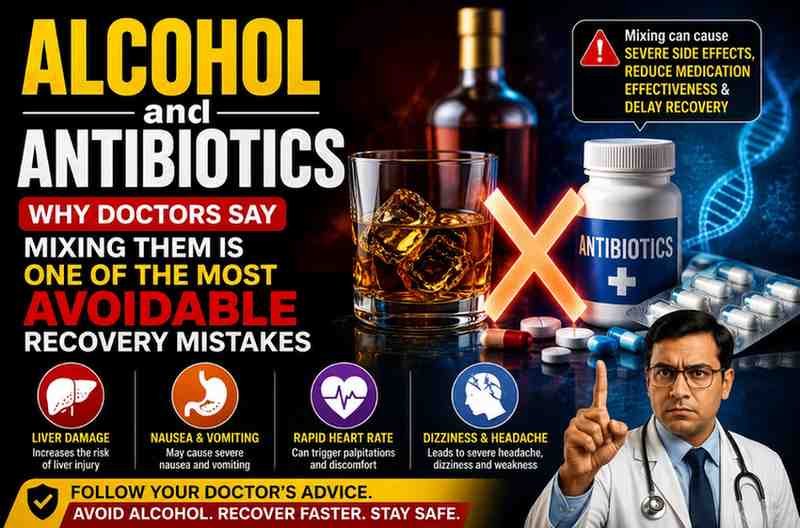
Feeling better after a few days of antibiotics often tempts people to return to normal routines, including social drinking. But according to doctors and pharmacists, combining alcohol with antibiotics is one of the most common and most preventable mistakes patients make during recovery.
While alcohol does not interact dangerously with every antibiotic, healthcare professionals generally recommend avoiding it altogether during treatment. Beyond direct drug interactions, alcohol can impair the body’s ability to fight infection, worsen side effects, and delay healing.
And with certain medications, the consequences can be far more unpleasant than simply waking up with a headache.
Can You Drink Alcohol While Taking Antibiotics?
The answer depends on the antibiotic, but most doctors prefer a cautious approach.
Alcohol does not necessarily cancel the effect of antibiotics. However, it can:
- Increase dizziness and drowsiness.
- Worsen nausea and stomach upset.
- Contribute to dehydration.
- Interfere with sleep and immune function.
- Make it harder for the body to recover from infection.
- Mask symptoms, leading people to think they are fully recovered.
Because the body is already working hard to fight infection, adding alcohol often creates unnecessary stress.
Why Recovery Matters More Than the Medicine Alone
Antibiotics are only one part of the healing process. The body’s immune system, adequate hydration, proper nutrition, and rest all play equally important roles.
Alcohol can undermine these factors by disrupting sleep, reducing appetite, and contributing to dehydration. Even moderate drinking may leave people feeling more fatigued and slow their return to normal Health.
Doctors often emphasize that recovery involves supporting the body—not simply taking pills on schedule.
Which Antibiotics Have Serious Alcohol Interactions?
Some antibiotics are particularly known for causing unpleasant reactions when combined with alcohol.
These include certain medications used to treat bacterial and parasitic infections.
Possible symptoms may include:
- Flushing and redness.
- Severe nausea and vomiting.
- Abdominal cramps.
- Rapid heartbeat.
- Headache.
- Low blood pressure.
- Dizziness and weakness.
These reactions can be intense enough to require medical attention.
Patients should always read medication instructions and follow the advice provided by their healthcare professionals.
Common Side Effects Can Become Worse
Many antibiotics already cause side effects such as:
- Upset stomach.
- Diarrhea.
- Nausea.
- Dizziness.
- Fatigue.
Alcohol can amplify these symptoms, making treatment less comfortable and increasing the likelihood of dehydration.
In practical terms, combining alcohol and antibiotics often means feeling worse rather than better.
Comparison: Recovery With Alcohol vs Recovery Without Alcohol
| During Recovery | Avoiding Alcohol | Consuming Alcohol |
|---|---|---|
| Hydration | Maintained | May worsen dehydration |
| Sleep quality | Improved | Frequently disrupted |
| Energy levels | Better recovery | Greater fatigue |
| Medication side effects | More manageable | Can intensify symptoms |
| Overall healing | Supports immune function | May delay recovery |
The Biggest Myth: “One Drink Won’t Matter”
Many people assume a small amount of alcohol is harmless.
In some cases, a single drink may not cause a dangerous interaction. However, doctors point out that the issue isn’t always toxicity—it is recovery.
Alcohol can affect how patients feel, sleep, hydrate, and tolerate medication. Since illness already places stress on the body, even moderate drinking may prolong symptoms or make side effects more noticeable.
Simply put, recovery and alcohol are rarely good partners.
Why Finishing Antibiotics Is Equally Important
Another common mistake occurs when people stop antibiotics early because they feel better.
Failing to complete the prescribed course may allow bacteria to survive and contribute to antibiotic resistance, a growing global health concern.
Doctors advise:
- Take antibiotics exactly as prescribed.
- Do not skip doses.
- Complete the full course unless instructed otherwise.
- Ask a doctor or pharmacist about alcohol interactions.
- Prioritize hydration and rest.
Following instructions carefully improves treatment effectiveness and reduces complications.
An Insight Competitors Often Miss: Alcohol Affects Recovery Even When It Doesn’t Affect the Drug
Much of the public discussion focuses on whether alcohol chemically interacts with antibiotics.
But doctors increasingly point out that the larger issue is biological recovery.
Fighting infection requires energy, good sleep, hydration, and a properly functioning immune system—all factors that alcohol can compromise.
Even if a particular antibiotic carries no direct warning about alcohol, drinking during illness may still slow the healing process.
In that sense, avoiding alcohol is less about fear and more about giving the body the best chance to recover efficiently.
When Is It Safe to Drink Again?
The answer varies depending on the medication and the infection being treated.
Some antibiotics require avoiding alcohol for a period even after treatment ends. Others may not carry specific restrictions.
The safest approach is to:
- Finish the entire antibiotic course.
- Wait until symptoms have resolved.
- Follow instructions provided by the prescribing doctor.
- Consult a pharmacist if unsure.
Individual circumstances, underlying medical conditions, and the specific medication involved all influence the timeline.
Conclusion
Mixing alcohol and antibiotics is one of the most avoidable mistakes people make during recovery. While not every antibiotic interacts dangerously with alcohol, drinking can worsen side effects, disrupt sleep, contribute to dehydration, and potentially delay healing.
For certain antibiotics, the combination can trigger severe and unpleasant reactions. More importantly, alcohol offers no benefit during illness and may undermine the body’s natural recovery process.
The simplest prescription for most patients is also the most effective: take medications as directed, prioritize rest and hydration, and save the celebratory drink for after recovery not during it.
For breaking news and live news updates, like us on Facebook or follow us on Twitter and Instagram. Read more on Latest Lifestyle on thefoxdaily.com.






COMMENTS 0