Choosing what to eat in Bengaluru can sometimes feel harder than finding something to eat. With countless cafés, bakeries and restaurants competing for attention, food delivery apps offer plenty of choice—but that abundance can create its own problem: decision fatigue.
Luckd is taking a deliberately different approach. Instead of asking users to scroll through menus, compare ratings and decide exactly what they want, the newly launched Bengaluru-focused app offers limited “Drops” containing curated surprise food bags from partner restaurants and bakeries.
The concept is deliberately simple. A participating food business creates a limited number of bags, Luckd makes the Drop available, users receive a notification and can claim one. The exact contents remain a surprise until the bag arrives, although the platform says categories and relevant allergen information are provided before claiming.
That changes the psychology of ordering food. The user is not searching for the perfect item; they are choosing whether to take a chance on a curated food discovery. Luckd describes its model as “not a menu” but a Drop, with limited quantities designed to create urgency and discovery.
What is the Luckd app?
Luckd is a curated food-drop platform launching in Bengaluru. Its model revolves around limited surprise bags from restaurants and bakeries rather than conventional item-by-item ordering.
The platform says its partners are personally reviewed before going live, with the focus on quality, consistency and independent food businesses rather than simply building a catalogue of chains. Its current service is operating in selected Bengaluru neighbourhoods, with HSR Layout identified as the initial delivery area and expansion planned as more partners join.
The idea combines three familiar behaviours: food discovery, limited-time drops and the appeal of surprise.
But the combination produces something different from a standard food-delivery experience. Instead of beginning with a craving and searching for an item, the user begins with curiosity: what has dropped today?
How Luckd’s mystery food bags work
The process has three main stages.
1. A Drop goes live
A participating restaurant or bakery lists a curated bag in limited quantities. The partner decides what goes into the bag, rather than offering users a conventional menu from which every item can be selected.
2. Users receive a notification
Luckd alerts users when a Drop becomes available near them. Because quantities are limited, the experience is intentionally time-sensitive. Once the available bags have been claimed, users have to wait for another Drop.
3. The surprise is revealed
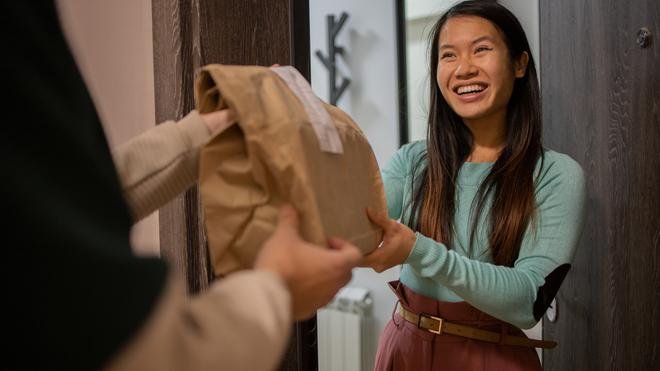
The user knows the food category and relevant information supplied before claiming, but not the precise contents. The bag is then delivered to the customer’s door through Luckd’s delivery partners.
The platform says every Drop is different, making repeat use less about ordering the same favourite dish and more about discovering something unexpected.
Why would anyone want a food order they cannot fully choose?
At first glance, the mystery element seems almost opposite to the direction of food-delivery apps. Most platforms have spent years giving customers more control: more restaurants, more filters, more customisation and increasingly detailed menus.
Luckd is effectively asking whether more choice is always better.
For someone who already knows exactly what they want, a conventional delivery platform makes sense. But for someone staring at dozens of restaurants without knowing what to order, the abundance can become tiring.
Luckd removes part of that decision-making process.
You choose the Drop and the general category, but you surrender the final decision to the restaurant’s curation. That uncertainty becomes part of the product rather than a flaw in it.
It is similar to the appeal of discovering a bakery item you would never have searched for yourself. The platform turns food ordering from a utility into a small daily experience.
The psychology behind the surprise
The mystery-box format works because it combines anticipation with discovery. There is a small amount of uncertainty, but it is constrained by the fact that the user knows the establishment and broad category before claiming the bag.
That distinction matters.
A completely random food order would be difficult to trust. A curated surprise from a reviewed bakery or restaurant is different. The uncertainty is about which items you receive, not whether the food comes from an unknown source.
Luckd’s model therefore depends heavily on trust. If users repeatedly receive bags that feel thoughtfully curated, the surprise becomes enjoyable. If the contents consistently feel like whatever the restaurant could not sell, the novelty could quickly disappear.
That is arguably the central test for the business.
Luckd is not simply another food-delivery app
The distinction becomes clearer when Luckd is compared with conventional food ordering.
| Traditional food delivery | Luckd’s Drop model |
|---|---|
| User searches for a specific restaurant or dish | User discovers a limited food Drop |
| Large menu and extensive choice | Curated category with limited availability |
| User selects individual items | Partner determines the surprise bag |
| Predictability is the priority | Discovery and surprise are part of the experience |
| Ordering is available according to normal menu availability | Drops are limited and can sell out |
| Primary objective is convenience | Convenience is combined with food discovery |
The interesting business problem Luckd is trying to solve
For restaurants and bakeries, the model could create another way to package their food and introduce customers to their businesses.
Instead of asking a new customer to browse a long menu and decide whether to try an unfamiliar establishment, the Drop provides a controlled introduction.
For an independent bakery, for example, a curated bag could allow someone to sample the day’s selection without requiring the customer to understand the entire menu beforehand.
The platform’s partner model is therefore important. Luckd says it personally reviews restaurants and bakeries before they go live, looking for quality, consistency and a genuine interest in food.
That curation can become a competitive advantage if it remains consistent as the platform expands.
But Luckd’s model is different from a conventional surplus-food marketplace
There is an important distinction between a curated surprise bag and a platform built primarily around surplus food.
Some food-rescue services in Bengaluru explicitly connect consumers with unsold food at reduced prices. Their central proposition is food waste reduction and savings. Other platforms also market surplus-food bags as a way for restaurants to recover value from food that might otherwise go unsold.
Luckd’s public positioning is different: it presents itself as a curated food-drop platform focused on discovery, limited availability and surprise. Its website says the partner chooses the contents and that the point is not to function like a conventional menu.
This difference could matter for both consumers and restaurants. The stronger the emphasis on curation and quality, the more Luckd can build a food-discovery identity rather than being perceived simply as a discount marketplace.
Why Bengaluru is a natural testing ground
Bengaluru is particularly suited to experiments in food discovery.
The city has a large ecosystem of independent cafés, bakeries, neighbourhood restaurants and specialty food businesses. Its consumers are also accustomed to discovering new places through digital platforms and social media.
That gives a mystery-food concept a potentially receptive audience.
There is another reason the city makes sense: neighbourhood density. A Drop-based service becomes more useful when several interesting food businesses are located within a practical delivery radius. Luckd’s current focus on selected neighbourhoods allows the company to build that density rather than attempting to cover an entire city immediately.
Its initial operation in HSR Layout reflects that neighbourhood-first approach. The company says additional areas will open as more partners join.
The biggest challenge: the surprise has to feel worth it
The novelty of a mystery bag can attract the first order. Quality determines whether there is a second.
This is where Luckd’s model faces an interesting balancing act.
Restaurants need enough flexibility to create a bag without turning it into an unpredictable collection of leftovers. Customers need enough information to make an informed choice while retaining the element of surprise. And Luckd needs to maintain quality across different partners.
The platform says each Drop lists its category and relevant allergens before a user claims it. That is an important boundary for a product built around surprise: mystery should not mean ignorance about information that could affect a consumer’s decision.
The more consistently Luckd can make the surprise feel curated rather than arbitrary, the stronger its proposition becomes.
Decision fatigue may be Luckd’s most underrated opportunity
Food apps have historically competed by adding options. Luckd is competing, at least partly, by taking options away.
That sounds counterintuitive, but it addresses a real behaviour.
When someone opens a conventional food-delivery app, they may compare cuisines, restaurants, delivery fees, ratings, discounts, portion sizes and reviews before ordering. The ability to choose everything can turn a simple meal into a lengthy decision.
Luckd compresses that process into a much smaller question: Do I want today’s surprise from this place?
That could be particularly appealing for users who enjoy trying new food but do not want to spend time researching it.
The notification is part of the product
Luckd’s Drop model also makes notifications unusually important.
On a traditional food-delivery platform, the user decides when to browse. With Luckd, the platform can tell the user when something interesting becomes available.
That reverses the normal relationship between customer and app.
Instead of opening an app every time you are hungry, you may receive a notification saying a limited Drop has opened nearby. If the concept works, the notification itself becomes a small moment of anticipation.
But this also creates a potential challenge: too many notifications could weaken the sense of discovery. The value lies partly in scarcity. If every notification feels like another generic promotion, the Drop loses its special character.
What could make Luckd successful
Several factors will determine whether the concept becomes a lasting habit rather than a short-lived novelty.
Consistent quality
The surprise should be exciting because the underlying food is good. Curation cannot be sacrificed as the platform adds more partners.
Strong neighbourhood density
Users need enough nearby Drops for the app to remain relevant. A sparse marketplace can quickly become an app people forget to check.
Transparent expectations
Users need to understand what they are buying without destroying the mystery. Category information, allergen disclosures and clear pricing are therefore essential.
Restaurant creativity
The best partners may be those that treat the Drop as a creative format rather than simply a way to package whatever happens to be available.
Repeat discovery
Ultimately, Luckd needs customers to return because they enjoy discovering new food, not merely because they want a one-time bargain.
What Luckd could change about food discovery
If the model succeeds, its biggest impact may not be on food delivery itself but on how people discover independent food businesses.
Traditional restaurant discovery usually starts with a search. A customer looks for pizza, coffee, pastries or a particular cuisine and then chooses a business.
Luckd reverses that sequence.
The business becomes the starting point, while the food becomes the surprise.
That could give smaller restaurants and bakeries an interesting way to introduce themselves to customers who might otherwise never search for them.
It also creates the possibility of turning an ordinary weekday food order into a recurring discovery ritual.
The future: from ordering food to discovering it
The broader opportunity for Luckd lies in positioning itself between food delivery and food discovery.
It is not trying to replace every traditional meal-ordering occasion. If someone wants a specific pizza or knows exactly which coffee they want, a normal menu remains more useful.
Luckd is addressing the opposite situation: when the user wants something good but does not know what that something should be.
That is a narrower proposition, but potentially a more distinctive one.
The company’s decision to begin with a limited Bengaluru footprint is also strategically sensible because the Drop model depends on local density. A handful of strong partners in a compact area may create a better experience than a huge catalogue spread thinly across a city.
What Bengaluru’s food lovers should expect
For consumers, the Luckd experience is likely to feel different from opening a conventional delivery app.
You are not going to the platform primarily to search for a particular dish. You are checking whether there is a Drop worth claiming.
That means the ideal Luckd user is probably someone who enjoys trying new cafés and bakeries, likes a little unpredictability and is comfortable giving up some control in exchange for discovery.
For highly specific dietary needs or someone who wants complete control over every item, the format may be less suitable. The surprise element is central to the experience, not an optional extra.
Conclusion: Luckd is betting that less choice can make food discovery more fun
Luckd’s arrival in Bengaluru represents an interesting counterpoint to the evolution of food-delivery apps. While established platforms have largely competed by giving customers more restaurants, more dishes and more control, Luckd is experimenting with the opposite idea: fewer decisions, limited availability and a surprise at the end.
Its daily Drop model combines curated food bags, notifications and delivery into an experience built around anticipation. The company says its restaurant and bakery partners are personally reviewed, while users receive category and allergen information before claiming a bag.
The concept’s real test will come after the novelty wears off. If the bags consistently feel thoughtful, the food quality remains strong and Bengaluru users discover places they genuinely want to revisit, Luckd could establish a new category of food discovery.
The larger insight is perhaps the simplest one: sometimes the most useful food app is not the one that helps you choose faster, but the one that gives you fewer choices worth making.</
For breaking news and live news updates, like us on Facebook or follow us on Twitter and Instagram. Read more on Latest Lifestyle on thefoxdaily.com.

COMMENTS 0