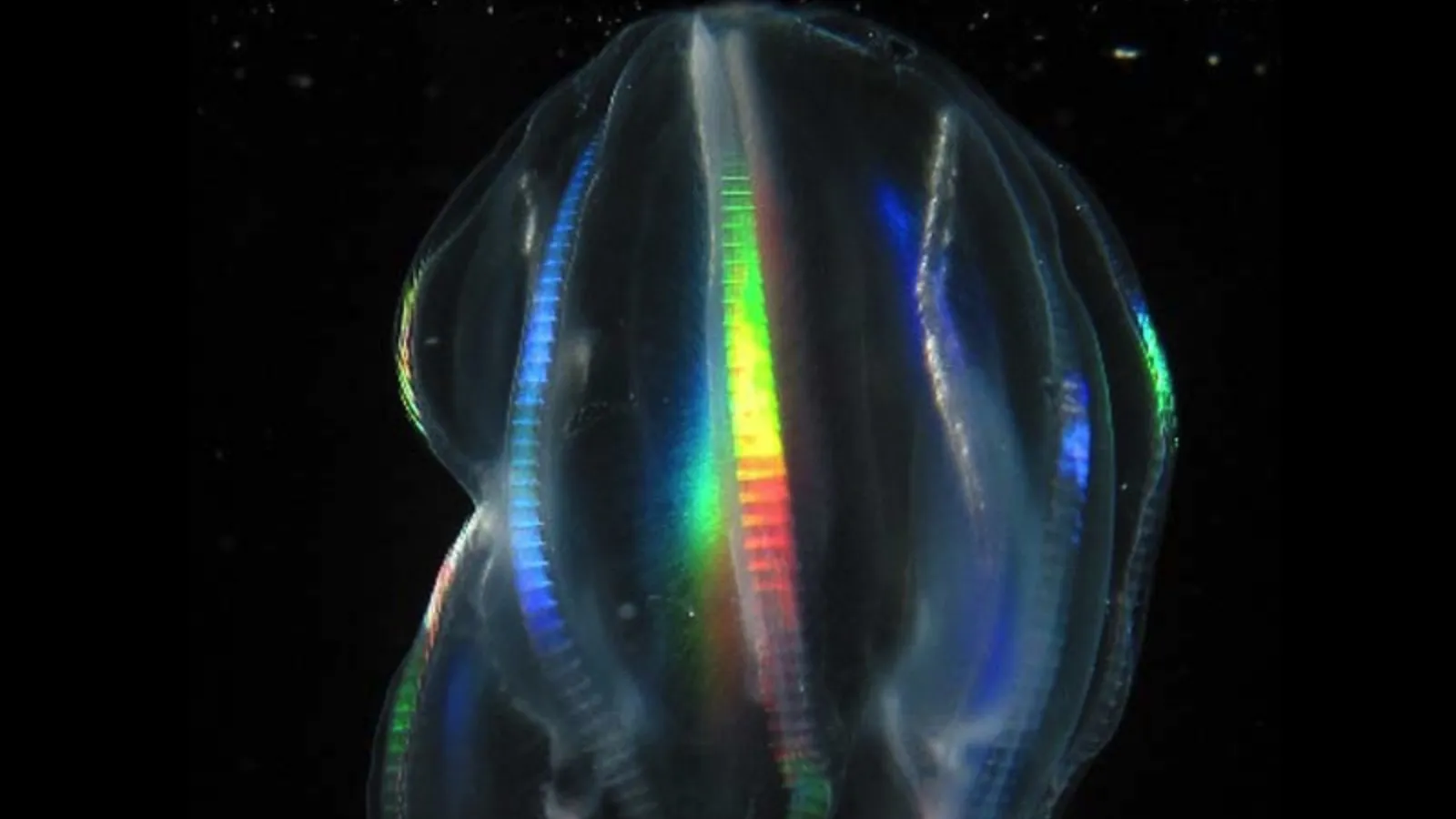
Clytia hemisphaerica Jellyfish Healing Explained: Why This Transparent Jellyfish Can Heal Wounds in Minutes Without Scars
A tiny transparent jellyfish once sent to space by NASA is helping scientists unlock the secrets of rapid tissue repair, offering fresh insights into scar-free healing—even if humans are still a long way from achieving the same remarkable ability.
A scraped knee, a kitchen cut, or a surgical incision all trigger the same biological response in humans: inflammation, tissue repair, and often a permanent scar. While modern medicine has improved wound care significantly, completely scar-free healing remains one of biology’s greatest unsolved puzzles.
That is why scientists are paying close attention to Clytia hemisphaerica, a transparent jellyfish capable of repairing damaged tissue at astonishing speed. According to recent research highlighted by Discover Wildlife, this small marine organism can seal minor wounds within minutes and larger injuries in less than an hour—without producing scar tissue.
The discovery has generated excitement not because it promises an immediate medical breakthrough, but because it offers researchers an unusually clear window into one of nature’s oldest and most efficient repair systems. Experts believe studying this jellyfish could deepen our understanding of wound healing, tissue regeneration, inflammation, and even the future of regenerative medicine.
Adding another fascinating chapter to its scientific legacy, the same species was among thousands of baby jellyfish launched aboard NASA’s Space Shuttle Columbia in 1991 to investigate how microgravity affects the development of gravity-sensing organs. Decades later, it continues contributing to Science—this time from the perspective of regenerative biology.
Quick Facts: Why Is Clytia hemisphaerica Making Headlines?
| Feature | Details |
|---|---|
| Scientific Name | Clytia hemisphaerica |
| Habitat | Marine coastal waters |
| Unique Ability | Rapid wound healing without scar formation |
| Healing Time | Minutes for small wounds; under an hour for larger injuries |
| Scientific Importance | Helps researchers study ancient tissue repair mechanisms |
| NASA Connection | Baby jellyfish flew aboard Space Shuttle Columbia in 1991 |
What Makes This Jellyfish Different?
Unlike most animals, Clytia hemisphaerica repairs injuries rapidly while maintaining the original structure of its tissues. There is no thick scar, no prolonged inflammation, and no visible reminder that the wound ever existed.
According to zoologist Heris Patel, Assistant Professor at Hemchandracharya North Gujarat University, the speed of healing is only one part of the story. What truly fascinates scientists is how organized the repair process is.
Instead of relying on emergency scar formation, the jellyfish restores damaged tissue using coordinated cellular movement that resembles a carefully choreographed biological repair team.
How Does the Jellyfish Heal So Quickly?
The healing process occurs in two remarkably coordinated stages.
Stage 1: Cells Crawl Across the Wound
Immediately after injury, cells surrounding the damaged area extend tiny finger-like projections. These structures grip nearby surfaces and pull the cells forward, allowing living tissue to spread rapidly across the wound.
Rather than filling the gap with replacement material, existing tissue physically migrates to restore continuity.
Stage 2: The Tissue Tightens Like a Drawstring
Once the wound is covered, a ring of contractile fibres forms around the injury.
These fibres contract much like the drawstring of a bag, gently pulling the tissue together until the wound is completely sealed.
This elegant combination of cellular crawling followed by tissue contraction enables remarkably efficient healing while preserving normal tissue architecture.
Why Don’t Humans Heal This Way?
The biggest difference lies in biological priorities.
Human bodies evolved to survive injuries in environments full of bacteria, viruses, and other pathogens. As a result, preventing infection takes priority over cosmetic perfection.
Whenever skin is damaged, the immune system launches an inflammatory response designed to:
- Stop bleeding quickly.
- Prevent microbial infection.
- Remove damaged cells.
- Begin rebuilding tissue.
Although this response saves lives, it also stimulates fibroblasts to produce large amounts of collagen. Instead of rebuilding the original skin perfectly, the body constructs a strong biological patch—what we recognize as scar tissue.
Scars therefore represent a survival strategy rather than a biological mistake.
The Surprising Human Comparison: Babies Before Birth
Interestingly, adult humans are not entirely incapable of scar-free healing.
Early-stage fetuses possess an extraordinary regenerative ability remarkably similar to that seen in the jellyfish.
Before birth, wounds can heal almost perfectly because inflammation remains minimal and tissues regenerate rather than forming thick fibrous scars.
As development progresses, however, the immune system becomes increasingly aggressive, shifting the balance toward rapid protection instead of flawless repair.
This comparison is one reason researchers find jellyfish particularly valuable. They provide a living model of efficient regeneration without excessive inflammatory interference.
The Role of Inflammation: Friend and Foe
Inflammation is essential for survival.
Without it, even minor injuries could become life-threatening infections.
However, inflammation also creates unintended consequences:
- Excess collagen production.
- Permanent scar formation.
- Reduced flexibility in repaired tissue.
- Longer healing times.
- Potential chronic inflammation.
The transparent jellyfish largely avoids this inflammatory cascade, allowing scientists to observe pure tissue repair mechanisms that are often hidden in more complex animals.
Why Scientists Love Transparent Animals
One of the greatest advantages of Clytia hemisphaerica is that its body is almost entirely transparent.
This allows researchers to observe living cells responding to injury under a microscope in real time.
Unlike studies involving mammals, there is no need to rely solely on tissue samples collected after healing has already occurred.
Scientists can literally watch:
- Individual cells migrate.
- Tissues reorganize.
- Contractile fibres form.
- The wound close minute by minute.
Few research organisms provide this level of visual clarity.
NASA’s Unexpected Contribution to Jellyfish Science
The transparent jellyfish has another remarkable claim to fame.
In 1991, NASA sent more than 2,000 baby jellyfish aboard Space Shuttle Columbia.
The mission aimed to understand how microgravity affects the development of gravity-sensing organs.
Because jellyfish use specialized structures to detect orientation in water, they became valuable biological models for understanding how living organisms adapt to space environments.
Although those experiments focused on space biology rather than wound healing, they helped establish the jellyfish as an important laboratory species that continues contributing to scientific discoveries decades later.
How Ancient Is This Healing Strategy?
Jellyfish belong to one of Earth’s oldest animal lineages.
They evolved hundreds of millions of years before mammals appeared.
This makes their biology especially valuable.
If researchers discover repair mechanisms shared between jellyfish and humans, it suggests those cellular tools evolved extremely early in animal history and have been preserved throughout evolution.
Rather than inventing new healing machinery, humans may simply regulate ancient mechanisms differently.
Could This Lead to Scar-Free Medicine?
This is perhaps the most exciting—and most misunderstood—aspect of the research.
While headlines often imply that jellyfish could directly revolutionize medicine, experts urge caution.
According to Heris Patel, humans already possess many of the same cellular movements observed in jellyfish.
The challenge is not the absence of these mechanisms.
The challenge is that inflammation and scar formation overpower them during adult wound healing.
Future therapies are therefore more likely to focus on controlling inflammation or guiding tissue regeneration rather than introducing “jellyfish cells” into patients.
Potential Medical Applications Being Explored
Although practical treatments remain years away, understanding scar-free healing could eventually influence several fields.
| Medical Area | Possible Future Impact |
|---|---|
| Plastic surgery | Reduced postoperative scarring |
| Burn treatment | Improved skin regeneration |
| Orthopedic surgery | Better tissue repair after injury |
| Regenerative medicine | Enhanced natural healing pathways |
| Cosmetic dermatology | Advanced scar-reduction therapies |
These possibilities remain speculative but scientifically plausible if researchers continue identifying the molecular pathways involved.
What This Discovery Teaches Beyond Medicine
The story of Clytia hemisphaerica demonstrates an important principle in biology: seemingly simple organisms often hold answers to some of science’s biggest questions.
Many revolutionary discoveries have emerged from studying unexpected species.
Research involving fruit flies, zebrafish, yeast, bacteria, and jellyfish has transformed genetics, neuroscience, developmental biology, and medicine.
The transparent jellyfish now joins that list as scientists seek deeper understanding of tissue regeneration.
Comparison: Human Healing vs Jellyfish Healing
| Feature | Humans | Clytia hemisphaerica |
|---|---|---|
| Healing speed | Days to weeks | Minutes to under an hour |
| Inflammation | High | Minimal |
| Scar formation | Common | Absent |
| Main priority | Prevent infection | Rapid tissue restoration |
| Tissue outcome | Repair with collagen scar | Regeneration of normal tissue |
Why This Research Matters Now
Chronic wounds, surgical scars, burns, and tissue damage affect millions of people worldwide every year.
Healthcare systems spend billions managing complications associated with poor wound healing.
Even small improvements in understanding natural repair mechanisms could eventually influence future therapies for trauma patients, surgical recovery, dermatology, and regenerative medicine.
While no one should expect a “jellyfish healing cream” anytime soon, discoveries like these expand the scientific foundation needed to develop safer and more effective treatments.
Future Outlook
The transparent jellyfish is unlikely to become tomorrow’s miracle medicine, but it represents something equally valuable: a biological blueprint that scientists are only beginning to understand.
Future research will focus on identifying the genes, proteins, and signalling pathways responsible for its extraordinary regenerative abilities. As technologies such as live-cell imaging, gene editing, and molecular biology continue advancing, researchers may uncover ways to encourage cleaner tissue repair in humans without compromising the body’s natural defenses.
The journey from laboratory discovery to clinical treatment is often measured in decades rather than years. Nevertheless, every major medical breakthrough begins with understanding basic biology, and Clytia hemisphaerica is proving that even one of the ocean’s smallest creatures can reshape how scientists think about healing.
Conclusion
The remarkable healing ability of Clytia hemisphaerica offers far more than a fascinating biological curiosity. It provides researchers with a rare opportunity to observe scar-free tissue repair in one of nature’s oldest animals, revealing cellular mechanisms that have existed for hundreds of millions of years.
Although humans cannot yet replicate this process, studying the transparent jellyfish could ultimately improve our understanding of wound healing, inflammation, and regenerative medicine. Rather than promising instant medical miracles, the discovery represents an important step toward uncovering how nature achieves rapid, efficient, and nearly perfect tissue repair—knowledge that may one day help transform the future of human healthcare.
For breaking news and live news updates, like us on Facebook or follow us on Twitter and Instagram. Read more on Latest Lifestyle on thefoxdaily.com.






COMMENTS 0