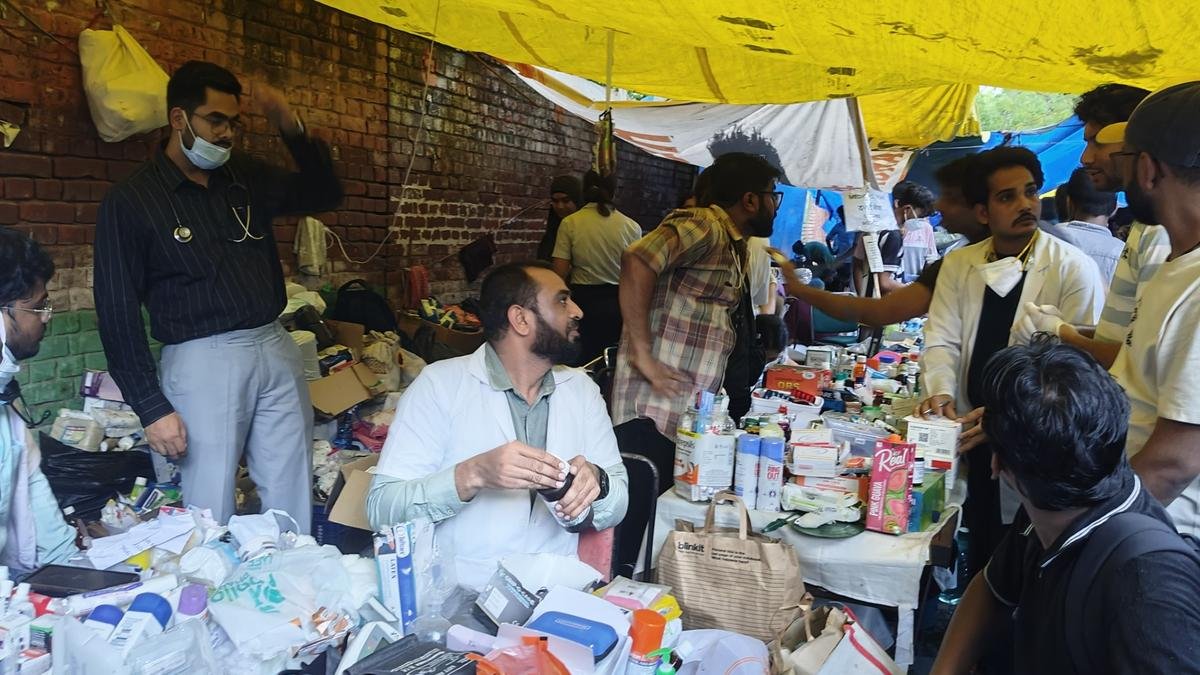
According to the volunteer medical teams, hundreds of protesters have received treatment ranging from minor wounds and dehydration to more serious injuries requiring referral to hospitals. Beyond emergency care, the initiative reflects how healthcare professionals can provide humanitarian medical assistance during large public gatherings while helping ensure timely access to basic healthcare services.
Free Clinics Offer Immediate Medical Assistance
The temporary clinics have been established inside makeshift shelters at the protest site, where volunteer doctors, physiotherapists, nurses, and other healthcare workers provide medical assistance throughout the day.
Individuals visiting the clinics receive treatment for:
- Minor injuries.
- Cuts and bruises.
- Body pain.
- Dehydration.
- Headaches.
- Fever and common illnesses.
The services are provided free of cost using donated medicines and medical supplies.
Medical Supplies Donated by Volunteers
Despite operating from temporary structures, the clinics are equipped with essential diagnostic tools and first-aid materials.
Available supplies reportedly include:
- Paracetamol.
- Pain relief medicines.
- Antiseptic solutions.
- Bandages and dressings.
- Sanitary pads.
- Oral Rehydration Solution (ORS).
- Blood pressure monitor.
- Pulse oximeter.
- Thermometers.
Most of the equipment and medicines have been donated by volunteers and members of the public supporting the medical initiative.
| Medical Resource | Purpose |
|---|---|
| Blood pressure monitor | Monitoring cardiovascular Health |
| Pulse oximeter | Checking oxygen saturation |
| Thermometer | Detecting fever |
| ORS | Treating dehydration |
| First-aid medicines | Managing minor injuries and pain |
Volunteer Doctors Treating Injury Cases
Medical volunteers reported that a significant number of patients sought treatment for injuries sustained during recent events at the protest site.
Healthcare professionals assessed wounds, applied dressings, managed pain, and advised patients when hospital evaluation appeared necessary.
In several cases, doctors reportedly encouraged individuals with suspected fractures or serious soft tissue injuries to seek advanced medical care.
Encouraging Patients to Seek Hospital Treatment
Volunteer healthcare workers emphasized that temporary clinics are designed primarily for first aid and basic medical support.
Patients showing signs of more serious conditions were advised to visit hospitals for:
- X-rays.
- Orthopedic evaluation.
- Emergency treatment.
- Advanced wound care.
- Further diagnostic testing.
Early medical assessment is particularly important when fractures or internal injuries are suspected.
Managing Common Health Problems During Protests
In addition to injury management, doctors also treated many participants experiencing routine health issues associated with spending extended periods outdoors.
Common complaints included:
- Dehydration.
- Headaches.
- Fatigue.
- Fever.
- Common cold symptoms.
- General body aches.
Providing timely care for these conditions helps reduce the risk of more serious medical complications.
The Role of Volunteer Healthcare Professionals
The clinics have been supported by doctors from different medical specialties as well as physiotherapists, nurses, and other healthcare volunteers.
Some volunteers reportedly travelled from different cities and took leave from their regular work to provide medical assistance at the protest site.
Their participation highlights the role healthcare professionals can play in community service during large public events.
Why First-Aid Clinics Are Important at Large Gatherings
Temporary medical camps are commonly established during large public events, religious gatherings, sporting events, and demonstrations to provide immediate healthcare access.
Their benefits include:
- Rapid treatment of minor injuries.
- Early identification of serious medical conditions.
- Reduced burden on nearby hospitals.
- Health education.
- Emergency referral when needed.
Such services help improve overall public health preparedness during mass gatherings.
| Service Provided | Benefit |
|---|---|
| First aid | Immediate treatment of injuries |
| Health screening | Identifies patients needing further care |
| ORS distribution | Prevents dehydration |
| Pain management | Provides symptomatic relief |
| Hospital referrals | Ensures advanced medical treatment when required |
Challenges Faced by Volunteer Medical Teams
Providing healthcare in temporary outdoor settings presents unique logistical challenges.
Medical volunteers often work with limited space while ensuring:
- Patient privacy.
- Safe medicine storage.
- Continuous medical supplies.
- Proper sanitation.
- Efficient patient flow.
Effective coordination among volunteers is essential to maintain quality care under such circumstances.
Public Support Through Donations
The operation of the clinics has been made possible largely through public contributions.
Community members have donated medicines, diagnostic equipment, medical consumables, and other essential supplies needed to continue providing free treatment.
Such community-driven healthcare initiatives often rely on sustained volunteer participation and resource sharing.
The Importance of Timely Medical Attention
Healthcare professionals consistently encourage individuals with injuries to seek prompt medical evaluation.
Early treatment can:
- Reduce complications.
- Promote faster recovery.
- Prevent infection.
- Identify hidden injuries.
- Improve long-term outcomes.
Even injuries that initially appear minor may require professional assessment if symptoms worsen.
Community Healthcare Beyond Hospitals
The volunteer clinics demonstrate how community-based healthcare initiatives can complement existing medical infrastructure during periods of increased public need.
While they do not replace hospitals or emergency departments, such services can provide accessible first-line care and facilitate timely referrals when necessary.
They also illustrate the important role that volunteerism can play in supporting public health during large gatherings.
Conclusion
The free medical clinics operating at Jantar Mantar highlight the dedication of volunteer doctors, nurses, physiotherapists, and community members committed to providing essential healthcare services during a large public gathering. Equipped through public donations and staffed by medical professionals, the clinics have offered first aid, basic treatment, health monitoring, and referrals for individuals requiring more advanced medical care.
Beyond addressing immediate health needs, the initiative underscores the value of community-led healthcare, timely medical intervention, and professional volunteerism. As large public events continue to present unique healthcare challenges, accessible medical support remains an important component of safeguarding the well-being of participants and ensuring prompt attention to those in need.
For breaking news and live news updates, like us on Facebook or follow us on Twitter and Instagram. Read more on Latest Health on thefoxdaily.com.





COMMENTS 0