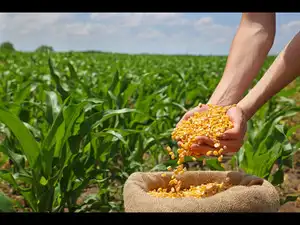
Maize is emerging as an increasingly important crop in India’s efforts to diversify its energy sources, reduce dependence on imported fuels and strengthen agricultural supply chains. Once primarily associated with poultry feed and food products, the grain is now gaining attention as a key raw material for Ethanol production, with potential applications in sustainable aviation fuel as well.
The growing interest in maize reflects a wider shift in India’s energy and agricultural priorities. As the country seeks alternatives to conventional fossil fuels, agricultural commodities are becoming part of the conversation around Energy Security. However, the expansion of demand also raises an important question: can Indian farmers produce enough maize without creating pressure on food supplies, feed manufacturers and agricultural markets?
Why maize is becoming strategically important for India
Maize has traditionally served several purposes in India’s agricultural economy. It is used in poultry and livestock feed, food processing and industrial applications. Its role is now expanding as ethanol producers increasingly look towards grain-based feedstocks.
Ethanol can be blended with petrol to reduce the use of conventional fossil fuels. For India, expanding domestic ethanol production offers an opportunity to diversify its fuel supply and create additional demand for agricultural produce.
Maize is particularly relevant because it can be processed into ethanol and integrated into existing biofuel production chains. A larger domestic supply could support fuel production while creating another market for farmers beyond traditional food and feed buyers.
Maize and India’s push to reduce fuel import dependence
India depends heavily on imported crude oil to meet its energy requirements. This exposes the economy to changes in international oil prices, geopolitical disruptions and fluctuations in the value of the rupee.
When crude oil prices rise, India’s import bill can increase, putting pressure on the country’s external finances and currency. Greater use of domestically produced ethanol could help reduce a portion of petrol demand and limit exposure to imported petroleum products.
Maize-based ethanol is therefore relevant not only to the agricultural sector but also to India’s broader energy security strategy. If domestic production expands sustainably, it could help build a stronger connection between farmers and the country’s fuel supply chain.
However, ethanol cannot replace crude oil across the entire energy system. Its contribution depends on blending requirements, production capacity, feedstock availability and the economics of processing.
How maize demand could benefit Indian farmers
Growing demand from ethanol producers could create an additional market for maize farmers. Traditionally, producers have depended on demand from food processors, poultry feed manufacturers and other industrial buyers. A larger biofuel market could diversify these demand sources.
More buyers can potentially improve market opportunities for farmers, particularly in regions where maize cultivation is already established. It may also encourage investment in better seeds, irrigation, storage and post-harvest infrastructure.
Yet higher industrial demand does not automatically translate into higher or more stable farm incomes. The benefits will depend on procurement arrangements, market prices, transportation costs and the ability of farmers to meet quality requirements.
Farmers will also need access to reliable buyers and transparent pricing mechanisms. Without these, increased demand could benefit intermediaries and processors more than agricultural producers.
The challenge of balancing fuel, food and animal feed
One of the biggest questions surrounding India’s maize expansion is how to manage competing uses of the crop. Maize is an important ingredient in poultry and livestock feed, making it a critical part of the food supply chain.
If ethanol producers compete aggressively for the same supply, feed manufacturers could face higher raw material costs. These increases may eventually affect poultry production expenses and the prices of products such as eggs and chicken.
Food processors could also face greater competition for available grain. This makes the expansion of maize-based ethanol production dependent on a corresponding increase in agricultural output rather than simply redirecting existing supplies towards fuel.
A sustainable strategy would therefore need to account for the requirements of the energy, food and animal-feed industries simultaneously.
Can Indian agriculture meet rising maize demand?
Expanding maize production will require improvements across the agricultural value chain. Higher productivity, better-quality seeds, efficient farming practices and reliable access to irrigation could help increase output without requiring a proportionate expansion in cultivated land.
Storage and transportation infrastructure will also play an important role. Maize needs to be handled and stored properly to maintain quality and reduce post-harvest losses. Weak storage facilities can limit the amount of grain available to processors throughout the year.
In addition, farmers need better access to market information and predictable demand. Long-term procurement arrangements between producers, cooperatives and industrial buyers could help reduce uncertainty and encourage investment in cultivation.
Climate conditions remain another consideration. Changes in rainfall patterns, heat stress and water availability can affect crop yields. Any major increase in maize production will need to account for regional differences in agricultural conditions and resource availability.
Maize could support India’s future aviation fuel ambitions
Beyond road transport, agricultural feedstocks are also attracting attention in discussions about sustainable aviation fuel. The aviation sector faces a difficult challenge because conventional aircraft depend on energy-dense liquid fuels, making direct electrification more complicated than in passenger vehicles.
Sustainable aviation fuel offers one possible route to reducing emissions from air travel. Depending on the production pathway, agricultural materials and other renewable feedstocks can be used to manufacture alternative aviation fuels.
Maize could form part of the wider feedstock conversation, although its suitability depends on the conversion technology, production economics and sustainability requirements. Producing aviation fuel from agricultural resources at commercial scale would require substantial investment and technological development.
It is also important to distinguish between ethanol blending in petrol and sustainable aviation fuel. They are separate fuel pathways with different technical specifications, production processes and regulatory requirements. Growth in maize-based ethanol does not automatically mean that the same production capacity can supply aircraft fuel.
Investment and infrastructure will determine the pace of expansion
India’s ability to turn maize into a dependable energy resource will depend on more than crop production. Ethanol plants need adequate processing capacity, access to feedstock and reliable transportation networks.
Investment in grain handling, storage facilities and processing technology could help connect agricultural producers with industrial consumers. Better coordination between farmers, state governments, ethanol manufacturers and fuel companies will also be important.
Policy stability matters as well. Farmers and businesses are more likely to make long-term investments when procurement rules, blending targets and pricing arrangements provide a predictable operating environment.
What India’s maize strategy means for the economy
The growing importance of maize connects three major economic priorities: energy security, foreign-exchange management and rural income generation. Domestic ethanol production could help reduce some dependence on imported petroleum, while additional demand for maize could create opportunities for farmers and agricultural businesses.
However, these potential gains depend on whether agricultural production can expand efficiently. If demand grows faster than supply, competition between fuel producers, food processors and feed manufacturers could push up prices and create new challenges for the wider economy.
India’s maize strategy will therefore need to focus on productivity rather than demand alone. Better farming practices, improved infrastructure, sustainable water use and dependable market access will determine whether the country can support a larger biofuel industry without putting excessive pressure on food and feed supplies.
The road ahead: Turning agricultural demand into energy security
Maize is becoming more than an ordinary agricultural commodity in India’s economic planning. Its expanding role in ethanol production and its potential relevance to future aviation fuels give the crop strategic importance across multiple sectors.
But the success of this shift will not be measured only by how much maize the country can convert into fuel. It will also depend on whether farmers receive meaningful economic benefits, food and feed supplies remain stable, and production expands without placing unsustainable pressure on land and water resources.
India’s bet on maize could strengthen the link between agriculture and energy. The real test will be whether the country can build enough agricultural capacity to support that ambition while keeping the interests of farmers, consumers and the energy industry in balance.
For breaking news and live news updates, like us on Facebook or follow us on Twitter and Instagram. Read more on Latest Business on thefoxdaily.com.






COMMENTS 0