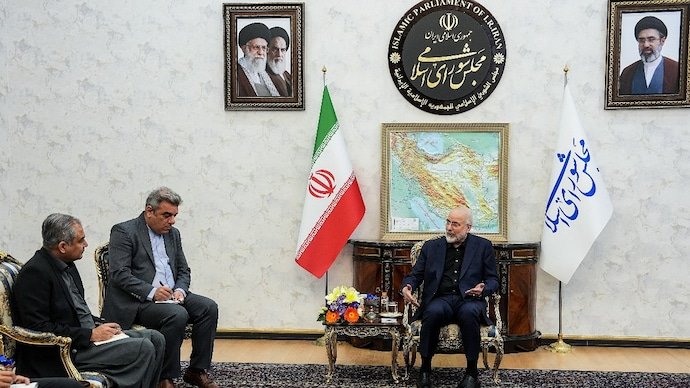
As diplomatic momentum builds following the recently signed US-Iran Memorandum of Understanding (MoU), Pakistan has moved into an unexpectedly influential position in regional politics. The unannounced visit of Pakistan Interior Minister Mohsin Naqvi to Iran has drawn attention not only because of its timing but also because it underscores Islamabad’s expanding role in efforts to stabilize a region that has witnessed months of conflict, economic disruption, and geopolitical uncertainty.
Naqvi’s trip marks the first known visit by a senior Pakistani official to Iran since Washington and Tehran agreed to a framework designed to reduce tensions and create conditions for broader negotiations. While Pakistani authorities have remained largely silent about the details, reports indicate that discussions are likely focused on the next phase of US-Iran engagement, regional security arrangements, and the implementation of commitments outlined in the memorandum.
The visit comes at a crucial moment when global energy markets, regional governments, and international investors are closely monitoring whether the fragile diplomatic breakthrough can evolve into a lasting peace framework.
Why Mohsin Naqvi’s Iran Visit Matters
On the surface, the visit may appear to be a routine diplomatic engagement. However, its strategic significance extends far beyond bilateral relations between Pakistan and Iran.
Several factors make the trip particularly important:
- It follows the signing of a US-Iran memorandum aimed at reducing regional tensions.
- Pakistan reportedly played a mediation role during negotiations.
- Islamabad is considered a guarantor of certain aspects of the agreement.
- The next phase of technical negotiations is expected to begin soon.
- Regional stability remains critical for global Energy Security.
In diplomatic terms, timing often communicates as much as official statements. Naqvi’s presence in Iran during this sensitive phase suggests Pakistan intends to remain actively involved in the peace process rather than simply serving as a facilitator during the initial negotiations.
Background: The US-Iran Memorandum of Understanding
The diplomatic breakthrough between the United States and Iran emerged after months of regional instability, military escalation, and disruptions to global energy supplies.
The agreement established a framework designed to:
- Reduce military tensions.
- Create a structured negotiation process.
- Address nuclear-related concerns.
- Restore confidence-building measures.
- Facilitate the resumption of critical shipping routes.
One of the most immediate consequences of the agreement was the reopening of the Strait of Hormuz, a maritime corridor that serves as one of the world’s most important energy chokepoints.
The memorandum also created a 60-day negotiation period intended to develop a more comprehensive and durable arrangement between Washington and Tehran.
The Strategic Importance of the Strait of Hormuz
The success or failure of the current diplomatic process has implications that extend far beyond the Middle East.
The Strait of Hormuz remains one of the most strategically important waterways in the global Economy.
Its significance stems from:
- Massive daily oil shipments.
- Global natural gas transportation.
- Energy security for Asia and Europe.
- Supply chains affecting global trade.
- Influence on fuel prices worldwide.
Any disruption in the strait immediately affects energy markets, inflation expectations, shipping costs, and economic confidence.
As a result, governments around the world have a vested interest in ensuring that diplomatic progress between the United States and Iran continues.
Pakistan’s Evolution from Observer to Mediator
For decades, Pakistan has maintained relationships with both Western powers and neighboring Muslim-majority states. However, its role in regional Diplomacy has often been constrained by competing strategic interests.
The recent negotiations appear to represent a significant shift.
Rather than remaining a passive observer, Islamabad has increasingly positioned itself as a bridge between rival powers.
Pakistan’s involvement reportedly included:
- Facilitating communication channels.
- Reducing diplomatic misunderstandings.
- Supporting confidence-building efforts.
- Helping maintain dialogue during periods of tension.
- Providing guarantees for aspects of the negotiation framework.
If successful, this role could enhance Pakistan’s diplomatic standing internationally and strengthen its influence within regional security discussions.
Why Iran Values Pakistan’s Involvement
Iran and Pakistan share a long border, significant economic interests, and a mutual desire for regional stability.
Although relations have occasionally faced challenges, both countries recognize the strategic benefits of cooperation.
For Tehran, Pakistan offers several advantages as a mediator:
- Geographic proximity.
- Established diplomatic channels.
- Influence within the Muslim world.
- Working relationships with Western governments.
- Interest in preventing regional conflict.
These factors make Pakistan a potentially useful intermediary during periods of heightened geopolitical tension.
The Switzerland Talks: The Next Crucial Stage
Attention is now turning toward the expected technical-level negotiations that could determine whether the memorandum evolves into a broader agreement.
Diplomatic sources indicate that Switzerland is expected to host the next phase of discussions.
Key issues likely to dominate negotiations include:
- Nuclear oversight mechanisms.
- Verification procedures.
- Sanctions-related discussions.
- Regional security arrangements.
- Long-term confidence-building measures.
These talks are expected to be significantly more complex than the initial political agreement because they involve technical details, verification standards, and implementation mechanisms.
Mohsin Naqvi’s Emerging Diplomatic Profile
Although primarily known as Pakistan’s Interior Minister, Mohsin Naqvi has increasingly become involved in strategic diplomatic engagements.
Reports suggest he played a role in multiple diplomatic initiatives preceding the current agreement.
His repeated engagements with Iranian officials and Western diplomats indicate that his responsibilities may extend beyond traditional domestic security matters.
The Iran visit reinforces perceptions that Naqvi has become an important figure within Pakistan’s broader geopolitical strategy.
What Success Would Mean for Pakistan
If the US-Iran peace process advances successfully, Pakistan could emerge as one of its biggest diplomatic beneficiaries.
Potential gains include:
- Enhanced international credibility.
- Greater regional influence.
- Stronger economic partnerships.
- Improved investment confidence.
- Expanded diplomatic leverage.
Successful mediation often elevates a country’s global standing by demonstrating its ability to contribute constructively to international stability.
Comparison: Traditional Diplomacy vs Modern Mediation Diplomacy
| Traditional Diplomacy | Mediation Diplomacy |
|---|---|
| Focuses on bilateral interests | Focuses on conflict resolution |
| Limited involvement in disputes | Active facilitation role |
| Protects national priorities | Builds regional consensus |
| Often reactive | Proactively shapes outcomes |
| Diplomatic engagement only | Political, economic and security coordination |
An Overlooked Insight: The Energy Security Dimension
Much of the discussion surrounding the US-Iran agreement has focused on Geopolitics and security. However, the energy dimension may ultimately prove even more significant.
Global economies remain highly sensitive to energy price fluctuations.
Periods of instability in the Gulf region often trigger:
- Higher fuel costs.
- Inflationary pressure.
- Supply-chain disruptions.
- Reduced consumer spending.
- Slower economic growth.
By helping maintain dialogue between key stakeholders, Pakistan is indirectly contributing to broader economic stability that affects countries far beyond the Middle East.
This economic angle is often overlooked but could ultimately become one of the most important outcomes of the mediation effort.
Challenges Facing the Peace Process
Despite recent optimism, substantial obstacles remain.
Diplomatic agreements reached during periods of crisis frequently encounter difficulties during implementation.
Potential challenges include:
- Political opposition within participating countries.
- Regional security incidents.
- Disagreements over verification procedures.
- Domestic political pressures.
- Competing geopolitical interests.
Maintaining momentum over the next several weeks will be critical if negotiators hope to convert preliminary understandings into lasting agreements.
Why Global Markets Are Watching Closely
Financial markets have reacted positively to signs of de-escalation, particularly in energy markets.
Investors generally view diplomatic stability as supportive of:
- Lower energy volatility.
- Improved trade conditions.
- Reduced geopolitical risk.
- Greater investment confidence.
- More predictable economic growth.
As negotiations progress, market participants will continue monitoring developments for signals regarding the durability of the emerging framework.
Future Outlook
The coming weeks could prove decisive for both the US-Iran agreement and Pakistan’s role within it. If technical talks proceed successfully, Islamabad may solidify its reputation as a credible mediator capable of facilitating dialogue in one of the world’s most complex geopolitical regions.
However, sustaining peace will require more than diplomatic symbolism. Negotiators must address difficult technical, political, and security issues while maintaining trust among all parties involved.
Should the process continue moving forward, Pakistan’s involvement could become a case study in how middle powers can influence major international negotiations through persistent diplomacy and strategic engagement.
Conclusion
Mohsin Naqvi’s surprise visit to Iran reflects far more than routine diplomatic engagement. It highlights Pakistan’s increasingly important role in shaping a fragile but potentially transformative peace process between the United States and Iran.
As negotiations advance and technical discussions begin, Islamabad finds itself in an influential position as both mediator and guarantor. The success of these efforts could strengthen regional stability, support global energy security, and elevate Pakistan’s diplomatic standing on the international stage.
Whether the current momentum leads to a durable agreement remains uncertain. What is clear, however, is that Pakistan has emerged as a key player in one of the most consequential geopolitical developments of the year.
For breaking news and live news updates, like us on Facebook or follow us on Twitter and Instagram. Read more on Latest World on thefoxdaily.com.





COMMENTS 0