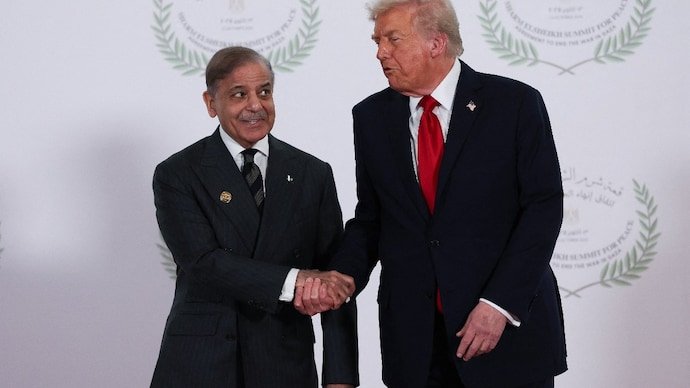
The latest development in Pakistan-US relations has drawn international attention after Pakistan President Asif Ali Zardari sent a diplomatic letter to US President Donald Trump calling for deeper and more structured engagement between the two countries. While congratulating the United States on the 250th anniversary of the Declaration of Independence, Zardari used the occasion to advocate for expanding cooperation in strategic sectors including Energy Security, Trade, investment, defence, and counter-terrorism.
WHO initiated the outreach? President Asif Ali Zardari. What was proposed? A structured framework to strengthen Pakistan-US cooperation across multiple sectors while enhancing regional diplomatic coordination. When? The letter coincided with celebrations marking the United States’ 250th Independence anniversary. Where? The diplomatic communication was sent from Islamabad to Washington. Why is it significant? It signals Pakistan’s interest in broadening its relationship with the United States beyond traditional security cooperation toward long-term economic and strategic partnerships. How could this influence the future? A more institutionalized dialogue may create opportunities for expanded trade, investment, regional stability, and diplomatic collaboration.
Why the Letter Matters Beyond Diplomatic Courtesy
Congratulatory messages between world leaders are common during national celebrations. However, such communications often serve a broader diplomatic purpose by reinforcing bilateral ties and introducing priorities for future cooperation.
In this instance, President Zardari’s message went beyond ceremonial greetings. It presented a vision for sustained engagement through formal mechanisms rather than ad hoc discussions, reflecting Pakistan’s desire to maintain regular dialogue on strategic, economic, and security issues.
The emphasis on “structured engagement” suggests an interest in creating predictable channels for cooperation that can continue regardless of short-term political developments.
The Evolution of Pakistan-US Relations
Relations between Pakistan and the United States have evolved significantly over the past several decades.
The partnership has experienced periods of close cooperation alongside phases of strategic differences, influenced by changing regional dynamics and Global Security priorities.
Historically, cooperation has included:
- Security and defence collaboration.
- Counter-terrorism coordination.
- Economic assistance and development programs.
- Educational and cultural exchanges.
- Regional diplomatic engagement.
In recent years, both countries have increasingly emphasized economic cooperation, investment opportunities, climate resilience, technology partnerships, and regional stability alongside traditional security interests.
What Is Meant by “Structured Engagement”?
The phrase “structured engagement” carries important diplomatic meaning.
Rather than relying solely on occasional high-level meetings, structured engagement generally refers to regular institutional dialogue involving government ministries, diplomats, economic officials, military representatives, and technical experts.
Such frameworks often include:
- Scheduled bilateral meetings.
- Sector-specific working groups.
- Trade and investment dialogues.
- Security consultations.
- Energy cooperation initiatives.
- Joint policy reviews.
These mechanisms help maintain continuity even during periods of political transition.
Trade and Investment Remain Central Priorities
One of the strongest themes in the letter is expanding economic cooperation.
The United States remains an important export destination for Pakistani goods, while American companies continue investing in sectors including information technology, consumer products, healthcare, manufacturing, and energy.
Greater economic engagement could potentially benefit both countries through:
- Increased bilateral trade.
- Higher foreign direct investment.
- Technology transfer.
- Employment generation.
- Supply chain diversification.
- Expanded business partnerships.
As global supply chains continue evolving, stronger commercial ties may become an increasingly significant pillar of the bilateral relationship.
Energy Security Has Become a Strategic Issue
Energy security featured prominently among the proposed areas of cooperation.
Reliable energy supplies are essential for economic growth, industrial production, infrastructure development, and national security.
Potential areas of collaboration could include:
- Renewable energy development.
- Grid modernization.
- Energy efficiency technologies.
- Natural gas infrastructure.
- Private sector investment.
- Energy market innovation.
For Pakistan, improving energy reliability remains an important objective for supporting long-term economic development and attracting additional investment.
Defence and Counter-Terrorism Continue to Shape the Partnership
Security cooperation has historically been one of the defining features of Pakistan-US relations.
The letter reaffirmed interest in continuing collaboration on defence and counter-terrorism, reflecting the shared importance both governments place on regional security.
Counter-terrorism cooperation can encompass:
- Intelligence sharing.
- Capacity building.
- Training programs.
- Border security coordination.
- Countering violent extremism.
- Maritime security.
While the scope of cooperation has evolved over time, security remains an important component of bilateral engagement.
Pakistan’s Diplomatic Role in Regional Affairs
An important aspect of President Zardari’s message was his reference to Pakistan’s diplomatic engagement regarding Iran.
He expressed appreciation for the confidence placed in Pakistan’s role as a mediator and emphasized that lasting solutions to regional tensions require dialogue, Diplomacy, and de-escalation.
This reflects Pakistan’s longstanding position that diplomatic engagement is essential for managing complex regional disputes.
Regional stability carries significant implications for trade routes, energy markets, humanitarian conditions, and international security.
The Pakistani-American Community as a Bridge
The letter also highlighted the contribution of the Pakistani-American community.
Diaspora communities often play an important role in strengthening bilateral relations by contributing to business, education, healthcare, scientific research, entrepreneurship, and cultural exchange.
Pakistani-Americans have established successful careers across numerous industries while maintaining connections with both countries.
These people-to-people relationships frequently complement official diplomatic efforts by encouraging educational partnerships, investment, innovation, and cultural understanding.
Timeline of Pakistan-US Relations
| Period | Key Development | Strategic Importance |
|---|---|---|
| 1950s–1980s | Security cooperation expands. | Regional strategic partnership develops. |
| 1990s | Relations experience periods of reduced engagement. | Diplomatic priorities shift. |
| 2001 onwards | Counter-terrorism cooperation increases. | Security becomes a central focus. |
| Recent years | Greater emphasis on trade, investment, and economic cooperation. | Relationship gradually broadens beyond security. |
| Latest development | Zardari proposes structured engagement with the United States. | Focus shifts toward long-term institutional cooperation. |
Economic Diplomacy Is Becoming More Important
Modern diplomacy increasingly extends beyond traditional political dialogue.
Countries now compete to attract investment, strengthen supply chains, encourage technological collaboration, and improve market access.
Economic diplomacy has therefore become a major component of International Relations.
Pakistan’s emphasis on investment and trade reflects this broader global trend, where economic partnerships often reinforce political and strategic cooperation.
Comparison: Traditional Diplomacy vs. Structured Strategic Partnership
| Traditional Diplomatic Engagement | Structured Strategic Engagement |
|---|---|
| Occasional leadership meetings. | Regular institutional dialogue. |
| Issue-specific discussions. | Multi-sector cooperation. |
| Short-term coordination. | Long-term strategic planning. |
| Limited economic integration. | Expanded trade and investment frameworks. |
| Primarily political focus. | Economic, security, technology, and regional collaboration. |
Why Regional Stability Matters for Both Countries
Pakistan occupies a strategically important location connecting South Asia, Central Asia, and the Middle East.
Developments across neighboring regions can influence:
- International trade routes.
- Energy transportation.
- Investment flows.
- Refugee movements.
- Counter-terrorism cooperation.
- Global supply chains.
Because of this geographic position, Pakistan frequently participates in regional diplomatic initiatives aimed at reducing tensions and promoting dialogue.
A Unique Insight: Economic Cooperation May Define the Next Chapter
Much public discussion of Pakistan-US relations traditionally focuses on security cooperation. However, one of the most significant aspects of the latest outreach is its strong emphasis on economic engagement.
Global diplomacy is increasingly driven by investment, technology, innovation, digital commerce, renewable energy, and resilient supply chains.
If both countries continue expanding cooperation in these areas, the relationship could gradually become more balanced, with economic development complementing longstanding security collaboration.
Such diversification would also make bilateral ties more resilient during periods of geopolitical uncertainty.
Potential Opportunities Ahead
If structured engagement moves forward, several areas could see increased cooperation:
- Technology and digital innovation.
- Energy infrastructure projects.
- Higher education partnerships.
- Agricultural modernization.
- Healthcare collaboration.
- Private-sector investment.
- Climate resilience initiatives.
- Regional connectivity projects.
Progress in these sectors would depend on continued diplomatic dialogue, favorable economic conditions, and sustained political commitment from both governments.
Future Outlook
The invitation extended to President Donald Trump to visit Islamabad underscores Pakistan’s interest in maintaining active high-level engagement.
Whether or not such a visit takes place, the broader significance lies in the emphasis on institutional cooperation rather than isolated diplomatic exchanges.
Future progress is likely to depend on how successfully both countries translate diplomatic goodwill into practical initiatives that deliver measurable benefits in trade, investment, security, and regional stability.
Conclusion
The latest outreach by President Asif Ali Zardari highlights an evolving vision for Pakistan-US relations, one centered on structured engagement, economic cooperation, energy security, defence collaboration, and sustained diplomatic dialogue. By combining congratulations on a historic American milestone with proposals for deeper institutional partnerships, the letter signals Pakistan’s interest in strengthening long-term bilateral ties across multiple sectors.
As international diplomacy increasingly emphasizes economic resilience, regional stability, and strategic cooperation, the future of Pakistan-US relations may be shaped as much by trade, investment, and innovation as by traditional security concerns. Continued dialogue and practical collaboration could provide both countries with opportunities to build a broader, more durable partnership in an increasingly interconnected global environment.
For breaking news and live news updates, like us on Facebook or follow us on Twitter and Instagram. Read more on Latest World on thefoxdaily.com.




COMMENTS 0