- What Happened: Timeline of the KC-135 Incident
- What Is a KC-135 Stratotanker and Why It Matters
- Understanding the 7700 Emergency Squawk Code
- Why the Strait of Hormuz Is a High-Risk Zone
- Possible Scenarios: What Could Have Happened?
- Geopolitical Context: Rising Tensions in West Asia
- Comparison: Normal vs Emergency Flight Behavior
- Real-World Impact: Why This Incident Matters
- Unique Insight: The Invisible Battlefield Electronic Warfare
- What Happens Next?
- Conclusion: A Developing Story with Global Implications
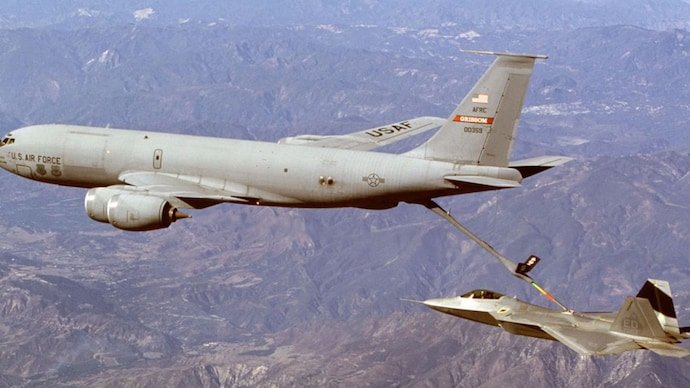
A US Air Force KC-135 Stratotanker missing over the Strait of Hormuz after transmitting an emergency signal has triggered widespread concern across Military and geopolitical circles. The aircraft commonly known as a “flying gas station” due to its aerial refuelling role reportedly issued a 7700 emergency squawk code before vanishing from public tracking systems.
But what exactly happened in the skies over one of the world’s most sensitive maritime chokepoints? And why does this incident matter far beyond aviation?
This in-depth analysis breaks down the facts, explores possible scenarios, and examines the broader implications of the incident.
What Happened: Timeline of the KC-135 Incident
According to flight-tracking data and early reports, the aircraft was operating over the Gulf region near the Strait of Hormuz when events took a sudden turn.
- The KC-135 Stratotanker was conducting routine aerial refuelling operations
- It transmitted a 7700 squawk code, signaling a general emergency
- The aircraft altered its course and began descending toward Qatar
- Approximately an hour later, its transponder signal disappeared from public radar
As of now, there is no official confirmation of a crash, landing, or recovery operation, leaving the situation unresolved and highly sensitive.
What Is a KC-135 Stratotanker and Why It Matters
The KC-135 Stratotanker is one of the most critical assets in the US Air Force fleet. Built by Boeing, it enables mid-air refuelling of fighter jets, bombers, and surveillance aircraft.
In simple terms, it extends the operational range of military aircraft making it a force multiplier in any conflict zone.
Key capabilities include:
- Aerial refuelling for multiple aircraft types
- Long endurance missions
- Cargo and limited passenger transport
Its presence in the Gulf region typically signals active or heightened military operations.
Understanding the 7700 Emergency Squawk Code
The 7700 squawk code is an internationally recognized signal used by pilots to indicate a general emergency.
It can be triggered by several situations:
- Mechanical failure
- Engine trouble
- Onboard fire
- Medical emergency
- Security threat
Importantly, 7700 does not specify the type of emergency only that immediate attention is required.
When combined with a sudden loss of signal, it raises the possibility of a serious incident but does not confirm one.
Why the Strait of Hormuz Is a High-Risk Zone
The location of the incident adds a critical layer of complexity.
The Strait of Hormuz is one of the most strategically important waterways in the world:
- Roughly 20% of Global Oil passes through it
- It lies between Iran and Gulf states
- It is heavily monitored and militarized
Any disruption in this region whether maritime or aerial immediately attracts global attention.
Possible Scenarios: What Could Have Happened?
While official confirmation is still pending, several plausible scenarios are being discussed by analysts.
1. Mechanical Failure
The most common explanation for a 7700 signal is a technical malfunction. A critical system failure could have forced the aircraft to divert and descend.
2. Emergency Landing
The aircraft may have safely landed at a nearby base in Qatar or another Gulf country, with its transponder turned off afterward.
3. Signal Interference or Jamming
The Gulf region has seen instances of GPS and signal interference. This could explain the sudden disappearance from public tracking systems.
4. Security or Military Incident
Given regional tensions, the possibility of hostile engagement or defensive action cannot be entirely ruled out though there is no confirmed evidence.
5. Controlled Military Blackout
In sensitive operations, military aircraft sometimes disable transponders intentionally, making them invisible to public tracking platforms.
Key takeaway: At this stage, all scenarios remain speculative without official confirmation.
Geopolitical Context: Rising Tensions in West Asia
The incident comes at a time of heightened tensions between the United States and Iran, despite recent ceasefire efforts.
Recent developments in the region include:
- Increased military surveillance and patrols
- Reports of targeted engagements involving aircraft
- Strategic posturing by regional powers
In such an Environment, even routine operations carry elevated risks.
Comparison: Normal vs Emergency Flight Behavior
| Factor | Normal Operation | Emergency Situation |
|---|---|---|
| Flight Path | Stable and predictable | Sudden deviation or descent |
| Transponder | Continuous signal | 7700 code activated |
| Communication | Routine | Priority or distress |
| Radar Visibility | Consistent | Possible signal loss |
Real-World Impact: Why This Incident Matters
1. Military Readiness
If confirmed as a serious incident, it could temporarily affect aerial refuelling capabilities in the region.
2. Oil Market Sensitivity
Any instability near the Strait of Hormuz can influence global oil prices due to perceived risk.
3. Regional Security
The incident may trigger increased surveillance, military alerts, or precautionary deployments.
4. Public Perception
Uncertainty often fuels speculation, which can escalate tensions even without concrete evidence.
Unique Insight: The Invisible Battlefield Electronic Warfare
One often overlooked dimension is electronic warfare.
Modern conflicts increasingly involve:
- GPS spoofing
- Signal jamming
- Cyber interference with navigation systems
If signal disruption played a role, it highlights a growing reality: airspace conflicts are no longer just physical they are digital.
What Happens Next?
In situations like this, the next steps typically include:
- Military verification and internal reporting
- Satellite and radar analysis
- Possible official statement from the US Department of Defense
Until then, the absence of confirmed debris or rescue operations leaves room for multiple interpretations.
Conclusion: A Developing Story with Global Implications
The case of the US KC-135 Stratotanker missing over the Strait of Hormuz is more than just an aviation mystery it is a reflection of the complex and fragile security environment in West Asia.
Whether the incident turns out to be a technical emergency, a controlled landing, or something more serious, it underscores a critical point:
In geopolitically sensitive regions, even a single aircraft incident can ripple across Global Security, economics, and Diplomacy.
For now, the world watches and waits for clarity because in a region like Hormuz, silence is often as significant as action.
For breaking news and live news updates, like us on Facebook or follow us on Twitter and Instagram. Read more on Latest World on thefoxdaily.com.





COMMENTS 0