- Why the Strait of Hormuz matters so much
- What triggered the current standoff
- The US response: escort mission with a message
- A fragile ceasefire under pressure
- The numbers behind the crisis
- Conflicting claims and information warfare
- Economic shockwaves already building
- A deeper insight: power vs perception
- Comparison: controlled tension vs open conflict
- What happens next
- Prediction: a prolonged standoff, not an instant war
- Conclusion: a crisis bigger than politics
The Strait of Hormuz has always been a pressure point in global geopolitics but right now, it’s something more dangerous: a live flashpoint where diplomacy, military power, and economic survival are colliding.
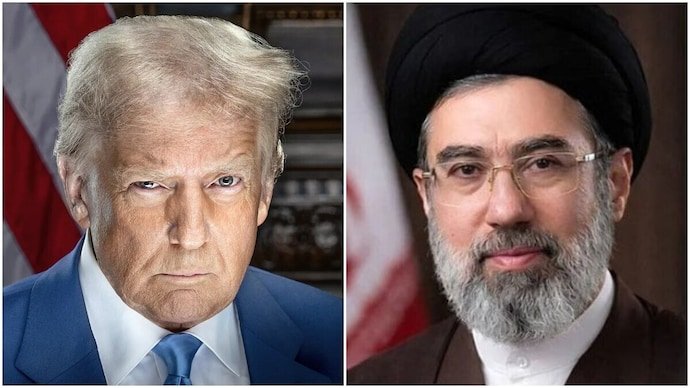
US President Donald Trump’s latest warning to Iran threatening overwhelming retaliation if American ships are targeted has sharply escalated tensions just as the United States begins a high-stakes naval operation to escort stranded vessels out of the region.
At the center of this unfolding crisis is a simple but alarming reality: hundreds of ships remain stuck in one of the world’s most vital energy corridors, and any miscalculation could ripple across the Global Economy.
Why the Strait of Hormuz matters so much
If global trade had choke points, the Strait of Hormuz would sit at the very top of the list.
This narrow waterway connects the persian gulf to international waters and handles roughly a fifth of the world’s oil supply. Every day, massive tankers carrying energy resources pass through it, supplying economies across Asia, Europe, and beyond.
When traffic slows here, the impact isn’t local it’s global.
That’s why the current situation, involving hundreds of stranded ships and tens of thousands of crew members, is being watched so closely.
What triggered the current standoff
The crisis stems from a broader confrontation between the United States and Iran over control and security in the region.
Iran’s attempt to assert influence over the Strait combined with blockades and rising military activity has effectively disrupted normal shipping routes. As a result, vessels from multiple countries have been unable to pass through safely.
For shipping companies, this creates a dilemma: risk moving through a volatile zone, or wait and absorb mounting losses.
For governments, it raises a more serious concern how to ensure freedom of navigation without triggering open Conflict.
The US response: escort mission with a message
Washington’s decision to launch a naval operation to assist stranded ships is being framed as both a humanitarian and strategic move.
On the surface, the objective is clear: help vessels exit safely and restore movement through the strait.
But beneath that lies a broader message one aimed directly at Tehran.
The operation signals that the United States is willing to actively intervene to keep the waterway open, even if it risks confrontation.
And Trump’s warning reinforces that stance, making it clear that any attack on US-linked vessels would trigger a forceful response.
A fragile ceasefire under pressure
Just weeks ago, there were signs of de-escalation.
A ceasefire had been brokered to halt hostilities, offering a brief window of stability. But crucially, it did not resolve the core issue the disruption of maritime traffic through the Strait of Hormuz.
That gap is now becoming increasingly significant.
Because while fighting may have paused, the underlying tensions never really disappeared.
Trump’s latest remarks have added new uncertainty, raising questions about whether the ceasefire can hold if military activity continues to intensify.
The numbers behind the crisis
The scale of the disruption is larger than many realize.
| Factor | Current Situation |
|---|---|
| Ships stranded | 800+ |
| Crew members affected | ~20,000 |
| Global oil flow through Hormuz | ~20% |
| Status of route | Restricted / high risk |
These numbers highlight why even a temporary disruption can have long-term consequences.
Conflicting claims and information warfare
As with many geopolitical conflicts, the situation is also being shaped by competing narratives.
US officials have claimed successful defensive actions against Iranian threats, including intercepting missiles and neutralizing small vessels.
Iran, however, has rejected these claims.
This back-and-forth is more than just rhetoric it reflects the role of information in modern conflict. Controlling the narrative can be almost as important as controlling territory.
Economic shockwaves already building
Even without a full-scale conflict, the economic impact is already being felt.
Shipping delays increase costs. Insurance premiums for vessels in the region rise sharply. Oil markets react quickly to uncertainty, often pushing prices higher.
For countries dependent on energy imports, this can translate into higher fuel prices and inflation.
In other words, what happens in the Strait of Hormuz doesn’t stay in the Strait of Hormuz.
A deeper insight: power vs perception
There’s an important dynamic at play here that goes beyond military capability.
This crisis is as much about perception as it is about power.
By launching an escort mission and issuing strong warnings, the United States is not just protecting ships it is reinforcing its role as a guarantor of global trade routes.
At the same time, Iran’s actions signal its willingness to challenge that role, at least within its regional sphere of influence.
This clash of perceptions is what makes the situation particularly volatile.
Comparison: controlled tension vs open conflict
| Scenario | Outcome |
|---|---|
| Controlled tension | Limited incidents, continued negotiations |
| Escalation | Military confrontation, disruption of oil supply |
| Full conflict | Global economic shock, long-term instability |
Right now, the region is hovering somewhere between the first and second scenarios.
What happens next
The immediate future will likely depend on three key factors:
- Whether the US naval operation succeeds without incident
- How Iran responds to increased military presence
- Whether diplomatic channels remain open
Even a single misstep an accidental clash or misinterpreted move could quickly shift the situation.
Prediction: a prolonged standoff, not an instant war
Despite the heated rhetoric, a full-scale war is not the most immediate outcome.
More likely is a prolonged period of controlled tension marked by military posturing, limited confrontations, and ongoing negotiations.
This kind of standoff can be just as impactful as open conflict, especially when it disrupts global trade over time.
Conclusion: a crisis bigger than politics
The current standoff in the Strait of Hormuz is not just about the United States and Iran it’s about the stability of global systems that millions depend on.
Trump’s warning has added urgency to an already tense situation, but the real story lies in what happens next.
Because in a world so deeply connected by trade and energy, even a narrow strip of water can shape the direction of the global economy.
And right now, that strip of water is anything but calm.
For breaking news and live news updates, like us on Facebook or follow us on Twitter and Instagram. Read more on Latest World on thefoxdaily.com.




COMMENTS 0