- What Happened: Talks Collapse at a Critical Moment
- Why the Ceasefire Is More Fragile Than It Appears
- Iran’s Position: No Talks Under Pressure
- The Core Deadlock: Demands That Don’t Align
- Trump’s Strategy: Leverage Over Engagement
- The Regional Dimension: Why This Conflict Matters Beyond Two Countries
- A Dangerous Middle Ground: Neither War Nor Peace
- Comparison: Then vs Now in US-Iran Relations
- What Happens Next: Possible Scenarios
- A Key Insight: This Is a Battle Over Terms, Not Just Outcomes
- Conclusion: A Pause That Feels Increasingly Unstable
The guns may have fallen silent for now, but peace remains elusive.
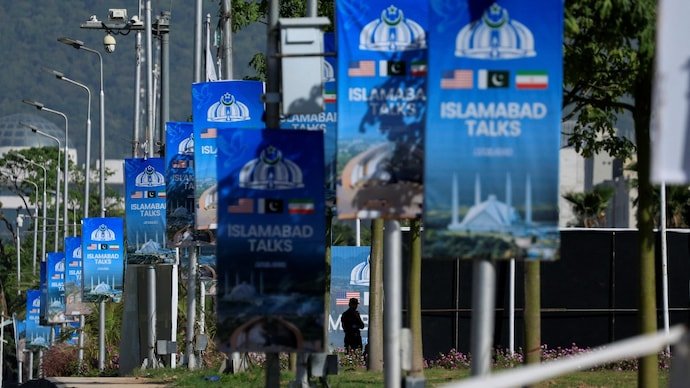
The US-Iran conflict stalemate has entered a dangerous phase one where active fighting has paused, yet Diplomacy is slipping away. Over the past week, hopes for a negotiated breakthrough dimmed sharply after former US President Donald Trump abruptly pulled back from ongoing peace efforts, cancelling a second round of talks and signaling a shift toward a more hardline posture.
What remains is a tense pause: no war, no peace, and no clear roadmap forward.
What Happened: Talks Collapse at a Critical Moment
Recent backchannel diplomacy had raised cautious optimism that negotiations between Washington and Tehran could resume. Regional players were actively mediating, and a second round of talks was expected to build on early contact.
That momentum collapsed suddenly.
Trump’s decision to cancel the planned diplomatic engagement including withdrawing envoys from a scheduled visit has effectively frozen the process. His public remarks, emphasizing that the United States “holds all the cards,” reinforced the perception that Washington is currently unwilling to negotiate on equal terms.
At the same time, reports of the US quietly pulling back security infrastructure from Islamabad suggest a broader disengagement from immediate diplomatic re-entry.
The result: a ceasefire without diplomacy a historically unstable combination.
Why the Ceasefire Is More Fragile Than It Appears
On paper, the ceasefire has halted large-scale military escalation. But without a political framework, ceasefires often act as temporary pauses rather than permanent solutions.
In this case, several factors make the situation particularly fragile:
- No formal agreement outlining long-term de-escalation
- Ongoing military posturing by both sides
- Deep mistrust following recent strikes and countermeasures
In essence, the conflict has shifted from active confrontation to strategic waiting where each side reassesses its leverage.
Iran’s Position: No Talks Under Pressure
Tehran has drawn a clear red line: it will not negotiate under coercion.
Iranian leadership has framed recent US actions particularly naval restrictions and continued pressure as violations of trust. From Tehran’s perspective, meaningful diplomacy can only begin once these measures are reversed.
This stance reflects a broader strategic calculation. By refusing talks under pressure, Iran aims to:
- Maintain sovereignty over its policy decisions
- Avoid setting a precedent of negotiating under duress
- Strengthen its bargaining position in future talks
At the same time, Iran has not fully shut the door on diplomacy. Its continued engagement with regional and global actors suggests it is keeping alternative channels open just not direct negotiations with Washington under current conditions.
The Core Deadlock: Demands That Don’t Align
The US-Iran nuclear negotiations deadlock remains rooted in fundamentally opposing expectations.
| United States Position | Iran’s Position |
|---|---|
| End nuclear programme | Maintain nuclear rights with limited restrictions |
| Transfer enriched uranium stockpile | Retain control over nuclear materials |
| No immediate sanctions relief | Demand sanctions removal and asset release |
| No compensation commitments | Seek compensation for conflict-related damage |
These positions are not just different they are structurally incompatible in their current form.
This is why negotiations have stalled: neither side sees compromise as strategically beneficial at this stage.
Trump’s Strategy: Leverage Over Engagement
Donald Trump’s approach reflects a familiar pattern maximize leverage before returning to the negotiating table.
By stepping back from talks and emphasizing US strength, the strategy appears designed to:
- ضغط Iran into concessions
- Signal domestic political strength
- Reframe negotiations on US terms
However, this approach carries risks. While it may strengthen short-term bargaining power, it can also harden the opponent’s stance making compromise more difficult later.
In diplomacy, perception matters as much as position. And right now, Iran appears to interpret US actions as pressure rather than partnership.
The Regional Dimension: Why This Conflict Matters Beyond Two Countries
The US-Iran tensions 2026 are not confined to bilateral relations. They have wider implications for regional stability.
Key concerns include:
- Security of vital shipping routes, especially the Strait of Hormuz
- Impact on global energy markets
- Involvement of regional allies and proxy actors
Even limited disruptions in these areas can have global consequences affecting oil prices, trade flows, and geopolitical alignments.
A Dangerous Middle Ground: Neither War Nor Peace
One of the most unstable positions in international conflict is what analysts often call the “gray zone” a space between active war and formal peace.
That is exactly where the current situation stands.
In this phase:
- Military escalation remains possible
- Diplomatic trust is minimal
- Small incidents can trigger larger crises
History shows that such standstills can persist but they are inherently volatile.
Comparison: Then vs Now in US-Iran Relations
| Earlier Phases | Current Phase (2026) |
|---|---|
| Structured negotiations (e.g., nuclear deals) | Breakdown of formal dialogue |
| Multilateral engagement | Fragmented, indirect diplomacy |
| Defined frameworks | Unclear end goals |
The shift is clear: from structured diplomacy to strategic uncertainty.
What Happens Next: Possible Scenarios
1. Return to Negotiations
Diplomatic channels could reopen if both sides soften positions likely through mediation by neutral countries.
2. Prolonged Stalemate
The current situation could persist, with periodic tensions but no major escalation.
3. Escalation Triggered by Incident
A miscalculation or localized clash could reignite broader conflict.
Among these, the second scenario prolonged uncertainty is currently the most likely.
A Key Insight: This Is a Battle Over Terms, Not Just Outcomes
What often gets overlooked is that this conflict is not just about what agreement is reached but how it is reached.
Both sides are not only negotiating outcomes, but also negotiating:
- Who sets the terms
- Who concedes first
- What defines a “fair” agreement
This makes the deadlock more complex than a simple policy disagreement.
Conclusion: A Pause That Feels Increasingly Unstable
The US-Iran conflict stalemate represents a precarious moment in global Geopolitics.
Trump’s retreat from peace talks has not ended diplomacy but it has delayed it at a critical juncture. Meanwhile, Iran’s refusal to negotiate under pressure ensures that neither side is ready to move first.
What remains is a fragile equilibrium one that holds for now, but lacks the foundation needed for lasting stability.
In conflicts like these, the most dangerous phase is not escalation it is stagnation without direction.
Until diplomacy finds a way back in, the risk is not just renewed conflict but a slow drift toward a crisis that neither side fully intends, yet neither can easily avoid.
For breaking news and live news updates, like us on Facebook or follow us on Twitter and Instagram. Read more on Latest World on thefoxdaily.com.





COMMENTS 0