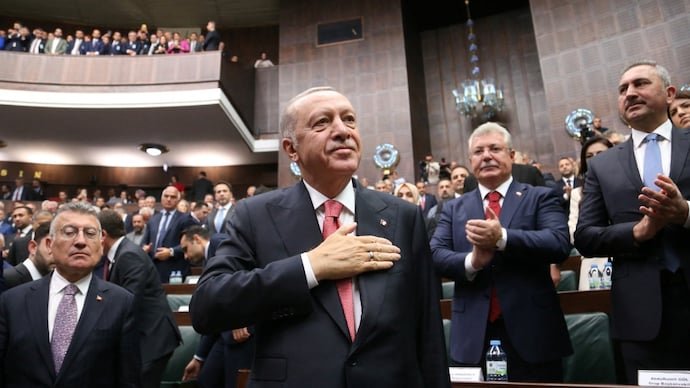
Turkey‘s opposition has sharply criticised the activation of the Mecca defence Alliance, questioning the legal basis for any Turkish military deployment to Saudi Arabia and warning that deeper involvement could eventually draw Ankara into the conflict in Yemen.
The dispute comes after Turkey, Saudi Arabia and Pakistan moved to activate their collective defence commitments under the Mecca Pact following an emergency meeting in Riyadh on October 5. The agreement calls for the rapid deployment of agreed military forces and capabilities to Saudi Arabia, but the precise scale and nature of Turkey’s involvement remain a major point of political debate.
Turkey’s Opposition Challenges the Mecca Pact
Opposition parties in Turkey have focused their criticism on two connected questions: whether Ankara’s participation in the defence agreement has received the required parliamentary approval and whether Turkish forces can legally be deployed abroad without authorisation from the Grand National Assembly.
The Mecca Defence Alliance, also known as the Mecca Joint Defence Agreement, was signed on August 7 by Turkey, Saudi Arabia and Pakistan. It establishes a mutual defence framework under which an attack on one member is treated as a threat requiring collective action.
The alliance was activated after the Strategic-Political and Defence Committee of the Makkah Alliance for Defence held an emergency meeting in Riyadh on October 5. The meeting came amid escalating fighting involving Saudi Arabia and Yemen’s Houthi movement, also known as Ansar Allah.
For Turkey’s opposition, however, activation of the alliance does not settle the domestic legal requirements surrounding military deployment. Opposition lawmakers have argued that Turkey’s participation still needs to pass through the country’s constitutional and parliamentary procedures.
Why Turkish Opposition Leaders Are Raising Constitutional Concerns
Turkey’s opposition has pointed to the country’s constitutional rules governing international agreements and the deployment of armed forces abroad. According to the objections raised by opposition lawmakers, Ankara’s entry into the pact has not yet been ratified by the Grand National Assembly.
The opposition also argues that sending Turkish troops to foreign territory would require parliamentary authorisation. That distinction has become central to the political dispute because the Mecca Pact calls for participating countries to provide agreed military forces and capabilities to Saudi Arabia.
Opposition leaders say the government cannot simply treat the alliance as operational for Turkish military deployments without completing the relevant parliamentary procedures.
The disagreement therefore extends beyond the military implications of the pact. It has become a constitutional and political dispute over the authority to commit Turkish forces to an overseas security arrangement.
Ozgur Ozel Rejects Military Commitment to Saudi Arabia
New Party leader Ozgur Ozel has been among the most prominent critics of the government’s approach to the Mecca Defence Alliance. He has questioned the decision to enter a defence arrangement involving a country that is already connected to an active conflict in Yemen.
Ozel argued that defence agreements of this nature are normally established during periods of peace and said that entering such an arrangement with a country involved in war could make Turkey a party to the conflict.
He also criticised the government’s handling of the proposed troop deployment, arguing that the agreement should first have been presented to Parliament and placed on the legislative agenda before military commitments were made.
Ozel further maintained that any departure of Turkish military personnel would have to receive parliamentary approval. His comments reflected the broader opposition position that the government cannot bypass the Grand National Assembly when making decisions involving the deployment of Turkish soldiers abroad.
He also warned against a scenario in which Turkish troops could eventually become involved in Yemen, describing such an outcome as an unacceptable military adventure.
Opposition Lawmakers Question the Legal Status of the Agreement
Other opposition figures have raised similar concerns about the legal status of the Mecca Pact and the possible deployment of Turkish forces.
IYI Party lawmaker Turhan Comez accused the government of violating Articles 90 and 92 of the Turkish Constitution. He argued that Turkish soldiers should not be sent into Yemen in pursuit of the interests of other countries.
His comments reflect a broader concern within the opposition that military involvement in the Gulf could gradually expand beyond defensive assistance in Saudi Arabia and eventually expose Turkish personnel to the fighting in Yemen.
IYI Party International Relations head Ahmet Erozan has also questioned the status of the agreement itself. Speaking to Turkish news outlet T24, he raised doubts about whether a formal text of the pact had been made physically available.
The issue is significant because the precise obligations created by the alliance are central to the debate over what Turkey can legally and militarily be expected to provide.
New Party MP Namik Tan has similarly questioned the pact’s legal standing. He argued that the agreement cannot be implemented without parliamentary approval and called for clarification over reports that Turkish military forces or capabilities could be deployed in connection with the Yemen conflict.
New Party spokesperson Zeynel Emre has also said the agreement must pass through the Grand National Assembly and be published in the Official Gazette before taking effect in Turkey.
Turkish Military Personnel Are Reportedly Already in Saudi Arabia
While the political debate centres on whether Turkey can make additional deployments, reports indicate that Turkish personnel and military equipment are already operating in Saudi Arabia in a limited defensive role.
Reports citing Turkish officials have said Ankara has maintained technical teams, air defence systems and electronic warfare equipment in Saudi Arabia since last year. The reported purpose has been to help protect critical Infrastructure, including energy facilities.
A senior Turkish official has indicated that additional equipment, technicians, emergency response teams and accompanying combat personnel could be sent to the Kingdom. The official linked the possibility to a 2010 military training agreement between Turkey and Saudi Arabia that permits limited Turkish forces to be deployed for technical purposes.
That arrangement is different from a broader deployment of Turkish combat forces. According to the position outlined by the Turkish official, a larger deployment would require parliamentary authorisation under Turkey’s constitutional system.
This distinction could become increasingly important as the Mecca Pact moves from a diplomatic framework towards practical military cooperation.
Air Defence Could Be Turkey’s Initial Role
One possible path outlined by analysts is for Turkey to concentrate initially on defensive capabilities rather than sending large numbers of combat troops into Yemen.
Murat Yesiltas, an academic and member of the Turkish Presidency’s foreign policy advisory board, said Ankara could bring the Mecca Pact or a separate authorisation for deployment before the Grand National Assembly within 30 days.
He indicated that Turkey could initially focus on capabilities such as air defence, anti-drone systems and intelligence, surveillance and reconnaissance support in Saudi Arabia.
Such a role would allow Ankara to participate in Saudi Arabia’s broader security network while keeping the level of direct Turkish involvement more limited.
The distinction matters because the immediate security challenge facing Saudi Arabia includes missile and drone threats originating from the Yemen conflict. Defensive systems stationed inside Saudi territory would not necessarily mean Turkish troops were directly participating in ground operations in Yemen.
Turkey Could Deploy Aircraft and Experienced Pilots
Reports have also pointed to the possibility of Turkey deploying experienced pilots and aircraft to Saudi Arabia if the required parliamentary approval is secured.
The potential role would be connected to countering Drones and ballistic missiles launched by the Houthis from Yemen. Such a deployment would represent a greater level of Turkish military participation than technical teams and defensive equipment alone, while still being distinct from sending Turkish ground forces into Yemen.
The precise number of aircraft or personnel has not been disclosed.
A senior Turkish official has also sought to draw a line between supporting Saudi Arabia’s defence and directly entering the Yemen war. The official said there were no plans to send a large group of soldiers or directly intervene in Yemen.
The official also indicated that Ankara continues to believe diplomatic efforts could produce results in the coming months.
Why Yemen Is at the Centre of Turkey’s Political Debate
The opposition’s strongest concern is not simply the deployment of Turkish personnel to Saudi Arabia. It is the possibility that a defensive commitment could gradually connect Turkey to military operations associated with the Yemen conflict.
Saudi Arabia has become directly involved in the fighting as the conflict between forces aligned with Yemen’s internationally recognised government and the Houthis has intensified. The Houthis have carried out attacks affecting Saudi territory and infrastructure, creating pressure for Riyadh to strengthen its air and missile defences.
The activation of the Mecca Defence Alliance therefore comes at a moment when the distinction between defending Saudi territory and responding to threats originating from Yemen is increasingly important.
For Ankara, providing air defence, intelligence or technical assistance inside Saudi Arabia could allow it to support its ally without directly entering the Yemen battlefield. But opposition leaders fear that military commitments can expand once an alliance becomes operational.
That concern is driving calls for parliamentary scrutiny before Turkey undertakes any substantial new deployment.
The Mecca Pact’s First Major Test
The activation of the alliance marks an important test for the three countries that signed the agreement in August. Until now, the pact had primarily represented a framework for closer defence cooperation between Turkey, Saudi Arabia and Pakistan.
The October 5 meeting moved the agreement towards practical implementation by committing the members to provide agreed military forces and capabilities and to ensure their rapid deployment in Saudi Arabia.
For Turkey, however, implementation must operate within its domestic legal framework. This means that the political debate in Ankara could influence the extent and timing of Turkish military participation.
The opposition’s objections also demonstrate how an international security agreement can generate domestic constitutional questions when it involves the deployment of armed forces.
What Happens Next for Turkey
The immediate question is whether Turkey’s Parliament will formally consider the Mecca Pact or a separate authorisation for military deployment.
If parliamentary approval is sought, lawmakers could face a decision over the scope of Turkey’s involvement, including whether Ankara should provide defensive systems, aircraft, technical personnel, intelligence support or other military capabilities.
A limited defensive role in Saudi Arabia would represent a different level of involvement from direct participation in combat operations in Yemen. The Turkish government has indicated that it does not currently plan a large-scale deployment of soldiers or direct intervention in Yemen.
At the same time, opposition parties are demanding clarity over the agreement’s legal status and the government’s authority to make military commitments under it.
The Mecca Defence Alliance has therefore created a dual challenge for Ankara: meeting the security expectations of Saudi Arabia while addressing constitutional requirements and political opposition at home.
For now, Turkey’s reported focus remains on strengthening Saudi Arabia’s defensive capabilities rather than sending forces into Yemen. Whether that limited role remains unchanged will depend on the alliance’s operational demands, developments in the Yemen conflict and the decisions taken by Turkey’s Parliament.
For breaking news and live news updates, like us on Facebook or follow us on Twitter and Instagram. Read more on Latest World on thefoxdaily.com.



COMMENTS 0