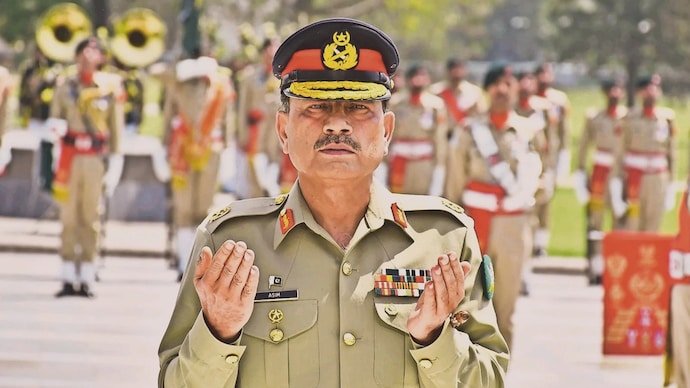
Pakistan has stepped up its diplomatic effort to break the deadlock between the United States and Iran, with Army chief and Chief of Defence Forces Field Marshal Asim Munir holding a series of high-level meetings in Tehran focused on de-escalation, the reopening of the Strait of Hormuz and an end to the ongoing conflict.
Munir travelled to Tehran with Pakistan’s Interior Minister Mohsin Naqvi for a day-long visit that brought them into direct contact with several of Iran’s senior political and security officials. The meetings came as Washington continued to increase economic pressure on Tehran and tensions around one of the world’s most important energy shipping routes remained high.
According to Pakistan’s military, the visit was part of Islamabad’s effort to end the stalemate in the US-Iran conflict and explore a path towards lasting peace and regional stability. Iran’s leadership also expressed appreciation for Pakistan’s efforts to facilitate dialogue and de-escalation.
The discussions are significant because they combine two issues that are closely connected: the wider US-Iran conflict and the disruption of shipping through the Strait of Hormuz. A durable reduction in tensions could help create conditions for negotiations, while reopening the waterway would ease pressure on energy markets and international shipping.
What Asim Munir discussed with Iran’s leadership
Munir and Naqvi held meetings with Iranian President Masoud Pezeshkian, Parliament Speaker Mohammad Bagher Ghalibaf, Foreign Minister Abbas Araghchi, Interior Minister Eskandar Momeni and Mohsen Rezaei, the Supreme Leader’s representative on the Supreme National Security Council.
The discussions covered measures to prevent further escalation, the reopening of the Strait of Hormuz and bringing the conflict to an end as quickly as possible. The two sides also discussed regional peace and possible ways of reaching negotiated settlements to outstanding disputes.
Pakistan’s military said the Iranian leadership appreciated Islamabad’s “constructive role” and its efforts to facilitate dialogue, de-escalation and a peaceful resolution.
The meetings therefore went beyond a conventional bilateral discussion between Pakistan and Iran. Islamabad was effectively using its relationship with Tehran to explore whether the diplomatic process between Iran and Washington could be brought back on track.
Why Pakistan is trying to revive US-Iran diplomacy
Pakistan has increasingly positioned itself as a potential intermediary between Washington and Tehran. The effort reflects Islamabad’s interest in preventing a wider regional confrontation that could have consequences far beyond Iran’s borders.
The current diplomatic push follows an earlier attempt to establish an agreement between the United States and Iran. Pakistan helped facilitate an interim understanding in June, known as the Islamabad Memorandum of Understanding, but that process later broke down as military tensions returned.
The collapse demonstrated how difficult mediation between Washington and Tehran remains. The two sides have accumulated deep mistrust, and even when they reach preliminary understandings, disagreements over implementation and security commitments can quickly derail negotiations.
Pakistan’s latest initiative is therefore not simply about arranging another meeting. Islamabad is attempting to identify conditions under which both sides could return to negotiations without immediately repeating the breakdown that followed the earlier agreement.
Iran’s message to Pakistan: Washington must make the first move
Iran’s position has also highlighted the central obstacle facing any new diplomatic process.
During Munir’s meetings, Iranian officials stressed their commitment to the Islamabad understanding and conveyed concerns about Washington’s approach. Iranian officials have argued that the United States must fulfil its commitments before Tehran can move ahead with further de-escalation.
This creates a difficult starting point for mediation. Washington has been increasing pressure on Iran, while Tehran says that continued pressure undermines trust and makes diplomacy harder.
For Pakistan, the challenge is to narrow that gap without becoming identified exclusively with either side. Islamabad maintains relationships with both Washington and Tehran, giving it a channel for communication, but that position also means it must navigate competing expectations.
Why reopening the Strait of Hormuz is so important
The Strait of Hormuz is central to the economic dimension of the crisis.
The waterway, located between Iran and Oman, connects the Persian Gulf with the Arabian Sea. It is one of the world’s most important routes for the movement of oil and other energy supplies.
Before the conflict disrupted shipping, roughly one-fifth of global oil supplies passed through the strait. Any prolonged interruption can therefore affect far more than the countries immediately surrounding the Gulf.
When tanker traffic is disrupted, the consequences can spread through energy markets, shipping costs, insurance premiums and fuel prices. Import-dependent economies are particularly exposed because higher transportation and energy costs can eventually feed into the prices of goods and services.
That is why the reopening of Hormuz has become a central element of Pakistan’s diplomatic discussions rather than simply a maritime issue.
The shipping crisis has become a wider economic problem
The consequences of the conflict have already extended beyond military and diplomatic circles.
Commercial vessels operating around the Gulf have faced increased risks, while shipping companies have had to consider whether vessels can safely pass through the area. The resulting uncertainty can make transportation more expensive even when ships continue to operate.
Recent reporting citing the International Maritime Organization said there had been dozens of incidents involving commercial vessels in the Gulf and surrounding waters during the conflict, including fatalities and injuries among seafarers and port workers.
The disruption has also affected the movement of oil and gas. The Strait of Hormuz is difficult to replace as a transport route because alternative pipelines and routes cannot simply absorb all of the energy volumes that normally pass through the waterway.
This makes a diplomatic solution particularly important for countries that depend on stable energy supplies.
US sanctions add another layer of pressure
Munir’s Tehran visit also took place as Washington widened economic pressure on Iran.
The United States has announced additional sanctions targeting dozens of Iran-linked individuals, entities and vessels. The broader strategy is intended to restrict Tehran’s economic options and pressure it into changing its behaviour.
US President Donald Trump has also warned countries and businesses against providing Iran with what he described as a “lifeline”, raising concerns about the possible use of secondary economic pressure against countries that continue doing Business with Tehran.
For Iran, the sanctions campaign is evidence that Washington continues to pursue maximum economic pressure even while diplomatic possibilities are being discussed. For the United States, economic pressure is intended to increase leverage over Tehran.
That contradiction is one of the central difficulties facing Pakistan’s mediation effort: diplomacy requires trust, while the two sides continue using economic and political pressure against each other.
Why Pakistan’s role is unusual
Pakistan’s position gives it an unusual combination of interests in the crisis.
It has longstanding ties with Iran, shares a border with the country and has a direct interest in stability across its western neighbourhood. At the same time, Pakistan maintains a longstanding relationship with the United States.
That gives Islamabad reasons to prevent the conflict from expanding and creates channels through which messages can potentially be passed between Washington and Tehran.
Munir’s role is also notable. While Pakistan’s civilian government remains involved in diplomacy, the army chief has become a prominent figure in the country’s regional security engagement. His involvement means the Tehran discussions are taking place at a very senior security level.
According to Reuters, Munir also spoke with Trump before his Tehran visit, with Pakistani sources saying the US president wanted Islamabad to use its influence to encourage Iran to return to negotiations. The reported contact illustrates the expectations surrounding Pakistan’s mediation effort.
The biggest obstacle is mutual distrust
The central problem is not a lack of possible meeting venues or intermediaries. It is the depth of mistrust between Washington and Tehran.
Both sides have reasons to doubt the other’s willingness to honour agreements. Previous diplomatic efforts have struggled because commitments on military activity, sanctions, shipping and broader security issues have been interpreted differently.
For a new agreement to survive, the parties would therefore need more than a declaration of peace. They would need mechanisms that establish what each side must do, when those steps should occur and what happens if one party believes the other has violated the arrangement.
Pakistan can facilitate communication, but it cannot impose those conditions on either Washington or Tehran.
What the Strait of Hormuz means for the global economy
The importance of Hormuz extends well beyond the Middle East because energy markets operate through a highly interconnected global system.
A disruption in one of the world’s major oil transit routes can influence crude prices even in countries thousands of kilometres away. Higher oil prices can increase costs for transportation, Manufacturing, electricity generation and other industries that depend directly or indirectly on energy.
For consumers, the effects may eventually appear through higher fuel and transportation costs. For businesses, the uncertainty can complicate planning and raise operating expenses.
For governments, an extended disruption can create pressure to secure alternative energy supplies or manage the economic impact of higher import costs.
This explains why reopening the waterway is being discussed alongside the search for a diplomatic settlement rather than treated as a separate maritime problem.
What could happen next?
The immediate question is whether Pakistan’s latest engagement can produce enough progress to bring Washington and Tehran back into a meaningful negotiating process.
Pakistan’s Interior Minister Mohsin Naqvi said the Tehran meetings made “significant progress” and concluded on a positive note. However, the ultimate test will be whether the reported progress translates into concrete steps by the United States and Iran.
The next phase could depend on whether both sides are willing to revive the earlier Islamabad understanding or negotiate a modified framework. The exact sequence of sanctions relief, military restraint and shipping arrangements could become particularly important.
The reopening of Hormuz could also become an early measure of whether de-escalation is genuine. If commercial traffic can resume under credible security arrangements, it would provide an immediate economic benefit and potentially build confidence for wider negotiations.
Conversely, continued restrictions or new attacks around the waterway would make diplomacy considerably harder.
Why Munir’s Tehran visit matters
Asim Munir’s meetings with Iran’s top leadership represent one of Pakistan’s most significant recent attempts to influence the course of the US-Iran conflict.
The objective is ambitious: reduce the risk of further escalation, restore movement through the Strait of Hormuz and create a route back to negotiations.
Pakistan cannot resolve the fundamental disputes between Washington and Tehran on its own. But it can provide a channel for communication at a time when direct trust between the two sides remains weak.
The Tehran meetings also underline how closely diplomacy and energy security have become linked in the current crisis. A reduction in military tensions could reopen one of the world’s most important shipping routes, while the restoration of normal commercial traffic could itself help reduce economic pressure and create space for further negotiations.
For now, the most important development is not a final peace agreement but the possibility that diplomacy can prevent the conflict from widening. Whether Islamabad’s latest effort succeeds will ultimately depend on whether Washington and Tehran are prepared to turn indirect diplomatic contacts into concrete, reciprocal steps toward de-escalation.
For breaking news and live news updates, like us on Facebook or follow us on Twitter and Instagram. Read more on Latest World on thefoxdaily.com.





COMMENTS 0