In a landmark immigration ruling that could reshape asylum policy in the United States for years to come, the US Supreme Court has sided with President Donald Trump‘s administration in a dispute over the government’s authority to limit access to asylum processing at the southern border.
The decision marks another significant legal victory for Trump’s immigration agenda and could pave the way for the revival of a controversial policy known as “metering,” which allows border officials to restrict or delay asylum claims when ports of entry become overcrowded.
Beyond its immediate legal implications, the ruling reignites a broader national debate over Border Security, humanitarian obligations, executive authority and the future of America’s immigration system.
The case arrives at a time when immigration remains one of the most politically charged issues in the United States, influencing Elections, public policy and America’s relationship with neighboring countries.
What Is the Supreme Court Ruling About?
At the center of the case is a seemingly simple but legally significant question: When does an asylum seeker officially “arrive” in the United States?
Federal immigration law states that individuals WHO arrive in the United States have the right to apply for asylum and have their claims reviewed by immigration authorities.
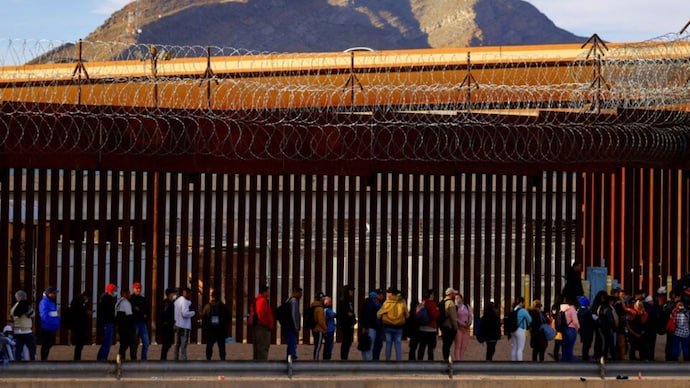
The dispute focused on migrants who present themselves at official border crossings but remain physically on the Mexican side while waiting for processing.
The Trump administration argued that individuals standing in Mexico have not legally arrived in the United States and therefore are not yet entitled to asylum processing under federal law.
Immigrant rights advocates argued the opposite, maintaining that asylum seekers who reach official ports of entry should be allowed to begin the asylum process regardless of their precise physical location.
The Supreme Court ultimately agreed with the administration’s interpretation.
Understanding the “Metering” Policy
The ruling centers on a policy known as metering, which became one of the most debated border management tools of the past decade.
Under metering, border officials can limit the number of asylum seekers processed each day when facilities, staffing or infrastructure are unable to handle additional arrivals.
Rather than allowing everyone to enter the asylum system immediately, authorities establish waiting lists and restrict access based on available capacity.
Supporters argue that the policy helps prevent chaos during periods of exceptionally high migration.
Critics contend that it effectively denies asylum seekers access to protections guaranteed under US and international law.
The policy became formalized during Trump’s first administration before being rescinded by President Joe Biden in 2021.
Why the Decision Matters Beyond Immigration
Although the case concerns border procedures, its implications extend into broader questions about executive authority and judicial interpretation.
The ruling strengthens the federal government’s discretion in determining how immigration laws are implemented at the border.
It also signals a judicial willingness to grant immigration authorities flexibility when responding to operational challenges and surges in migration.
Legal scholars note that immigration law often involves balancing two competing priorities:
- National sovereignty and border control.
- Humanitarian obligations toward asylum seekers.
The Supreme Court’s decision reflects a stronger emphasis on governmental authority to manage border operations under challenging circumstances.
The Long History of Border Metering
While often associated with Donald Trump, the origins of metering predate his presidency.
US authorities began limiting asylum processing at certain crossings during the Obama administration as migration numbers increased.
However, the practice expanded significantly under Trump’s first term and became a central element of his broader immigration strategy.
The policy emerged largely in response to growing migrant flows from Central America, where violence, political instability and economic hardship drove thousands toward the US border.
As arrivals increased, border facilities struggled to process claims quickly, creating operational bottlenecks that policymakers sought to address through administrative measures.
The Legal Argument That Won the Case
The administration’s legal strategy focused on the wording of federal immigration law.
Government lawyers argued that the phrase “arrive in the United States” should be interpreted literally.
According to this view, a person standing on Mexican territory has not yet entered or arrived in the United States, regardless of how close they are to the border crossing.
This interpretation convinced the Supreme Court’s conservative majority.
The ruling effectively overturns a lower court decision that had required border agents to process asylum claims from individuals waiting at official crossings.
The outcome demonstrates how seemingly minor interpretations of legal language can have major policy consequences.
How the Court’s Conservative Majority Shaped the Outcome
The case was decided by a 6-3 vote, with the court’s conservative bloc forming the majority.
The ruling continues a broader pattern in which the Supreme Court has frequently supported executive authority on immigration matters, particularly in cases involving border security and enforcement.
Since Trump’s return to office, the court has issued several decisions favorable to the administration’s immigration agenda.
These rulings have strengthened the government’s ability to manage deportations, temporary immigration protections and border enforcement policies.
The latest decision further reinforces the court’s influential role in shaping US Immigration Policy.
The Human Impact on Asylum Seekers
For migrants seeking protection, the ruling could have significant practical consequences.
Under a revived metering system, asylum seekers may face longer waiting periods before their claims are reviewed.
Many migrants arrive at the border after fleeing violence, persecution, political instability or severe economic hardship in their home countries.
Extended waiting times can create difficult humanitarian situations, particularly in border regions where resources are limited.
Advocacy groups argue that delays increase vulnerability to crime, exploitation and unsafe living conditions.
Supporters of the policy counter that orderly processing ultimately benefits both migrants and immigration authorities by preventing system overload.
Immigration Remains a Defining Political Issue
The decision comes amid an increasingly polarized debate over immigration in American Politics.
Supporters of stricter border enforcement argue that the United States must maintain control over migration flows to preserve National Security, public resources and immigration system integrity.
Others emphasize America’s historical role as a refuge for individuals fleeing persecution and danger.
The tension between these perspectives has fueled political battles for decades and remains central to election campaigns at every level of government.
Immigration consistently ranks among the most important issues for voters, ensuring that court decisions on border policy receive intense public attention.
Other Major Immigration Cases Still Pending
The Supreme Court’s latest ruling may not be the final word on immigration policy this year.
Several other high-profile cases remain under consideration.
Among the most closely watched are challenges involving birthright citizenship, temporary protected status programs and broader executive immigration powers.
These decisions could further redefine the legal framework governing immigration and citizenship in the United States.
Together, they represent one of the most consequential periods for immigration law in recent American History.
International Implications of the Decision
The ruling could also affect diplomatic relations with neighboring countries, particularly Mexico.
Policies that delay or restrict asylum processing often increase the number of migrants waiting in border communities on the Mexican side.
This places additional pressure on local governments, humanitarian organizations and infrastructure.
Regional migration management increasingly requires cooperation among multiple countries, making immigration policy not only a domestic issue but also a foreign policy challenge.
The effectiveness of future border strategies may depend as much on international coordination as on legal decisions within the United States.
The Bigger Question: Security or Access?
At its core, the debate surrounding metering reflects a broader question facing immigration systems worldwide.
How can governments maintain secure and orderly borders while ensuring access to asylum protections for people fleeing genuine danger?
Countries across Europe, North America and other regions are grappling with similar challenges as migration patterns evolve.
The Supreme Court’s ruling does not resolve this tension. Instead, it shifts the balance somewhat toward administrative control and border management authority.
Whether that approach proves effective in practice remains to be seen.
Conclusion
The US Supreme Court’s decision to uphold the federal government’s authority to limit asylum processing at the US-Mexico border represents a major victory for President Donald Trump’s immigration agenda and could clear the path for the return of the metering policy.
Beyond the immediate legal outcome, the ruling highlights enduring debates over border security, humanitarian responsibility and executive power. Supporters view the decision as a necessary tool for managing overwhelming migration flows, while critics fear it could restrict access to asylum protections for vulnerable individuals.
As immigration continues to dominate American politics, the ruling is likely to influence future policy decisions, legal challenges and border operations. More importantly, it underscores a reality confronting governments worldwide: balancing national security with humanitarian obligations remains one of the defining policy challenges of the modern era.
For breaking news and live news updates, like us on Facebook or follow us on Twitter and Instagram. Read more on Latest World on thefoxdaily.com.






COMMENTS 0