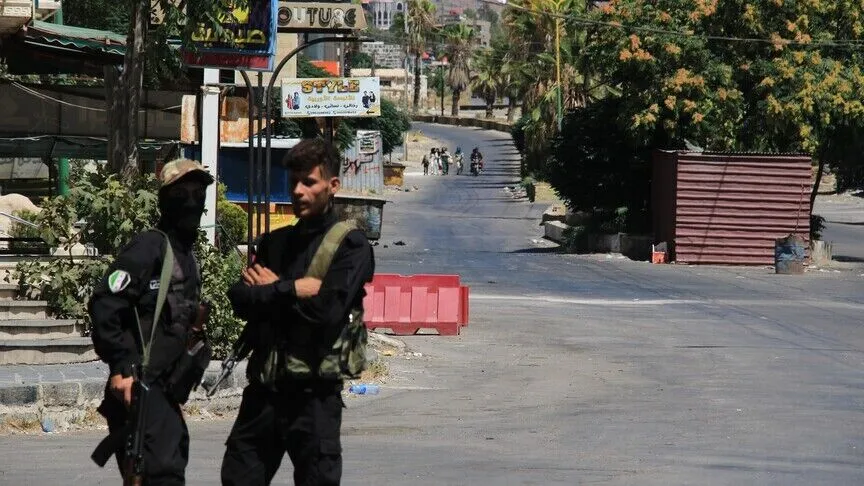
Syria has announced that its security forces intercepted a truck carrying what officials described as advanced weapons and rockets near the country’s border with Iraq. According to Syrian authorities, preliminary investigations indicate the shipment was allegedly intended for Hezbollah in neighboring Lebanon. Hezbollah has categorically rejected the accusation, calling it a fabricated claim without factual basis.
The reported interception comes at a critical moment for the Middle East, where Regional Security remains fragile amid ongoing conflicts, shifting alliances, and intensified efforts by governments to dismantle illicit smuggling networks. More than just a Border Security operation, the incident reflects Syria’s changing political landscape following the transition of power in Damascus and increasing international pressure to prevent armed groups from receiving military supplies.
Whether the allegations ultimately prove accurate or not, the event has renewed attention on one of the region’s most strategically important issues: the movement of weapons across porous borders connecting Iraq, Syria, and Lebanon.
Why the Syria-Iraq Border Is Strategically Important
The border between Syria and Iraq stretches for hundreds of kilometers across vast desert terrain, making it one of the Middle East’s most difficult frontiers to monitor. Sparse population, challenging geography, and years of conflict have historically allowed smugglers, militant organizations, and criminal networks to move people, weapons, fuel, and narcotics across the region.
For decades, this corridor has held strategic importance because it connects Iraq to western Syria and ultimately to Lebanon through established road networks. The route has frequently been cited by regional governments and international observers as an important logistical corridor used by various armed organizations operating across the Levant.
As Syria seeks to restore centralized authority after years of civil conflict, strengthening border security has become one of the government’s highest priorities.
What Syrian Authorities Say Happened
According to Syria’s Interior Ministry, security forces intercepted a truck carrying advanced military equipment while conducting operations near the Iraqi frontier.
Officials stated that an initial investigation suggested the shipment was allegedly intended for Hezbollah in Lebanon. Authorities reported that the cargo included sophisticated weapons and rockets, though detailed information regarding the quantity, origin, or specific weapon systems has not yet been publicly released.
The government has indicated that investigations remain ongoing to determine how the shipment was organized, WHO financed it, and whether broader smuggling networks were involved.
Hezbollah Rejects the Allegations
Hezbollah responded swiftly, dismissing Syria’s claims as entirely false.
In an official statement, the group’s media office described the allegations as fabricated narratives lacking any factual foundation. Hezbollah reiterated its longstanding position that it no longer maintains an operational military presence inside Syria following major changes in the country’s political leadership.
The denial reflects the highly sensitive political environment surrounding regional security, where competing narratives frequently emerge before investigations are completed.
At present, no independently verified public evidence has been released confirming the intended destination of the intercepted weapons.
Syria’s New Leadership Is Intensifying Border Enforcement
The reported seizure comes amid broader efforts by Syria’s current government to dismantle long-established smuggling networks operating along both the Iraqi and Lebanese borders.
Following the political transition that removed former President Bashar al-Assad from power in 2024, authorities have increasingly emphasized restoring state control over border crossings, customs operations, and internal security.
Government officials have identified several priorities:
- Preventing illegal weapons trafficking.
- Disrupting narcotics smuggling networks.
- Strengthening customs enforcement.
- Increasing military patrols along border regions.
- Improving intelligence coordination with neighboring countries.
These measures are intended not only to improve domestic security but also to demonstrate Syria’s willingness to cooperate with regional and international partners on cross-border security challenges.
Why Weapons Smuggling Remains a Regional Security Concern
Weapons trafficking has long been one of the defining security challenges across the Middle East.
Unlike conventional military supply chains, illicit smuggling networks often rely on decentralized logistics involving trucks, remote desert routes, informal crossings, and criminal organizations capable of adapting quickly to changing security conditions.
Security experts generally identify several factors that sustain these networks:
- Lengthy and difficult-to-monitor borders.
- Years of armed conflict weakening state institutions.
- Established criminal trafficking organizations.
- Political instability.
- Demand from armed groups operating across multiple countries.
Because these networks frequently overlap with drug trafficking, fuel smuggling, and human trafficking, dismantling them requires coordinated action between multiple governments.
Understanding Hezbollah’s Regional Role
Hezbollah is a political party and armed organization based in Lebanon that has played a significant role in regional conflicts for decades. The group receives support from Iran and has maintained close strategic ties with Syria throughout much of the past two decades.
During Syria’s prolonged civil conflict, Hezbollah fighters openly supported the Syrian government in numerous military operations.
Since political changes in Damascus, however, Hezbollah has repeatedly stated that its operational presence inside Syria has ended.
The current allegations therefore carry significant political implications because they concern whether cross-border logistical Relationships continue despite changing regional dynamics.
The Broader Geopolitical Context
The reported interception cannot be viewed in isolation.
Recent months have seen heightened diplomatic and security activity involving Syria, Iraq, Lebanon, Iran, Israel, and the United States.
Regional governments are increasingly focused on preventing escalation while simultaneously addressing the movement of weapons across national borders.
At the same time, ongoing military tensions involving Hezbollah and Israel have increased international attention on any reports concerning weapons transfers within the region.
| Country | Current Focus |
|---|---|
| Syria | Border security and anti-smuggling operations |
| Iraq | Investigating cross-border trafficking networks |
| Lebanon | Managing internal security amid regional tensions |
| United States | Regional security and countering armed groups |
| Israel | Monitoring regional military developments |
Iraq’s Role in the Investigation
Iraq has confirmed that its Joint Operations Command established an investigative committee following Syria’s announcement.
Officials said they would coordinate with Damascus to examine the circumstances surrounding the alleged smuggling attempt.
Although Iraqi authorities have not publicly confirmed Syria’s findings, their participation reflects growing regional recognition that cross-border security requires close cooperation among neighboring states.
Information sharing between customs agencies, intelligence services, and military commands has become increasingly important as trafficking networks adapt their methods.
The United States’ Strategic Interests
The United States has consistently encouraged stronger action against armed groups operating across the region and has emphasized the importance of preventing illicit weapons transfers.
Washington has also supported efforts to strengthen border security and disrupt smuggling routes that could contribute to regional instability.
At the diplomatic level, discussions between American, Iraqi, and Syrian officials increasingly focus on improving security coordination while avoiding broader military escalation.
These conversations form part of a wider strategy aimed at reducing the influence of armed non-state actors and strengthening state institutions throughout the region.
How Modern Arms Smuggling Networks Operate
Today’s weapons trafficking operations are considerably more sophisticated than traditional smuggling activities.
Rather than relying solely on individual couriers, many networks employ layered logistics designed to conceal the true origin and destination of shipments.
Common characteristics include:
- Multiple transportation stages.
- Hidden compartments within commercial cargo.
- Use of remote desert crossings.
- False shipping documentation.
- Coordination among separate criminal cells.
These methods make investigations particularly challenging because authorities must often reconstruct complex supply chains spanning multiple countries.
Economic and Security Implications
Border security affects more than military affairs.
Smuggling networks frequently undermine legitimate trade, reduce customs revenue, weaken investor confidence, and contribute to organized crime.
Governments therefore view stronger border enforcement as both a National Security objective and an economic necessity.
Successful anti-smuggling operations can improve customs administration, strengthen state authority, and encourage greater regional cooperation on trade and infrastructure development.
International Law and Border Sovereignty
Every sovereign nation has the legal authority to regulate the movement of goods and weapons across its internationally recognized borders.
International law permits governments to inspect cargo, seize illegal shipments, investigate trafficking organizations, and cooperate with neighboring countries in combating transnational crime.
When alleged weapons transfers involve multiple jurisdictions, cooperation becomes essential for determining responsibility and preventing future incidents.
The current investigation illustrates how regional security increasingly depends upon coordinated law enforcement rather than unilateral action alone.
Why This Incident Matters Beyond Syria
The reported interception carries significance beyond the immediate allegations.
It signals that Syria’s government is attempting to project greater control over territory that has experienced years of instability. It also demonstrates that border security remains one of the defining challenges facing the Middle East, where unresolved conflicts, geopolitical rivalries, and transnational trafficking networks remain deeply interconnected.
For international observers, the incident provides insight into how regional governments are adapting their security strategies following major political changes in Syria.
Future Outlook
Investigations into the alleged smuggling attempt are expected to continue as Syrian and Iraqi authorities exchange information regarding the intercepted shipment. Additional details may emerge concerning the weapons involved, their origin, and any organizations connected to the transportation network.
Looking ahead, Syria is likely to further strengthen surveillance along its borders while expanding intelligence cooperation with neighboring countries. International attention will remain focused on whether these efforts successfully reduce illicit trafficking without contributing to broader regional tensions.
At the diplomatic level, governments across the Middle East are expected to continue balancing security concerns with efforts to prevent escalation, recognizing that lasting stability depends on stronger institutions, effective border management, and sustained regional cooperation.
Conclusion
Syria’s announcement that it intercepted a truck allegedly carrying advanced weapons intended for Hezbollah has added another layer to an already complex regional security environment. While Hezbollah firmly denies the accusation and investigations remain ongoing, the incident underscores the continuing importance of border security, intelligence cooperation, and efforts to combat transnational smuggling networks.
Beyond the immediate allegations, the episode highlights broader geopolitical realities facing the Middle East, where national security, regional diplomacy, and cross-border criminal activity remain closely intertwined. As authorities continue their investigations, the outcome could influence future security cooperation among Syria, Iraq, Lebanon, and their international partners while shaping the next phase of regional stability efforts.
For breaking news and live news updates, like us on Facebook or follow us on Twitter and Instagram. Read more on Latest World on thefoxdaily.com.






COMMENTS 0