- What Is the UAPA and Why Is Bail So Difficult Under It?
- Why the Supreme Court Is Re-Examining UAPA Bail Standards
- The Umar Khalid Case Became the Flashpoint
- Why the Delhi Police Wants a Larger Bench
- The Constitutional Clash: Liberty vs National Security
- The Problem of Delayed Trials
- Why Courts Are Divided on the Issue
- Why This Debate Matters Beyond High-Profile Cases
- The Larger Institutional Question
- What Happens Next?
- Conclusion: The Supreme Court Faces a Defining Constitutional Test
The debate over bail in terrorism-related cases under India’s Unlawful Activities (Prevention) Act (UAPA) has once again reached the centre of national legal and constitutional discourse.
What began as hearings in the Delhi riots conspiracy cases has now evolved into a much larger legal confrontation over a foundational question:
Can personal liberty remain a constitutional guarantee when anti-terror laws impose extraordinarily strict bail conditions?
The Delhi Police’s request before the Supreme Court to refer the issue of UAPA bail to a larger bench signals that the Judiciary may soon revisit one of the most controversial areas of Indian criminal jurisprudence.
The immediate trigger is the growing tension between recent Supreme Court rulings that appear to interpret bail standards under the UAPA differently. On one side are judgments emphasising the seriousness of terrorism-related allegations and the restrictive nature of the law. On the other are rulings reaffirming the constitutional principle that “bail is the rule, jail is the exception,” even under stringent anti-terror statutes.
This legal Conflict carries consequences far beyond individual cases involving activists, riot accused, or terror suspects. It directly impacts the balance between National Security and civil liberties in India’s constitutional framework.
What Is the UAPA and Why Is Bail So Difficult Under It?
The Unlawful Activities (Prevention) Act is India’s principal anti-terror legislation. Originally enacted in 1967, the law has expanded significantly over the decades, especially after major terror incidents and rising security concerns.
The UAPA gives investigating agencies broad powers related to:
- Arrests in terror-related cases
- Detention during investigations
- Designation of terrorist organisations
- Asset seizure and surveillance
- Extended custody periods
However, the most legally contentious aspect of the law is Section 43D(5), which makes obtaining bail extremely difficult.
Under this provision, courts are generally expected to deny bail if there are “reasonable grounds” to believe that the accusations are prima facie true.
In practical terms, this creates a much higher threshold than ordinary criminal law.
Critics argue that this often leads to:
- Prolonged incarceration without trial
- Years spent in prison before conviction
- Punishment effectively occurring before guilt is established
- Weakening of the presumption of innocence
Supporters of the law, meanwhile, argue that terrorism-related offences require exceptional legal mechanisms because of the complexity and gravity of such threats.
Why the Supreme Court Is Re-Examining UAPA Bail Standards
The current Controversy stems from what appear to be diverging judicial approaches within the Supreme Court itself.
Recently, a bench hearing a separate UAPA matter questioned earlier decisions that denied bail despite prolonged incarceration.
The court emphasised that constitutional protections cannot disappear merely because a case falls under anti-terror legislation.
This observation revived attention on an earlier landmark judgment: Union of India vs KA Najeeb.
That three-judge bench ruling established an important legal principle:
Even under the UAPA, prolonged incarceration and the improbability of a speedy trial may justify granting bail.
The judgment effectively recognised that constitutional courts retain the power to protect personal liberty when trials become excessively delayed.
Now, however, concerns have emerged that later judgments may not have consistently followed that principle.
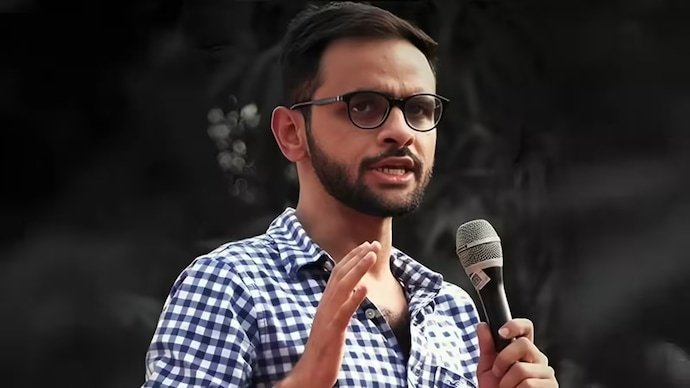
The Umar Khalid Case Became the Flashpoint
The renewed debate intensified after Supreme Court observations regarding activist Umar Khalid’s continued incarceration.
Khalid has remained in jail since 2020 in connection with the alleged larger conspiracy behind the Delhi riots.
During recent proceedings, Justice Ujjal Bhuyan reportedly questioned whether previous rulings denying bail adequately considered the precedent established in the KA Najeeb case.
The core concern was judicial consistency.
If a larger bench had already recognised prolonged incarceration as a valid ground for bail, could smaller benches adopt narrower standards without referring the matter back to a larger constitutional bench?
This issue goes beyond one individual case.
It strikes directly at the doctrine of precedent, which forms the backbone of judicial discipline in India’s legal system.
Why the Delhi Police Wants a Larger Bench
The Delhi Police has now formally sought a larger bench review to settle what it describes as conflicting interpretations of UAPA bail jurisprudence.
Its argument is significant for several reasons.
First, anti-terror investigations often involve lengthy probes, complex evidence chains, and national security considerations. Investigative agencies worry that a broader interpretation favouring bail could weaken ongoing investigations or increase security risks.
Second, the police appear concerned about judicial uncertainty.
Different benches applying different standards create unpredictability for:
- Investigating agencies
- Trial courts
- High Courts
- Accused persons
- Prosecutors
A larger constitutional bench ruling could establish a uniform legal standard applicable nationwide.
The Constitutional Clash: Liberty vs National Security
At its heart, the UAPA bail debate represents one of the oldest tensions in constitutional democracies:
How far can the state restrict individual liberty in the name of national security?
This is not an issue unique to India.
Countries across the world have struggled with similar legal dilemmas after major security threats.
| Country | Anti-Terror Law Debate |
|---|---|
| United States | Patriot Act and detention powers after 9/11 |
| United Kingdom | Extended detention and surveillance laws |
| France | Emergency security powers after terror attacks |
| India | UAPA and prolonged incarceration concerns |
In nearly every democracy, courts eventually become the arena where security concerns collide with civil liberties.
India’s Supreme Court is now facing precisely that challenge.
The Problem of Delayed Trials
One of the strongest arguments raised by civil liberties advocates concerns the pace of trials under anti-terror laws.
Many UAPA cases involve:
- Thousands of pages of evidence
- Large numbers of witnesses
- Complex digital records
- Multiple accused persons
- Lengthy forensic investigations
As a result, trials can take years to conclude.
Critics argue that if bail remains nearly impossible during this period, accused individuals may spend enormous portions of their lives imprisoned before guilt is legally established.
This creates what legal scholars sometimes describe as “process becoming punishment.”
Even eventual acquittal may not compensate for years already spent behind bars.
Why Courts Are Divided on the Issue
The judiciary’s divided approach reflects the complexity of the issue itself.
Arguments Supporting Strict Bail Standards
- Terror investigations involve national security risks
- Evidence networks are often highly sensitive
- Witness intimidation risks may exist
- International terror financing and coordination require time-intensive investigations
- Premature release could endanger public order
Arguments Supporting Liberal Bail Principles
- The Constitution guarantees personal liberty
- Presumption of innocence remains fundamental
- Delayed trials violate due process
- Indefinite incarceration without conviction undermines democracy
- Exceptional laws should not override basic constitutional rights permanently
The Supreme Court’s eventual direction could significantly influence how India balances these competing priorities in future cases.
Why This Debate Matters Beyond High-Profile Cases
Public attention often focuses on well-known names like Umar Khalid or other prominent accused individuals.
But the legal principles being debated affect far more people than those making headlines.
Across India, numerous undertrials booked under anti-terror provisions remain imprisoned for extended periods awaiting trial.
The Supreme Court’s interpretation of UAPA bail standards will shape:
- Future anti-terror prosecutions
- Trial court approaches nationwide
- Human rights jurisprudence
- Investigative agency powers
- The pace of criminal justice reform
In that sense, this is not merely a procedural legal dispute. It is a constitutional moment.
The Larger Institutional Question
Another important aspect often overlooked in public discussions is institutional credibility.
Courts must ensure consistency not only for legal accuracy but also for public confidence.
Justice Bhuyan’s observations regarding smaller benches being bound by larger bench precedents touch on a critical judicial principle:
The stability of constitutional law depends on consistency in interpretation.
If different benches apply fundamentally different standards under the same law, legal certainty weakens.
A larger bench review could therefore help resolve not only the bail issue itself but also broader concerns regarding judicial coherence.
What Happens Next?
If the Supreme Court agrees to refer the issue to a larger bench, the matter could become one of the most consequential constitutional hearings involving anti-terror laws in recent years.
The larger bench may examine several crucial questions:
- How should courts interpret Section 43D(5) of the UAPA?
- Can prolonged incarceration override statutory bail restrictions?
- What constitutes reasonable delay in trial?
- How should constitutional liberty interact with national security legislation?
- Are existing precedents being applied consistently?
The answers could redefine India’s anti-terror legal landscape for years.
Conclusion: The Supreme Court Faces a Defining Constitutional Test
The ongoing UAPA bail debate is no longer simply about individual accused persons or isolated court proceedings.
It has evolved into a larger constitutional examination of how India defines justice during times of heightened security concerns.
The government’s push for a larger bench review reflects the seriousness of the issue and the uncertainty surrounding conflicting judicial interpretations.
At stake is the delicate balance between two powerful state responsibilities:
- Protecting national security
- Protecting constitutional liberty
Neither objective can be ignored in a democracy.
But the challenge before the Supreme Court is determining where the legal equilibrium should lie when anti-terror laws collide with fundamental rights.
Whatever direction the court ultimately takes, the judgment will likely become one of the defining legal precedents shaping India’s criminal justice system in the coming decade.
For breaking news and live news updates, like us on Facebook or follow us on Twitter and Instagram. Read more on Latest India on thefoxdaily.com.






COMMENTS 0