- What Is Happening in Congo and Uganda?
- What Makes the Bundibugyo Ebola Virus Different?
- Why WHO Declared an International Emergency
- Why Eastern Congo Is Particularly Vulnerable
- How Ebola Spreads And Why It Is So Dangerous
- The Uganda Connection Raises Regional Fears
- Why This Outbreak Matters Globally
- The Bigger Problem: Outbreak Fatigue in a Post-COVID World
- What Happens Next?
- Conclusion
The World Health Organization’s decision to declare the Ebola outbreak in the Democratic Republic of Congo (DRC) and Uganda a “public health emergency of international concern” is more than a routine health warning. It is a signal that Global Health authorities are deeply concerned about the possibility of a wider regional crisis unfolding in Central and East Africa.
At the center of the outbreak is the Bundibugyo strain of the Ebola virus, a rare but highly dangerous variant that has already caused dozens of deaths and triggered cross-border infections. Unlike the better-known Zaire strain of Ebola, which has approved vaccines and treatments, the Bundibugyo virus presents a far more complicated challenge because there are currently no strain-specific vaccines or therapeutics available.
That reality changes the risk calculation significantly.
While the WHO clarified that the outbreak does not currently meet the threshold of a global pandemic emergency, the agency’s declaration reflects mounting concern over the outbreak’s speed, geography, and potential for regional spread. Health experts fear that porous borders, fragile medical systems, armed conflict in eastern Congo, and delayed detection could allow the virus to expand faster than containment efforts.
The outbreak is already being treated as one of the most serious Ebola emergencies in recent years.
What Is Happening in Congo and Uganda?
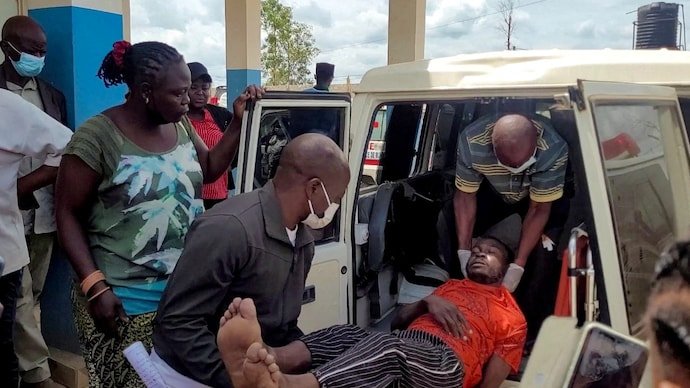
The outbreak began in the eastern Democratic Republic of Congo, particularly in Ituri province, a region already struggling with armed violence, displacement, and weak Healthcare access.
According to WHO figures, dozens of deaths and hundreds of suspected cases have been reported across multiple health zones, including Bunia, Rwampara, and Mongbwalu.
The situation became even more alarming after laboratory-confirmed cases appeared outside the immediate outbreak zone:
- A confirmed case was reported in Kinshasa, the capital of the DRC
- Cases linked to cross-border travel were detected in Uganda
- At least one Ebola-related death was reported in Kampala
The appearance of infections in major urban areas immediately raised fears of broader transmission networks.
Large cities create unique risks during Ebola outbreaks because infected individuals can unknowingly expose far more people through crowded transportation systems, hospitals, markets, and informal settlements.
This is one reason the WHO escalated the crisis to an international emergency level.
What Makes the Bundibugyo Ebola Virus Different?
Most major Ebola outbreaks in Congo have historically involved the Zaire strain, which is the deadliest and most extensively studied form of the virus. Over time, vaccines and targeted therapies were developed specifically for that strain.
The current outbreak is different.
The Bundibugyo virus is a rarer species of Ebola first identified in Uganda in 2007. Although it generally has a lower fatality rate than the Zaire strain, it still causes severe disease and can spread rapidly through direct human contact.
The biggest challenge is the lack of specialized medical tools.
There are currently:
- No approved Bundibugyo-specific vaccines
- No proven targeted treatments
- Limited clinical research compared to Zaire Ebola
- Fewer established response protocols
This forces healthcare workers to rely heavily on supportive care, isolation, contact tracing, and infection control measures rather than pharmaceutical intervention.
In epidemic response terms, that is a major disadvantage.
Why WHO Declared an International Emergency
A “public health emergency of international concern” is the WHO’s highest formal alert mechanism for serious disease outbreaks with cross-border implications.
The declaration does not mean the world is facing another COVID-style pandemic. However, it does indicate that international coordination is urgently needed.
The WHO’s decision appears to have been driven by several major concerns:
- Documented international spread between Congo and Uganda
- Cases emerging in large urban centers
- The absence of approved vaccines for the Bundibugyo strain
- High positivity rates among tested samples
- Weak health infrastructure in affected areas
- Risk of underreporting in conflict zones
One especially worrying factor is the possibility that the real scale of the outbreak may already be larger than official figures suggest.
Ebola outbreaks are often difficult to track accurately during the early stages because many infected people:
- Avoid hospitals
- Die before testing
- Travel across borders informally
- Remain in remote rural areas
- Fear stigma or quarantine
As a result, confirmed case numbers often lag behind actual transmission.
Why Eastern Congo Is Particularly Vulnerable
The Democratic Republic of Congo has experienced more Ebola outbreaks than any other country since the virus was first identified near the Ebola River in 1976.
Several factors make eastern Congo especially vulnerable:
| Risk Factor | Impact on Ebola Response |
|---|---|
| Dense tropical forests | Natural reservoir for Ebola virus transmission |
| Armed conflict | Limits healthcare access and emergency response |
| Population displacement | Increases uncontrolled movement of potentially infected people |
| Weak infrastructure | Slows testing, treatment, and isolation efforts |
| Cross-border trade | Facilitates international spread |
| Public distrust | Reduces cooperation with health authorities |
Eastern Congo’s security environment is particularly problematic.
Some outbreak zones are affected by armed militia activity, making it difficult for healthcare workers to safely conduct testing, contact tracing, and community outreach.
During previous Ebola outbreaks, attacks on treatment centers and medical personnel significantly disrupted containment efforts.
This creates a dangerous cycle where delayed intervention allows the virus to spread more widely.
How Ebola Spreads And Why It Is So Dangerous
Ebola is not airborne like influenza or COVID-19, but it remains one of the deadliest infectious diseases in the world because of how aggressively it attacks the body.
The virus spreads through direct contact with:
- Bodily fluids of infected individuals
- Blood, vomit, or saliva
- Contaminated surfaces or medical equipment
- Bodies of deceased Ebola victims
Symptoms often begin with:
- Fever
- Fatigue
- Muscle pain
- Headaches
- Vomiting
- Diarrhea
As the disease progresses, severe dehydration, organ failure, and internal bleeding can occur.
One of Ebola’s greatest dangers is that early symptoms resemble common tropical illnesses such as malaria or typhoid. This can delay isolation and allow infected individuals to unknowingly spread the virus.
Healthcare settings themselves can also become transmission hotspots if protective equipment and infection-control systems are inadequate.
The Uganda Connection Raises Regional Fears
Uganda’s involvement has intensified concern because the country acts as a major regional transit corridor in East Africa.
Cross-border movement between Uganda and eastern Congo is extensive and constant. People travel daily for:
- Trade
- Employment
- Family connections
- Medical treatment
- Refugee movement
Completely sealing borders is nearly impossible.
That is why the WHO advised countries not to impose blanket border closures despite the emergency declaration.
History has shown that aggressive travel bans can sometimes backfire by pushing movement underground through informal crossings that evade health monitoring.
Instead, the WHO is emphasizing:
- Cross-border screening
- Rapid testing
- Contact tracing
- Isolation protocols
- Community awareness campaigns
The strategy focuses on surveillance rather than isolationism.
Why This Outbreak Matters Globally
At first glance, an Ebola outbreak in Central Africa may appear geographically distant from much of the world. But modern outbreaks are never purely local events.
Globalization has changed disease dynamics dramatically.
Air travel, migration, international commerce, and urbanization mean infectious diseases can spread faster than ever before. Even though Ebola is harder to transmit internationally than respiratory viruses, a single infected traveler can trigger enormous public health challenges.
The 2014–2016 West Africa Ebola outbreak demonstrated this clearly.
That epidemic infected more than 28,000 people and caused global panic after isolated cases appeared in Europe and the United States.
The current outbreak is smaller for now, but health authorities are acting aggressively precisely because they want to avoid repeating the mistakes of delayed response seen during earlier epidemics.
The Bigger Problem: Outbreak Fatigue in a Post-COVID World
One of the less discussed challenges surrounding the Ebola emergency is global outbreak fatigue.
After COVID-19, many governments and populations are less responsive to infectious disease warnings. Public health systems in numerous countries are also financially strained.
That creates a dangerous environment where emerging outbreaks may struggle to receive:
- Rapid funding
- Political attention
- International medical support
- Media focus
Ironically, the world is simultaneously more experienced with pandemics and more exhausted by them.
This may become one of the defining public health challenges of the coming decade.
What Happens Next?
The coming weeks will determine whether the outbreak can be contained or whether it expands further across Central and East Africa.
Several factors will shape the outcome:
- Speed of contact tracing
- Availability of protective equipment
- Cross-border cooperation
- Public trust in health authorities
- Security conditions in outbreak zones
- International funding support
Scientists are also expected to accelerate research into Bundibugyo-specific vaccines and therapies.
While Ebola outbreaks are not new for the DRC, the emergence of a strain without approved targeted countermeasures increases pressure on global health agencies to respond quickly.
The emergency declaration may help mobilize resources faster but time remains critical.
Conclusion
The WHO’s declaration of an international emergency over the Ebola outbreak in Congo and Uganda is a warning that the situation carries risks far beyond local borders.
The Bundibugyo virus presents unique challenges because it lacks approved vaccines and therapies, while the outbreak itself is unfolding in regions already burdened by conflict, weak healthcare systems, and heavy cross-border movement.
Although the WHO has stressed that this is not currently a pandemic-level event, the outbreak highlights how vulnerable the world remains to infectious disease threats.
It also serves as another reminder that epidemics are not merely medical crises. They are deeply connected to politics, infrastructure, public trust, poverty, and global cooperation.
In the end, containing Ebola will depend not only on laboratories and hospitals, but also on whether governments and communities can act faster than the virus itself.
For breaking news and live news updates, like us on Facebook or follow us on Twitter and Instagram. Read more on Latest World on thefoxdaily.com.



COMMENTS 0