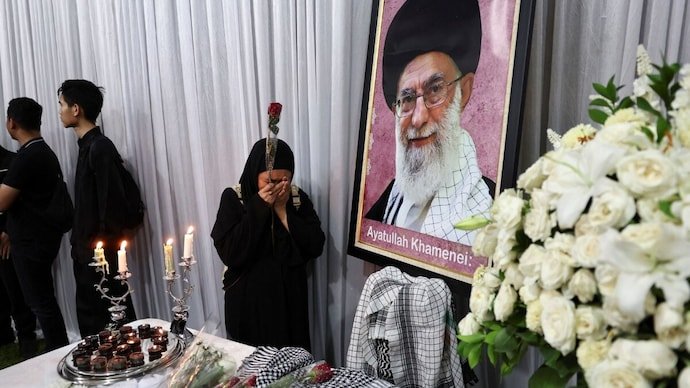
The announcement of funeral and burial arrangements for Ayatollah Ali Khamenei has opened a new chapter in one of the most consequential political transitions in modern Middle Eastern history. Iranian state media confirmed that funeral ceremonies for the late Supreme Leader will begin in Tehran on July 4, continue through major religious centres including Qom, and conclude with his burial in Mashhad on July 9.
Khamenei’s death ends an era that shaped Iran’s domestic politics, foreign policy, military strategy and relationship with the wider world for more than three decades. As the Islamic Republic prepares to lay its most influential leader to rest, attention is rapidly shifting toward what comes next—for Iran, for the region, and for global Geopolitics.
The significance of these ceremonies extends far beyond tradition. They represent a carefully managed political process designed to demonstrate continuity, preserve stability and reinforce the legitimacy of Iran’s governing institutions during a period of extraordinary uncertainty.
Who Was Ayatollah Ali Khamenei?
Ayatollah Ali Khamenei served as Iran’s Supreme Leader for 36 years, making him one of the longest-serving and most powerful political figures in the modern Middle East.
Born in Mashhad in 1939, Khamenei emerged as a prominent revolutionary figure during the movement that led to the 1979 Iranian Revolution. Following the establishment of the Islamic Republic, he held several influential positions, including President of Iran, before becoming Supreme Leader in 1989 after the death of Ayatollah Ruhollah Khomeini.
As Supreme Leader, Khamenei held authority over key state institutions including:
- The armed forces
- The Islamic Revolutionary Guard Corps (IRGC)
- National Security policy
- The judiciary
- State broadcasting
- Major strategic foreign policy decisions
His position made him arguably the most powerful individual in Iran’s political system, often exerting influence beyond elected governments and presidents.
Funeral Schedule and Burial Plans
According to state media reports, the funeral process will unfold over several days rather than following the traditional rapid burial commonly observed under Islamic customs.
| Date | Event |
| July 4 | State funeral ceremonies begin in Tehran |
| July 7 | Religious commemorations in Qom |
| July 9 | Final burial in Mashhad |
The decision to hold a multi-city funeral reflects both Khamenei’s status and the political symbolism attached to his legacy. Tehran represents the political heart of the Islamic Republic, while Qom serves as the country’s leading centre of Shia religious scholarship. Mashhad, his birthplace, carries deep personal and spiritual significance.
Such an extended schedule also allows millions of Iranians an opportunity to participate in public mourning ceremonies.
Why Is the Burial Taking Place Days Later?
Islamic tradition generally encourages burial as soon as possible after death, often within 24 hours. However, exceptions have historically been made for national leaders, wartime circumstances and situations involving major state ceremonies.
The extended funeral timeline serves several purposes:
- Allowing nationwide participation in mourning events
- Providing security agencies adequate preparation time
- Facilitating visits by foreign dignitaries and religious leaders
- Demonstrating political unity during a sensitive transition period
- Creating an organized transfer of authority within state institutions
For Iran’s leadership, the funeral is not merely a religious event. It is also a display of state continuity and institutional stability.
The Legacy of a 36-Year Rule
Khamenei’s tenure coincided with some of the most turbulent decades in Middle Eastern politics.
During his leadership, Iran evolved into a major regional power with influence extending across multiple countries through political alliances, military partnerships and strategic networks.
His government navigated:
- International sanctions
- Regional conflicts
- Nuclear negotiations
- Economic crises
- Domestic political protests
- Major geopolitical shifts across West Asia
Supporters view Khamenei as a leader WHO preserved Iranian sovereignty and resisted external pressure. Critics argue that his administration maintained strict political controls and limited dissent.
Regardless of perspective, few dispute the scale of his influence. For an entire generation of Iranians, Khamenei was synonymous with the state itself.
How Khamenei Shaped Iran’s Regional Strategy
One of Khamenei’s most enduring legacies was the development of Iran’s regional influence strategy.
Under his leadership, Tehran invested heavily in expanding political and security relationships throughout the Middle East. This approach allowed Iran to project power beyond its borders while countering rivals and adversaries.
The strategy reshaped regional politics in several ways:
- Increasing Iran’s strategic depth
- Expanding diplomatic influence
- Strengthening deterrence capabilities
- Creating regional alliances
- Enhancing Iran’s negotiating position internationally
This network became a defining feature of Iran’s foreign policy and remains a key component of the country’s security doctrine.
The Nuclear Issue That Defined an Era
No issue was more closely associated with Khamenei’s international legacy than Iran’s nuclear programme.
For years, Tehran maintained that its nuclear activities were intended for peaceful civilian purposes, including energy generation and scientific research. Western governments frequently expressed concerns regarding potential military dimensions of the programme.
The resulting dispute shaped decades of Diplomacy, sanctions and negotiations.
Successive rounds of talks sought to bridge differences between Iran and major world powers. While temporary agreements were reached at various points, the issue remained a central source of tension throughout Khamenei’s leadership.
The future direction of Iran’s nuclear policy is expected to remain one of the most closely watched aspects of the country’s post-Khamenei era.
The Succession Challenge: A Defining Moment for Iran
Leadership transitions in political systems built around powerful individuals are rarely simple.
The appointment of a new Supreme Leader carries enormous implications for Iran’s domestic Governance and foreign policy priorities.
Historically, transitions at the top of the Islamic Republic have been rare events. The current succession process therefore represents one of the most important political developments in Iran since 1989.
The new leadership will face immediate challenges:
- Maintaining political stability
- Managing economic pressures
- Handling international relations
- Addressing regional security concerns
- Responding to public expectations
How effectively these challenges are managed could shape Iran’s trajectory for decades.
Economic Implications of the Leadership Transition
Political transitions often create uncertainty in financial markets and economic planning.
Iran enters this period facing significant economic challenges, including inflation pressures, sanctions-related constraints and the need for long-term investment.
Investors and policymakers around the world will be monitoring whether the new leadership maintains existing economic policies or introduces reforms designed to stimulate growth.
Energy Markets are particularly sensitive to developments in Iran because of the country’s role as a major oil and gas producer.
Any changes in diplomatic relations, sanctions policy or regional stability could influence Global energy prices.
Why the Funeral Matters Beyond Iran
The significance of Khamenei’s funeral extends far beyond Iranian borders.
Major world powers, regional governments and international organizations are all watching closely because leadership changes in Tehran can influence:
- Energy markets
- Maritime security
- Regional conflicts
- Nuclear diplomacy
- Trade routes
- International investment decisions
The Middle East remains one of the world’s most strategically important regions. Any major shift in Iran’s leadership inevitably attracts global attention.
A Historical Comparison: Iran’s Two Great Leadership Transitions
Many analysts are comparing the current moment with the death of Ayatollah Ruhollah Khomeini in 1989.
That transition ultimately led to Khamenei’s rise and ushered in a new phase of Iranian governance.
However, today’s circumstances differ significantly.
| 1989 Transition | 2026 Transition |
| Post-Iran-Iraq War environment | Complex regional security environment |
| Emerging globalisation era | Multipolar geopolitical landscape |
| Limited digital communication | Instant global information flow |
| Different economic structure | Sanctions-influenced economy |
These differences mean that Iran’s current transition will unfold under very different domestic and international conditions.
The Human Dimension Often Overlooked
Beyond politics and geopolitics lies a deeply personal dimension.
For many Iranians, Khamenei was a figure who influenced national life for nearly four decades. Entire generations grew up during his tenure.
Whether viewed through the lens of support, criticism or historical significance, his death marks the end of a familiar chapter in Iran’s national story.
Funerals of major political leaders often become moments of collective reflection, allowing societies to assess the achievements, controversies and consequences of an era that has concluded.
What Happens Next?
Several developments are likely to dominate attention in the coming months:
- Implementation of the succession process
- Potential adjustments in foreign policy
- Economic policy decisions
- Future nuclear negotiations
- Regional diplomatic initiatives
- Internal political realignment
Observers will be looking for signals regarding continuity versus change.
The key question is not simply who leads Iran next, but how the next leader chooses to govern in an increasingly complex international environment.
Conclusion: The End of an Era and the Beginning of Another
The funeral and burial of Ayatollah Ali Khamenei represent more than the passing of a national leader. They symbolize the conclusion of one of the longest and most influential political eras in modern Middle Eastern history.
For 36 years, Khamenei played a central role in shaping Iran’s domestic policies, regional influence and global relationships. His leadership left a profound imprint on the Islamic Republic and on the wider geopolitical landscape.
As millions prepare to participate in ceremonies stretching from Tehran to Qom and finally Mashhad, attention is already turning toward the future. The coming months will determine whether Iran’s next chapter is defined primarily by continuity, reform or strategic recalibration.
One thing is certain: the decisions made after Khamenei’s burial may prove just as historically significant as those made during his lifetime. The funeral marks the end of an era, but the political, economic and geopolitical consequences of his legacy will continue to shape Iran and the Middle East for years to come.
For breaking news and live news updates, like us on Facebook or follow us on Twitter and Instagram. Read more on Latest World on thefoxdaily.com.

COMMENTS 0