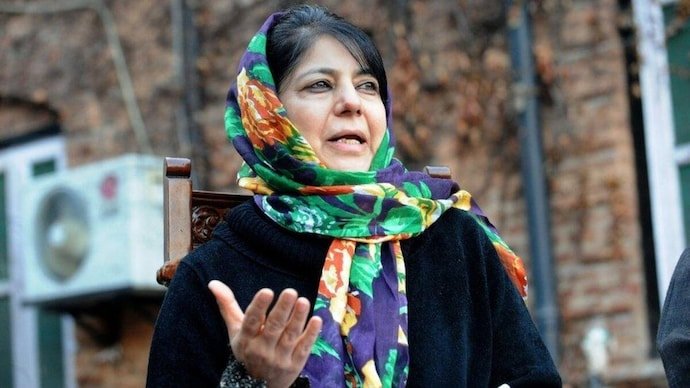
The Mehbooba Mufti Iran visit has drawn attention as the former Jammu and Kashmir Chief Minister attended the funeral of Iran’s former Supreme Leader, Ayatollah Ali Khamenei, in Tehran. Speaking during the funeral ceremonies, Mufti praised Iran’s resilience during the recent conflict and offered condolences to Khamenei’s family. Her remarks reflected her personal political views and highlighted the historical, cultural, and religious connections that have existed for centuries between Kashmir and Iran. The visit also coincided with one of the largest public mourning ceremonies in Iran’s recent history, attended by political leaders, diplomats, and religious figures from multiple countries.
WHO attended the funeral? Mehbooba Mufti, along with international dignitaries and political representatives. What was the occasion? Funeral ceremonies for former Iranian Supreme Leader Ayatollah Ali Khamenei. When? During the week-long state funeral following his death. Where? Tehran’s Grand Mosalla, before the funeral procession continued to other holy cities. Why is the visit significant? It reflects both diplomatic engagement and longstanding historical connections between Kashmir and Persian civilization. How did Mufti express her condolences? She publicly shared her views, praised Iran’s resilience, and stated that she had written a condolence letter to Mojtaba Khamenei.
Mehbooba Mufti’s Remarks in Tehran
While speaking during the funeral ceremonies, Mehbooba Mufti described Iran’s conduct during and after the recent conflict as an example of resilience and determination.
She also offered condolences to the family of the late Supreme Leader and stated that she had written to Mojtaba Khamenei following his father’s death.
The comments represent Mufti’s personal political opinions expressed during the funeral and should be understood in that context.
International Participation in the Funeral
The funeral attracted political leaders, diplomats, religious scholars, and mourners from Iran and abroad.
Iran organized an extended series of public ceremonies, allowing large numbers of people to pay their respects before the burial.
The funeral route includes several cities of major religious importance, reflecting both political and spiritual dimensions of the event.
India’s Presence at the Funeral
India was represented through both official and non-governmental delegations.
The participation included:
- Official government representatives.
- Political leaders from opposition parties.
- Diplomatic engagement.
- Condolence visits.
The presence of multiple delegations illustrates the importance often attached to maintaining diplomatic communication during significant international events.
The Historical Relationship Between Kashmir and Iran
One of the themes highlighted by Mufti was the centuries-old relationship between Kashmir and Persia.
These historical connections extend far beyond modern politics.
Persian influence shaped Kashmir in numerous ways, including:
- Language and literature.
- Architecture.
- Art and craftsmanship.
- Religious scholarship.
- Poetry.
- Administrative traditions.
For several centuries, Persian served as an important language of administration and scholarship across parts of the Indian subcontinent, including Kashmir.
Why Kashmir Is Sometimes Called “Mini Iran”
The phrase “Mini Iran” has occasionally been used by some scholars, writers, and public figures to describe the strong Persian cultural imprint on Kashmir.
This influence can still be observed through:
- Traditional architecture.
- Persian vocabulary in Kashmiri and Urdu.
- Classical poetry.
- Religious institutions.
- Historic manuscripts.
Although the expression is symbolic rather than official, it reflects centuries of cultural interaction between the two regions.
Who Was Ayatollah Ali Khamenei?
Ayatollah Ali Khamenei served as Iran’s Supreme Leader for several decades, making him the country’s highest political and religious authority.
His responsibilities included oversight of:
- National security.
- Foreign policy.
- Armed forces.
- Religious leadership.
- Strategic state institutions.
His leadership influenced Iran’s domestic governance as well as its International Relations for many years.
The Funeral Procession Across Holy Cities
Iran planned an extended funeral route that moves beyond the capital.
| Location | Purpose | Importance |
|---|---|---|
| Tehran | Public mourning and funeral prayers. | Political capital of Iran. |
| Qom | Religious ceremonies. | Major Shia theological center. |
| Najaf | Commemorative observances. | Important Shia holy city in Iraq. |
| Karbala | Religious tribute. | Associated with Imam Hussain. |
| Mashhad | Final burial. | One of Iran’s holiest cities. |
Islamic Burial Traditions
Under Islamic tradition, burials are generally performed as soon as practical, often within twenty-four hours.
However, exceptional circumstances—including security concerns, natural disasters, or logistical challenges—can result in delays.
In this instance, Iranian authorities postponed the funeral because of security considerations before scheduling the extended public ceremonies.
Religion, Diplomacy, and Public Mourning
Large state funerals frequently combine several dimensions simultaneously.
They often include:
- Religious observance.
- National mourning.
- Diplomatic engagement.
- International participation.
- Historical symbolism.
For visiting political leaders, attendance may represent condolences, diplomatic outreach, cultural respect, or personal conviction depending on individual circumstances.
Timeline of Events
| Event | Development | Significance |
|---|---|---|
| Recent conflict | Regional military confrontation. | Creates security concerns. |
| Death of Ayatollah Khamenei | National mourning declared. | Major political transition. |
| Funeral begins | Public ceremonies held in Tehran. | Large public participation. |
| International attendance | Foreign dignitaries arrive. | Diplomatic engagement. |
| Final burial | Interment planned in Mashhad. | Conclusion of funeral rites. |
Comparison: Official Government Delegations vs. Political Delegations
| Official Government Delegation | Political or Party Delegation |
|---|---|
| Represents the government officially. | Represents individual political parties or leaders. |
| Conducts formal diplomatic engagement. | May express personal or party viewpoints. |
| Acts according to government policy. | Acts independently of official state positions. |
| Diplomatic protocol driven. | Political or symbolic participation. |
The Broader Importance of Cultural Connections
Historical Relationships between regions often continue influencing contemporary diplomacy.
The centuries-old cultural exchanges between Persia and Kashmir demonstrate how language, literature, education, architecture, and religious scholarship can shape societies long after political circumstances change.
These shared historical experiences continue to feature in cultural discussions and public diplomacy even today.
A Unique Insight: State Funerals Often Become Diplomatic Platforms
Major state funerals are not solely ceremonies of remembrance. They frequently serve as venues for diplomatic interaction, symbolic messaging, and international engagement.
Political leaders attending such events often balance expressions of condolence with broader discussions about historical ties, regional relationships, and future cooperation.
As a result, public statements made during these occasions can carry diplomatic significance beyond the immediate funeral itself.
Future Outlook
Following the conclusion of the funeral ceremonies, attention is expected to shift toward Iran’s evolving political leadership and its diplomatic engagement with regional and international partners. Observers will also continue monitoring how cultural, religious, and historical relationships influence interactions between Iran and countries across South Asia and the broader Middle East.
The enduring historical connections between Kashmir and Persian civilization are also likely to remain an area of academic, cultural, and diplomatic interest, independent of changing political developments.
Conclusion
The Mehbooba Mufti Iran visit highlighted both the international attention surrounding Ayatollah Ali Khamenei’s funeral and the enduring historical links between Kashmir and Iran. Her participation, remarks, and expression of condolences reflected her personal political perspective while also drawing attention to centuries of shared cultural and religious interaction between the two regions.
As Iran continues its week-long funeral ceremonies across several holy cities, the event remains significant not only as a moment of national mourning but also as an occasion for international diplomacy, historical reflection, and cultural engagement. The funeral underscores how major state ceremonies often bring together religion, politics, history, and international relations in ways that extend well beyond the immediate event itself.
For breaking news and live news updates, like us on Facebook or follow us on Twitter and Instagram. Read more on Latest World on thefoxdaily.com.






COMMENTS 0