- The Core Issue: Can a Chief Minister Stay Without Majority or Mandate?
- What the Constitution Actually Says
- The Role of the Governor: Quiet Power in a Critical Moment
- Refusing to Resign: Political Statement vs Legal Reality
- Can the Election Results Be Challenged?
- The Bigger Picture: Why This Moment Matters
- Comparison: Political Defiance vs Constitutional Certainty
- What Happens Next: Step-by-Step Transition
- A Deeper Insight: The Strength of Silent Rules
- Prediction: Political Narrative Will Continue, But Power Will Shift
- Conclusion: A Test of Institutions, Not Just Leadership
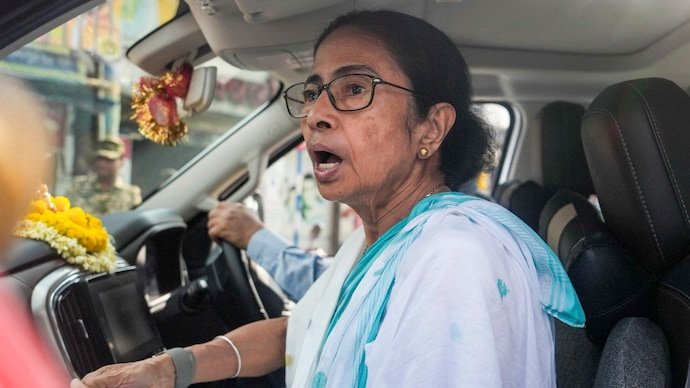
West Bengal is witnessing an unusual political moment one that blends defiance, constitutional limits, and high-stakes transition. Mamata Banerjee’s refusal to resign after an electoral defeat has triggered intense debate: can a sitting Chief Minister continue in office simply by refusing to step down?
The short answer is no. The longer answer, however, reveals how India’s constitutional framework handles power, transitions, and political resistance.
This is not just about one leader. It’s about how democracy resets itself when voters deliver a verdict and what happens when Politics tries to delay that reset.
The Core Issue: Can a Chief Minister Stay Without Majority or Mandate?
In India’s parliamentary system, a Chief Minister holds office as long as two conditions are met: the confidence of the legislative assembly and the validity of the assembly’s term. Remove either, and the position becomes untenable.
In this case, both conditions are under pressure.
- The ruling party has lost the election
- The five-year constitutional term of the assembly is ending
That combination leaves very little room for interpretation. Regardless of political statements, the legal framework is clear the government’s mandate expires automatically at the end of its term.
What the Constitution Actually Says
At the heart of this situation lies a simple but powerful rule: state assemblies in India cannot exist beyond five years unless under extraordinary circumstances like a national emergency.
Once that five-year period ends, the assembly dissolves automatically. There is no extension by choice, no pause for negotiation, and no exception based on political disagreement.
That means the Chief Minister’s position also effectively ends with it.
Even if no resignation is submitted, the office cannot continue beyond the constitutional deadline. It’s not about willingness it’s about legality.
The Role of the Governor: Quiet Power in a Critical Moment
When political uncertainty meets constitutional deadlines, the Governor becomes a central figure. Not as a political actor, but as a constitutional authority ensuring continuity.
Here’s how that typically plays out:
- The outgoing Chief Minister may be asked to continue temporarily
- This is only until a new government is ready to take oath
- It is a caretaker role, not a continuation of full power
This distinction matters. A caretaker government cannot take major policy decisions or introduce significant changes. Its role is limited to ensure administrative continuity, nothing more.
So even if Mamata Banerjee remains in office briefly, it would be symbolic and procedural not political control.
Refusing to Resign: Political Statement vs Legal Reality
When a leader says, “I won’t resign,” it carries political weight. It signals resistance, challenges the narrative, and energises supporters. But legally, it doesn’t change the outcome.
In India’s system, resignation is often a formality, not a requirement for transition. The system doesn’t depend on voluntary exit it is designed to enforce it through constitutional timelines.
In simple terms: the system moves forward whether a resignation is submitted or not.
Can the Election Results Be Challenged?
Yes but this is where many people misunderstand the process.
Election results can be challenged in court, typically through an election petition. However, this process operates independently of government formation.
That means:
- A challenge does not delay the formation of a new government
- It does not extend the term of the outgoing government
- It does not pause the constitutional timeline
Court proceedings take time often months or even years. Governance, however, cannot wait.
This separation ensures stability. Imagine if every disputed result froze governance the system would collapse under its own weight.
The Bigger Picture: Why This Moment Matters
This situation is not just a legal technicality it reflects a deeper political shift.
West Bengal has seen a dramatic change in voter sentiment. A strong mandate has been delivered, and transitions of this scale often come with friction. What we’re seeing now is that friction playing out in real time.
But here’s the key point: democratic systems are designed to absorb friction without breaking.
The Constitution doesn’t react emotionally. It follows timelines.
Comparison: Political Defiance vs Constitutional Certainty
| Aspect | Political Reality | Constitutional Reality |
|---|---|---|
| Resignation | Can be refused | Not mandatory for transition |
| Power Continuity | Claimed through statements | Ends with assembly term |
| Election Challenge | Used as political argument | Separate legal process |
| Authority | Based on perception | Based on mandate + timeline |
This contrast highlights something important: politics operates in narratives, but governance operates in rules.
What Happens Next: Step-by-Step Transition
The road ahead is more predictable than it may seem.
- The current assembly reaches the end of its five-year term
- The government transitions into a caretaker role (if needed)
- The Governor invites the majority party to form the government
- A new Chief Minister takes oath
This process has played out many times across India. It may feel dramatic in the moment, but institutionally, it’s routine.
A Deeper Insight: The Strength of Silent Rules
One of the most underrated aspects of India’s democracy is how much it relies on silent rules norms that don’t require constant enforcement because they are built into the system.
This is one such moment.
No dramatic intervention is needed. No extraordinary measures are required. The system simply follows its timeline, and power shifts accordingly.
It’s not loud. But it’s effective.
Prediction: Political Narrative Will Continue, But Power Will Shift
In the coming days, expect strong political messaging, legal arguments, and public statements. The narrative battle will continue.
But the actual transfer of power is unlikely to be disrupted.
Why? Because the Constitution leaves very little room for ambiguity in this scenario.
And when the rules are this clear, outcomes tend to follow them.
Conclusion: A Test of Institutions, Not Just Leadership
Mamata Banerjee’s refusal to resign may dominate headlines, but the real story lies elsewhere in how India’s constitutional system handles it.
This is a moment where political will meets institutional structure. And in such moments, structure usually wins.
The mandate has changed. The timeline is fixed. The transition is inevitable.
In the end, it’s a reminder of something fundamental: in a democracy, power doesn’t just depend on who wants to hold it,it depends on who is allowed to.
For breaking news and live news updates, like us on Facebook or follow us on Twitter and Instagram. Read more on Latest India on thefoxdaily.com.






COMMENTS 0