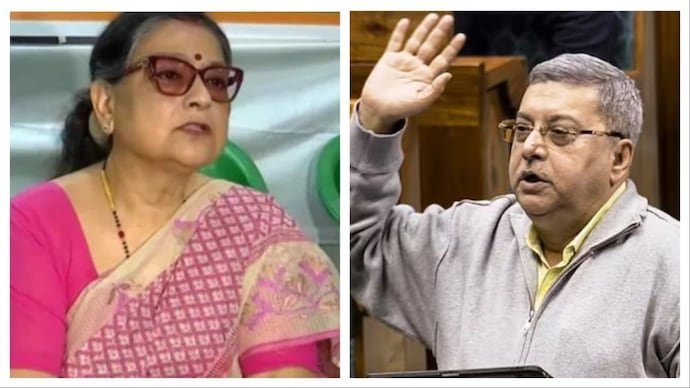
The Trinamool Congress (TMC), already battling political uncertainty after its disappointing Assembly election performance, is now confronting a deepening internal crisis after senior MP Kakoli Ghosh Dastidar accused party colleague and lok Sabha Chief Whip Kalyan Banerjee of misconduct and inappropriate behaviour toward women Members of Parliament.
In a formal letter dated May 28, 2026, addressed to Lok Sabha Speaker Om Birla, the Barasat MP alleged that Kalyan Banerjee routinely behaved in a derogatory and disrespectful manner toward women MPs inside Parliament. She demanded action and sought “punishment” against him, marking one of the most serious internal complaints to emerge publicly from within the Mamata Banerjee-led party in recent years.
The controversy has rapidly evolved beyond a personal dispute. Political observers now view it as a sign of growing unrest inside the TMC parliamentary unit, especially after the party’s crushing electoral defeat and subsequent organisational reshuffle.
Why the Complaint Against Kalyan Banerjee Matters Politically
The complaint is significant not only because it involves two senior Trinamool Congress MPs but also because it arrives at a politically vulnerable moment for the party.
Kakoli Ghosh Dastidar was recently removed as the TMC’s Chief Whip in the Lok Sabha and replaced by Kalyan Banerjee following the party’s electoral setback. Since then, tensions between the two leaders have increasingly spilled into public view.
Her latest move transforms what initially appeared to be an internal organisational disagreement into a much larger issue involving parliamentary conduct, women’s dignity, and internal party discipline.
The allegations could potentially create discomfort for the TMC leadership because the party has historically projected itself as a strong advocate for women’s representation and empowerment under Chief Minister Mamata Banerjee.
What Kakoli Ghosh Dastidar Alleged in Her Letter
According to the complaint, Kakoli Ghosh Dastidar accused Kalyan Banerjee of repeatedly engaging in inappropriate behaviour inside Parliament.
Importantly, she claimed the alleged conduct was not directed only at her but also affected other women MPs.
Her letter reportedly sought intervention from Speaker Om Birla and requested disciplinary action.
While the complete contents of the complaint have not been made public officially, the language used by Dastidar signals a serious breakdown in relations inside the TMC parliamentary group.
The accusations also raise broader questions about workplace conduct, political culture, and internal grievance mechanisms within major Indian political parties.
The Fallout of TMC’s Organisational Reshuffle
The roots of the current Conflict appear closely linked to the Trinamool Congress’s internal reshuffle after the Assembly election defeat.
Following the poor electoral performance, Mamata Banerjee initiated changes within the party structure aimed at rebuilding organisational control and containing dissatisfaction.
As part of those changes:
- Kakoli Ghosh Dastidar was removed as TMC Chief Whip in Lok Sabha
- Kalyan Banerjee was appointed in her place
- Several organisational responsibilities were redistributed
- The party leadership attempted to tighten central control
However, instead of calming tensions, the reshuffle appears to have exposed deeper fractures inside the party.
Political analysts believe the public nature of the dispute reflects frustration among sections of the TMC old guard who feel sidelined after the election defeat.
Kakoli Ghosh Dastidar’s Growing Rebellion Against the Party Leadership
Over the past few weeks, Kakoli Ghosh Dastidar has emerged as one of the most vocal critics of the TMC’s internal functioning.
Once considered part of Mamata Banerjee’s trusted inner circle, the veteran MP has increasingly expressed dissatisfaction over organisational decisions and the direction of the party.
Her rebellion unfolded in multiple stages.
Resignation From Key Party Posts
Dastidar first resigned as president of the TMC’s Barasat parliamentary district, taking what she described as “moral responsibility” for the party’s electoral defeat in the region.
She later stepped down from additional organisational responsibilities, including her role in the All India Trinamool Mahila Congress.
Sharp Criticism of Internal Culture
In her resignation letter, she indirectly attacked Kalyan Banerjee and criticised the inability of senior party leadership to address what she described as indecent behaviour toward women MPs.
Her comments suggested frustration not only with individual leaders but also with the party’s internal grievance-handling process.
Public Frustration Over Loyalty
After being removed as chief whip, Dastidar posted a cryptic Social Media message referencing her decades-long association with Mamata Banerjee.
The message implied disappointment over how her loyalty had been rewarded after nearly four decades in politics alongside the TMC leadership.
The Bigger Crisis Inside Trinamool Congress
The controversy highlights a larger challenge facing the Trinamool Congress after its electoral setback.
For years, the party operated with strong central leadership under Mamata Banerjee, often managing internal disagreements behind closed doors. However, the recent election defeat appears to have triggered open frustration among several leaders.
The Kakoli-Kalyan conflict may therefore represent only one visible symptom of broader organisational stress.
Political experts point to three major fault lines currently emerging inside TMC:
- Generational tensions between old guard leaders and newer power centres
- Frustration over organisational restructuring after the election defeat
- Concerns about decision-making concentration within the leadership
Managing these tensions could become one of Mamata Banerjee’s biggest political challenges in the coming months.
The Gender Dimension of the Controversy
The allegations also place the spotlight on the treatment of women leaders inside Indian political parties.
Despite increasing representation of women in Parliament, complaints involving disrespectful behaviour, internal intimidation, and political marginalisation remain sensitive issues across party lines.
Kakoli Ghosh Dastidar’s decision to formally approach the Lok Sabha Speaker instead of limiting the matter to internal party channels carries symbolic significance.
It suggests:
- A possible lack of confidence in internal conflict resolution
- An attempt to institutionalise the complaint formally
- A broader political message beyond personal grievance
The development may also put pressure on political parties to strengthen internal mechanisms dealing with complaints involving workplace dignity and parliamentary conduct.
The Electoral Defeat That Changed TMC’s Internal Dynamics
The backdrop to the current crisis is the Trinamool Congress’s disappointing Assembly election performance.
The electoral setback appears to have triggered blame games, organisational reviews, and power struggles inside the party.
Several leaders reportedly became unhappy over:
- Candidate selection decisions
- Campaign strategy
- Dependence on political consultants
- Disconnect with grassroots workers
Kakoli Ghosh Dastidar publicly criticised political consultancy firm I-PAC and accused the party leadership of ignoring grassroots concerns.
Her criticism reflected growing concerns within sections of TMC that the party may have become overly centralised and disconnected from local organisational realities.
Corruption Allegations and Public Perception Challenges
The internal rebellion also coincides with broader public criticism faced by the Trinamool Congress over multiple controversies in recent years.
Dastidar reportedly flagged concerns related to:
- The teacher recruitment scam
- Ration distribution corruption allegations
- The RG Kar Medical College controversy
While these issues are politically sensitive, they have already contributed to opposition attacks against the TMC.
The latest internal conflict risks amplifying perceptions of instability at a time when the party is trying to regain political momentum.
The Suvendu Adhikari Meeting That Triggered Speculation
Another factor intensifying speculation around Kakoli Ghosh Dastidar’s future was her appearance at an administrative meeting chaired by Suvendu Adhikari.
Adhikari, once a key TMC leader and now one of Mamata Banerjee’s fiercest political rivals, remains a highly symbolic figure in West Bengal politics.
Dastidar denied any political motive behind attending the meeting, but the appearance fueled rumors about possible realignments or growing distance from the party leadership.
In West Bengal’s politically charged environment, even symbolic gestures often attract enormous attention.
How Indian Political Parties Handle Internal Dissent
The TMC controversy reflects a broader reality of Indian politics: internal dissent is often tolerated only until it becomes public.
Most major political parties in India traditionally prefer to manage conflicts privately to avoid damaging public perception.
| Political Party Challenge | Common Consequence |
|---|---|
| Leadership reshuffles | Factional dissatisfaction |
| Electoral defeats | Internal blame games |
| Centralised decision-making | Rebellion from regional leaders |
| Public allegations between leaders | Image damage and instability perception |
The difference in this case is that the dispute involves formal allegations tied to parliamentary conduct and women MPs, making it more difficult for the party to quietly contain.
What Happens Next for TMC?
The Trinamool Congress leadership now faces several difficult choices.
Option 1: Internal Reconciliation
The party may attempt to quietly mediate between the two leaders and prevent further public escalation.
Option 2: Disciplinary Review
If pressure grows, the leadership could initiate internal disciplinary discussions or seek clarification from Kalyan Banerjee.
Option 3: Strategic Isolation
TMC may attempt to politically isolate dissenting voices to preserve organisational control ahead of future elections.
However, each option carries risks. Ignoring the issue could create perception problems, while aggressive disciplinary action may deepen internal rebellion.
Why This Crisis Matters Beyond West Bengal
The developments inside the TMC are being closely watched nationally because Mamata Banerjee remains one of India’s most prominent opposition leaders.
Any prolonged internal instability could affect:
- The party’s organisational rebuilding efforts
- Its national opposition positioning
- Its preparation for future elections
- Its image among women voters
The controversy also demonstrates how electoral defeats often expose tensions that remain hidden during periods of political success.
Conclusion
The complaint filed by Kakoli Ghosh Dastidar against Kalyan Banerjee has transformed an internal party disagreement into a major Political Controversy for the Trinamool Congress.
What began as dissatisfaction over organisational reshuffling now reflects deeper tensions involving leadership style, internal democracy, women’s dignity, and the future direction of the party after electoral defeat.
For Mamata Banerjee, the challenge extends beyond resolving a dispute between two MPs. The larger task is preventing internal frustration from evolving into a broader political rebellion at a time when the TMC is trying to regroup and rebuild.
Whether the crisis is contained quietly or escalates further could significantly shape the Trinamool Congress’s political trajectory in the months ahead.
For breaking news and live news updates, like us on Facebook or follow us on Twitter and Instagram. Read more on Latest India on thefoxdaily.com.






COMMENTS 0