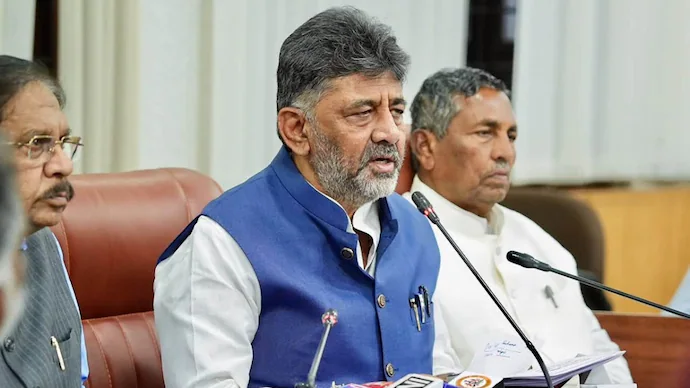
Karnataka Deputy Chief Minister DK Shivakumar has announced that the state government will challenge the Karnataka High Court judgment striking down enhanced reservation for Scheduled Castes (SCs) and Scheduled Tribes (STs) in the Supreme Court. Describing the verdict as unjust, Shivakumar said the government would strengthen its legal arguments and continue pressing for constitutional protection for the legislation.
The state is also planning to seek the inclusion of the reservation law in the Ninth Schedule of the Constitution, while preparing additional welfare measures for SC/ST communities. The decisions were discussed at a meeting in Bengaluru attended by SC/ST ministers, legislators and chairpersons.
The High Court judgment concerns a 2022 law that increased reservation for Scheduled Castes from 15% to 17% and for Scheduled Tribes from 3% to 7%. The changes raised the combined reservation for SCs, STs and Other Backward Classes (OBCs) in Karnataka from 50% to 56%, exceeding the general 50% ceiling that has shaped Reservation Policy in India.
Shivakumar Says Karnataka Will Move Supreme Court
Speaking after the meeting with representatives of SC/ST communities, Shivakumar said the Cabinet had decided to challenge the High Court’s decision. He said the government believed the enhanced reservation was necessary to address the needs and representation of the communities concerned.
“We have not received justice through that verdict. We have decided in the Cabinet to challenge the verdict. We have to strengthen our case and fight for justice. We have therefore decided to approach the Supreme Court.”
Shivakumar said he had discussed the issue with ministers, including G Parameshwara, and that the government would take the necessary steps to prepare its appeal. The legal challenge is expected to focus on the grounds used by the state to justify the increase and the constitutional questions raised by the High Court.
The Supreme Court will have to examine the arguments presented by the state and the reasoning behind the High Court’s ruling. Until the legal process produces a different outcome, the enhanced quotas cannot be treated as restored merely because Karnataka has decided to appeal.
Government Seeks Ninth Schedule Protection for Enhanced Reservation
Alongside the Supreme Court appeal, Shivakumar said Karnataka would continue urging the Centre to include the legislation in the Ninth Schedule of the Constitution. He said he would raise the demand with Prime Minister Narendra Modi and write to him seeking protection for the enhanced reservation.
“I will reiterate our demand and repeatedly meet the Prime Minister to press for the inclusion of this legislation in the Ninth Schedule. I will also write to the Prime Minister, requesting that justice be delivered to this community.”
The Ninth Schedule was introduced through the First Constitutional Amendment in 1951 to protect certain laws from being challenged on the grounds that they violated fundamental rights. However, its protection is not absolute. The Supreme Court has held that laws placed in the Ninth Schedule after April 24, 1973, can still face judicial review if they violate the Constitution’s basic structure.
In Karnataka’s case, inclusion would require action by the Union government through the constitutional amendment process. The state cannot place the legislation in the Ninth Schedule on its own.
The demand has also become a point of political disagreement between the Congress government in Karnataka and the previous BJP government, which enacted the quota legislation. The Congress government has accused its predecessor of failing to secure constitutional protection for the enhanced reservation when it introduced the law.
Why the Karnataka High Court Struck Down the Quota Hike
The dispute centres on the Karnataka Scheduled Castes and Scheduled Tribes (Reservation of Seats in Educational Institutions and of Appointments or Posts in the Services under the State) Act, 2022. The legislation increased the reservation for SCs from 15% to 17% and for STs from 3% to 7%.
The 32% reservation for OBC communities remained unchanged. As a result, the combined reservation for SCs, STs and OBCs rose from 50% to 56% in educational institutions and state government services.
On October 12, 2026, a division bench of the Karnataka High Court, comprising Chief Justice Vibhu Bakhru and Justice KS Hemalekha, struck down the provisions that enabled the enhanced reservation. The court held that the increase beyond the 50% ceiling violated constitutional guarantees of equality and equal opportunity.
The bench also examined whether the state had followed the mandatory constitutional consultation process with the National Commission for Scheduled Castes and the National Commission for Scheduled Tribes. The court found that consultation with the two commissions was required before taking major policy decisions affecting the communities.
Letters sent to the commissions after the legislation had been enacted did not satisfy that requirement, the court held. It struck down Sections 3 and 4 of the 2022 Act to the extent that they provided for reservation beyond the 50% ceiling.
State Had Defended the Increase on Population and Representation Grounds
During the proceedings, the Karnataka government argued that SCs, STs and OBCs together accounted for more than 90% of the state’s population. It maintained that reservation policies should take the population share of these communities into account.
The state also cited inadequate representation of SCs and STs in education and government employment, along with changes in the population of the communities, as reasons for increasing their quotas.
However, the High Court rejected the argument that population share alone could justify exceeding the 50% reservation ceiling. It held that the state’s assessment of inadequate representation did not automatically establish the extraordinary circumstances required to cross that limit.
The judgment has therefore raised two important legal questions for the state’s appeal: whether the enhanced quota could be justified under the constitutional framework governing reservations and whether the required consultation with the national commissions was properly carried out.
How the 2022 Law Became a Political and Legal Issue
The enhanced reservation was introduced by the then BJP government led by Basavaraj Bommai. The decision followed recommendations from a commission headed by retired judge HN Nagamohan Das, which examined reservation for SC and ST communities in Karnataka.
The legislation became a major political issue ahead of the 2023 Assembly elections. The state government at the time maintained that the changes were necessary to improve representation and address the demands of the communities concerned.
The Congress government, which later came to power, continued to defend the enhanced quotas. It has now argued that the previous government did not complete the process required to secure Ninth Schedule protection for the legislation.
The current government has also pointed to a resolution passed by the Karnataka Legislative Assembly on December 18, 2025, urging the Union government to include the enhanced reservation in the Ninth Schedule.
The legal dispute has continued despite changes in the state government because the central question concerns the constitutional validity of the reservation structure, rather than which political party introduced it.
Fresh Welfare Schemes for SC/ST Communities Planned
Shivakumar said the government would not limit its response to the legal challenge. It also plans to introduce additional measures for SC/ST communities in the next state Budget, with the aim of protecting their interests and fulfilling commitments made in the Congress election manifesto.
A sub-committee headed by minister G Parameshwara has been formed to examine issues affecting the communities and recommend new welfare schemes. According to Shivakumar, SC/ST ministers will meet within the next two days and prepare a report containing their suggestions.
The recommendations will then be discussed with officials from the Finance Department to assess the proposals and their financial implications. The government intends to use this process to identify areas where existing welfare programmes can be strengthened and where new interventions may be required.
The proposed measures are particularly significant as the enhanced reservation remains under judicial challenge. Welfare programmes and targeted development spending provide separate policy routes through which the government can address social and economic disadvantages.
Social Audit Planned for SC/ST Welfare Spending
The state government has also announced plans for a social audit of funds allocated to SC/ST welfare over the years. The exercise is intended to examine how much money was sanctioned across government departments and how effectively it was used.
Shivakumar said an allocation of Rs 44,631 crore had been made across 34 departments for programmes concerning SC/ST communities. He said the government wanted to review the allocation and utilisation of funds over time.
“An allocation of Rs 44,631 crore has been made across 34 departments. We need to audit how much money has been allocated over the years and how it has been utilised.”
A social audit can help assess whether public funds have reached their intended beneficiaries and whether schemes have delivered the outcomes they were designed to achieve. It can also identify gaps in implementation, delays in spending and areas where administrative improvements may be necessary.
The proposed review will therefore examine not only budget allocations but also the way welfare programmes have been implemented across departments.
Government Reviews Backlog Vacancies in Public Employment
Backlog vacancies in government departments were another issue discussed during the meeting. Shivakumar said 17,793 of the 19,115 vacant posts identified by the government had been filled.
He also said the remaining vacancies would be addressed. The figures provided in the announcement, however, do not fully reconcile: subtracting 17,793 from 19,115 leaves 1,322 posts, rather than the separately stated figure of 1,574. The final vacancy position will need clarification from the government.
Filling reserved backlog posts is an important part of improving representation in public employment. Vacancies that remain unfilled for extended periods can limit access to government jobs for eligible candidates and weaken the intended impact of reservation policies.
Unity Conventions and Changes to Student Uniforms
The government also plans to organise unity conventions for SC/ST communities at four locations. Shivakumar said the events would be used to explain the government’s welfare initiatives and the measures being taken to address community concerns.
Another proposal under consideration concerns uniforms provided to students in schools and hostels. The government is examining changes to their colours and quality, with the aim of improving the clothing supplied to students.
Shivakumar also said he would hold separate meetings with legislators belonging to the Backward Classes, Vokkaliga and Lingayat communities before the upcoming Assembly session. These discussions are expected to cover issues and demands raised by the respective groups.
What Happens Next in Karnataka’s SC/ST Reservation Case?
Karnataka is now pursuing the legal route through its Special Leave Petition in the Supreme Court while continuing to seek political and constitutional support from the Union government for Ninth Schedule inclusion.
The Supreme Court proceedings will determine whether the High Court’s judgment should be set aside and whether the enhanced reservation can be restored. The state will need to address the constitutional objections raised in the earlier ruling, including the 50% ceiling and the requirement to consult the national commissions.
At the same time, the proposed welfare schemes, social audit and recruitment measures indicate that the government intends to pursue other ways of supporting SC/ST communities while the legal dispute continues.
The outcome could have wider implications for reservation policy in Karnataka, particularly for the relationship between population-based demands, constitutional limits and the process required before governments introduce changes affecting disadvantaged communities. For now, the enhanced 17% SC and 7% ST quotas remain subject to the judicial outcome, with the state seeking their restoration through the Supreme Court.
For breaking news and live news updates, like us on Facebook or follow us on Twitter and Instagram. Read more on Latest India on thefoxdaily.com.






COMMENTS 0