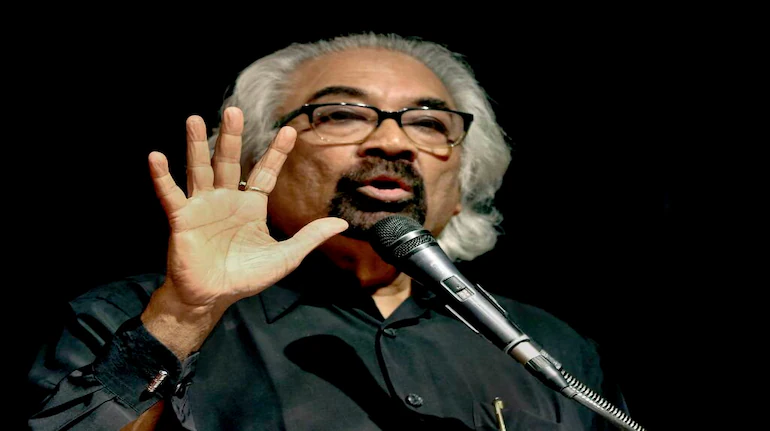
Indian Overseas Congress chairman Sam Pitroda has defended former Congress president Sonia Gandhi’s memoir, Belonging: A Journey of Love, after the Bharatiya Janata Party (BJP) criticised the book over its treatment of controversial episodes in India’s political history. Dismissing the allegations of historical whitewashing, Pitroda described the memoir as a personal account of Gandhi’s life, sacrifices and relationship with India rather than a political document.
Speaking to ANI, Pitroda accused the BJP of viewing the publication through the lens of political rivalry. He argued that the book should be understood as an account of a woman’s personal journey, including her experiences of family tragedy, public life and the difficult periods that shaped her association with the country.
His remarks have added to the political exchange surrounding the memoir, which went on sale in India on Tuesday. Senior Congress leader Digvijaya Singh has also defended the book, describing it as a reflection of Gandhi’s life and ideological beliefs.
Sam Pitroda Rejects BJP’s Allegations of Historical Whitewashing
The BJP has criticised Sonia Gandhi’s memoir over its handling of sensitive historical events, including the 1984 anti-Sikh riots, the Emergency and the demolition of the Babri Masjid. The party has questioned whether the book presents a complete account of these episodes.
Pitroda rejected the criticism, arguing that the memoir was written from a personal perspective and should not be treated as an election-related publication or political pamphlet.
He said the book documents Gandhi’s journey from arriving in India to becoming closely connected with the country and its political life. He also highlighted the personal losses she experienced, including the assassinations of her mother-in-law, former Prime Minister Indira Gandhi, and her husband, former Prime Minister Rajiv Gandhi.
According to Pitroda, reducing the memoir to an attempt to whitewash history overlooks the personal experiences and difficult decisions described in its pages. He accused the BJP of focusing on political attacks instead of engaging with the human experiences presented in the book.
His defence centres on the distinction between a personal memoir and a comprehensive political history. While the BJP has raised questions about how controversial events are addressed, Pitroda maintains that Gandhi is entitled to describe her own experiences and recollections.
Why the 1984 Riots, Emergency and Babri Masjid Remain Central to the Debate
The criticism of Belonging: A Journey of Love has brought several defining and deeply contested episodes in modern Indian history into the discussion.
The 1984 anti-Sikh riots followed the assassination of Indira Gandhi by two of her Sikh bodyguards. The violence, particularly severe in Delhi, remains a major subject of public debate and demands for accountability. Any discussion of the period carries considerable political and social significance.
The Emergency, imposed by Indira Gandhi’s government between 1975 and 1977, is another major episode in the country’s political history. It involved restrictions on civil liberties, press censorship and the detention of political opponents. The period continues to feature prominently in debates about democratic institutions and the use of executive power.
The demolition of the Babri Masjid in Ayodhya in December 1992 also remains one of India’s most sensitive political and religious controversies. It had far-reaching consequences for public life and relations between communities.
These events are not merely historical references. They remain part of contemporary political arguments between the Congress and the BJP. The disagreement over Sonia Gandhi’s memoir reflects wider differences about how political leaders should describe, interpret and take responsibility for controversial periods in India’s past.
Pitroda’s response does not settle those historical debates. Instead, it challenges the BJP’s interpretation of the memoir and argues that a personal account should not automatically be treated as an attempt to rewrite history.
Pitroda Highlights Sonia Gandhi’s Personal Losses and Public Journey
In defending the memoir, Pitroda placed particular emphasis on the personal tragedies that shaped Sonia Gandhi’s life in India. He argued that the book offers an account of the pain, isolation and difficult choices she experienced during periods of political and personal upheaval.
Gandhi entered public life in a country where her family became central to national politics. Her association with the Nehru-Gandhi family brought her into contact with some of the most consequential moments in India’s post-independence history.
The assassinations of Indira Gandhi in 1984 and Rajiv Gandhi in 1991 were particularly significant personal losses. Both events also had major consequences for the Congress party and Indian Politics more broadly.
Pitroda argued that the memoir records these experiences with honesty and sensitivity. He said the BJP’s criticism failed to recognise the personal dimension of the story and instead approached the book primarily as a political challenge.
The memoir’s title, Belonging: A Journey of Love, reflects its focus on Gandhi’s relationship with India. Its narrative covers her childhood in post-war Italy, her relationship with Rajiv Gandhi at Cambridge and her eventual life in India.
Sam Pitroda Recalls Rajiv Gandhi’s Vision for Technology
Pitroda also used his response to highlight the legacy of Rajiv Gandhi, whose political and technological initiatives feature prominently in the memoir.
He recalled working with the former prime minister during the development of India’s early technology and telecommunications missions. According to Pitroda, Rajiv Gandhi recognised the potential of computing, machine intelligence and digital connectivity during the 1980s, when these technologies were still developing rapidly.
Pitroda said Rajiv Gandhi faced criticism from political opponents who mocked his interest in computers and technology, including by referring to him as a “computer boy”. He argued that the initiatives launched during that period helped lay foundations for changes in India’s telecommunications, economy and public health systems.
The comments reflect Pitroda’s long-standing association with India’s technology and telecommunications development during Rajiv Gandhi’s tenure as prime minister. He presented the period as an example of the former prime minister’s willingness to pursue technological change despite political criticism.
For Pitroda, the memoir provides an opportunity to revisit those efforts and the challenges surrounding them. He said Gandhi had documented the struggles of that period with grace.
Why Sonia Gandhi’s 2004 Decision to Decline the Prime Minister’s Post Remains Significant
Another issue highlighted by Pitroda was Sonia Gandhi’s decision not to become prime minister after the Congress-led United Progressive Alliance (UPA) won the 2004 general election.
Although Gandhi was widely expected to lead the government after the electoral victory, she declined the position. Manmohan Singh subsequently became prime minister, while Gandhi remained a central figure in the Congress and the UPA.
Pitroda described her decision as an expression of moral conviction and a willingness to remain outside the country’s highest executive office despite having the opportunity to occupy it.
He contrasted the decision with what he described as the tendency of contemporary politicians to hold on to power. In his view, Gandhi’s choice demonstrated restraint and reflected the values of the memoir.
The decision has remained an important part of discussions about her political career. Supporters have often presented it as an example of her willingness to prioritise political circumstances over personal ambition, while critics have offered different interpretations of her role in the UPA government.
Pitroda’s defence focuses on the symbolic importance of the decision, arguing that it demonstrates the resilience and democratic values described in the book.
Digvijaya Singh Also Defends Sonia Gandhi’s Memoir
Senior Congress leader and former Madhya Pradesh chief minister Digvijaya Singh also responded to the BJP’s criticism of the memoir on Tuesday.
Speaking to ANI in Guna, Singh described the publication as a historic account of Sonia Gandhi’s life and said it reflected her ideological outlook. He linked her beliefs to India’s traditions of religious coexistence and the principle of Sarva Dharma Sambhava, which broadly means equal respect for all religions.
Singh argued that Gandhi’s ideology emphasised love, harmony, truth and non-violence. He contrasted those principles with what he described as the politics of hatred associated with Prime Minister Narendra Modi and the BJP.
His comments show how the Congress leadership is responding to the controversy by presenting the memoir as both a personal account and a reflection of the values the party associates with Gandhi.
While Pitroda focused on her personal experiences, Rajiv Gandhi’s legacy and her decision to decline the prime ministership, Singh placed greater emphasis on her ideological beliefs and commitment to religious harmony.
What Is Sonia Gandhi’s Book ‘Belonging: A Journey of Love’ About?
Published in India by HarperCollins, Belonging: A Journey of Love went on sale on Tuesday. The memoir traces Sonia Gandhi’s life from her childhood in post-war Italy to her relationship with Rajiv Gandhi and her eventual place in India’s political and public life.
The book also explores the personal experiences that shaped her connection with India. These include her marriage into the Nehru-Gandhi family, the responsibilities that came with her association with national politics and the losses caused by the assassinations of Indira Gandhi and Rajiv Gandhi.
Its narrative covers both private and public experiences, offering readers an account of how Gandhi came to identify with a country far removed from the place where she was born.
The publication has attracted political attention because of the historical figures and events connected with her life. Her association with two former prime ministers, her leadership of the Congress and her role in the UPA years mean that personal recollections can also carry political significance.
That overlap between personal history and national politics is at the heart of the current disagreement. Supporters describe the book as an opportunity to understand Gandhi’s life and experiences, while BJP critics have questioned its treatment of controversial historical episodes.
Political Debate Surrounding the Memoir Continues
The exchange between the BJP and Congress leaders illustrates how the publication has become part of a wider political debate about history, leadership and public accountability.
Pitroda and Singh have defended the memoir by emphasising its personal and ideological dimensions. Their arguments focus on Gandhi’s journey to India, her family tragedies, her association with Rajiv Gandhi’s technology initiatives and her decision to decline the prime minister’s office in 2004.
The BJP’s criticism, meanwhile, centres on how the book addresses events such as the 1984 anti-Sikh riots, the Emergency and the Babri Masjid demolition. These issues remain politically sensitive and continue to influence discussions about the Congress party’s historical record.
As readers engage with Belonging: A Journey of Love, the debate is likely to extend beyond the details of Gandhi’s personal life to questions about memory, historical interpretation and the responsibilities of political leaders when reflecting on the past.
For now, the Congress leaders’ defence has made clear that they view the memoir as more than a political publication. They present it as Sonia Gandhi’s account of love, loss, public service and her long journey towards belonging in India.
For breaking news and live news updates, like us on Facebook or follow us on Twitter and Instagram. Read more on Latest India on thefoxdaily.com.






COMMENTS 0