- Mahua Moitra Calls the Incident “Harassment,” Not Political Protest
- Why the Incident Has Sparked Wider Attention
- What Aviation Rules Say About Disruptive Passenger Behaviour
- The Political Context Behind the Slogans
- Political Hostility Is Increasingly Moving Into Public Spaces
- Social Media Has Changed Political Confrontations
- Mahua Moitra Remains a Polarising Political Figure
- Could Airlines Face Pressure to Tighten Rules?
- IndiGo’s Response Will Be Closely Watched
- Conclusion
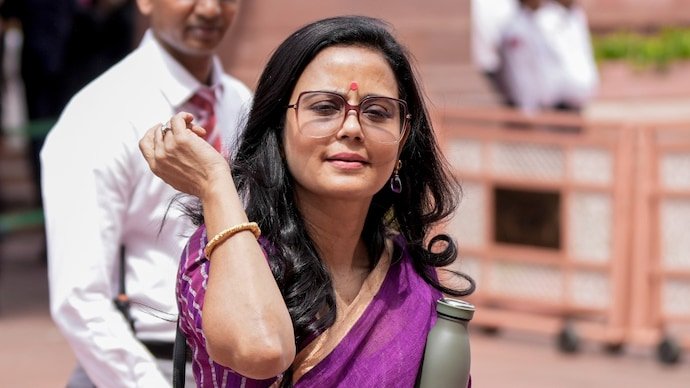
Trinamool congress (TMC) MP Mahua Moitra has alleged that she was harassed onboard an IndiGo flight to Delhi by a group of male passengers who shouted political slogans, filmed her inside the aircraft, and allegedly attempted to intimidate her moments before passengers disembarked.
The incident, which Moitra described as a serious breach of personal safety and airline discipline, has quickly escalated into a political Controversy, with fresh questions emerging over passenger behaviour, political aggression in public spaces, and the responsibilities of airlines in handling disruptive conduct onboard flights.
According to Moitra, the episode took place onboard IndiGo flight 6E 719 while she was travelling to Delhi to attend a Parliamentary Standing Committee on Defence meeting.
The Krishnanagar MP claimed that shortly after boarding, a group of four to six men allegedly stared at her before moving toward the rear section of the aircraft. The confrontation reportedly escalated after landing, before the aircraft doors were opened.
Videos circulating online appear to show passengers chanting slogans including “chor chor, TMC chor” and “Jai Shri Ram” while filming the MP inside the aircraft cabin.
Mahua Moitra Calls the Incident “Harassment,” Not Political Protest
In a strongly worded statement posted on social media platform X, Moitra rejected suggestions that the confrontation represented ordinary political disagreement or “citizen anger.”
Instead, she characterised the incident as targeted harassment that compromised passenger safety onboard a commercial aircraft.
“This is no citizen anger. This is harassment and violates my safety in an aircraft,” she wrote.
Moitra also called on IndiGo to review crew reports, identify the passengers involved, and place them on a no-fly list.
She tagged Union Civil aviation Minister Ram Mohan Naidu Kinjarapu in her post, seeking official intervention and accountability.
At the time of reporting, neither IndiGo nor the Ministry of Civil Aviation had issued a detailed public response regarding the allegations.
Why the Incident Has Sparked Wider Attention
The controversy has drawn national attention not only because it involves a high-profile opposition MP but also because it touches on a growing concern in India’s political Environment: the increasing overlap between political rivalry and public intimidation.
Air travel, traditionally viewed as a regulated and secure environment, has increasingly become a stage for viral confrontations, slogan shouting, and politically charged exchanges.
What makes this case particularly sensitive is that the alleged incident occurred inside an aircraft cabin a tightly controlled environment governed by strict aviation safety regulations.
Experts note that even verbal intimidation or aggressive group behaviour inside an aircraft can become a security concern because cabin spaces are enclosed and passengers have limited ability to disengage or move away.
What Aviation Rules Say About Disruptive Passenger Behaviour
India’s aviation sector operates under strict rules concerning disruptive passenger conduct.
The Directorate General of Civil Aviation (DGCA) classifies unruly behaviour into multiple categories, including:
- Verbal harassment
- Threatening conduct
- Physical intimidation
- Disruptive group behaviour
- Actions affecting passenger safety or cabin order
Depending on the severity, airlines can recommend penalties ranging from temporary travel restrictions to placement on a no-fly list.
| Type of Behaviour | Possible Aviation Response | Potential Consequence |
|---|---|---|
| Verbal abuse or intimidation | Crew report and warning | Temporary restrictions |
| Aggressive or threatening conduct | Security escalation | No-fly list review |
| Physical confrontation | Police complaint | Criminal charges possible |
| Disrupting aircraft operations | DGCA intervention | Long-term flying ban |
Legal experts say much depends on whether cabin crew documented the incident formally and whether airline staff perceived the behaviour as threatening or disruptive to flight operations.
The Political Context Behind the Slogans
The slogans reportedly raised during the incident carry strong political undertones tied to West Bengal’s fiercely polarised political landscape.
“TMC chor” slogans have frequently been used by opposition parties to target the ruling Trinamool Congress over corruption allegations and political controversies in the state.
Meanwhile, chants of “Jai Shri Ram” while religious in origin have also evolved into a politically charged slogan in parts of India, particularly during election campaigns and confrontational political events.
For political observers, the combination of slogans inside the aircraft suggests the confrontation may have been intended not merely as spontaneous criticism but as a performative political act designed for recording and social media circulation.
The presence of mobile phone filming during the incident further reinforces how political confrontations increasingly unfold with an online audience in mind.
Political Hostility Is Increasingly Moving Into Public Spaces
The incident reflects a broader trend in Indian Politics where political confrontation is no longer confined to rallies, television debates, or social media platforms.
Increasingly, political figures are facing aggressive encounters in:
- Airports
- Flights
- Restaurants
- Public events
- University campuses
- Roadshows
Political analysts warn that when partisan hostility enters tightly regulated public environments like aircraft cabins, the line between protest and intimidation becomes far more serious.
Unlike open public spaces, passengers onboard flights cannot freely leave, avoid confrontation, or seek distance during tense interactions.
That limitation makes airlines responsible not just for operational safety but also for maintaining a secure passenger environment.
Social Media Has Changed Political Confrontations
One major aspect competitors are missing in coverage of this incident is the growing role of “performative politics” inside public spaces.
Increasingly, confrontations involving politicians are recorded in real time because viral clips can quickly generate:
- Political visibility
- Online mobilisation
- Media attention
- Narrative control
- Supporter engagement
In many modern political confrontations, the camera is no longer secondary it is often central to the interaction itself.
The allegation that passengers filmed Moitra while chanting slogans fits into this evolving pattern of politically motivated public spectacle.
Whether spontaneous or organised, such incidents often gain traction online long before official investigations or airline responses emerge.
Mahua Moitra Remains a Polarising Political Figure
Mahua Moitra has consistently been one of India’s most outspoken and controversial opposition parliamentarians.
Known for her sharp speeches, aggressive criticism of the BJP-led central government, and confrontational political style, she frequently attracts both strong support and intense criticism.
Her political profile rose sharply after several high-profile parliamentary speeches and media appearances that gained significant traction online.
At the same time, she has remained a frequent target of political attacks from rival parties and ideological opponents.
That polarised reputation likely contributed to the intensity of public reaction surrounding the alleged flight incident.
Could Airlines Face Pressure to Tighten Rules?
The episode may also renew debate over whether Indian airlines need stronger protocols for handling politically charged confrontations onboard flights.
Airlines already operate under significant pressure to prevent:
- Passenger aggression
- Verbal abuse
- Mid-air disputes
- Security incidents
- Social media-triggered confrontations
However, political slogan shouting and targeted filming present newer challenges because they may not initially appear as physical threats while still creating an intimidating atmosphere.
Aviation experts say airlines may increasingly need clearer guidelines on:
- Passenger filming inside cabins
- Group intimidation behaviour
- Political slogan shouting
- Escalation thresholds for crew intervention
IndiGo’s Response Will Be Closely Watched
As India’s largest airline by market share, IndiGo’s handling of the matter is likely to attract scrutiny from both political observers and aviation regulators.
If the airline reviews cabin reports and CCTV-style cabin footage or crew documentation, it may eventually determine whether the conduct violated passenger behaviour norms.
The incident also places pressure on airlines to demonstrate neutrality while handling politically sensitive complaints involving public figures.
Any perceived inaction or inconsistency could quickly become part of a wider political narrative.
Conclusion
Mahua Moitra’s allegation of harassment onboard an IndiGo flight has triggered debate far beyond a single mid-air political confrontation.
The incident highlights growing concerns over political aggression in public spaces, the role of social media-driven confrontation culture, and the evolving challenges airlines face in maintaining passenger safety in increasingly polarised environments.
While authorities and the airline have yet to issue detailed findings, the controversy has already reignited broader questions about where legitimate political expression ends and intimidation begins especially inside confined public environments like commercial aircraft.
With political tensions continuing to spill into everyday public life, incidents like this may become an increasingly important test of how institutions balance free expression, passenger rights, and public safety.
For breaking news and live news updates, like us on Facebook or follow us on Twitter and Instagram. Read more on Latest India on thefoxdaily.com.





COMMENTS 0