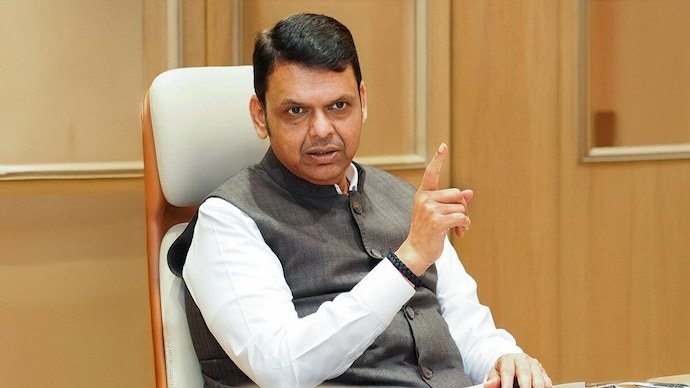
Maharashtra Chief Minister Devendra Fadnavis has said his government will consider reservation demands raised by different communities, but only when they are compatible with the Constitution and applicable rules.
His comments come amid renewed political debate over reservation in Maharashtra, particularly demands associated with the Maratha community and concerns surrounding the interests of Other Backward Classes (OBCs). Fadnavis said the government would listen to every community but would not make decisions outside the constitutional framework.
The chief minister also stressed that the government would not take benefits away from one community to provide them to another. He said the administration’s approach would be based on ensuring justice for Marathas, OBCs, Scheduled Castes, Scheduled Tribes, Vimukta Jatis and Nomadic Tribes.
The remarks place constitutional limits at the centre of Maharashtra’s reservation debate, where competing demands have repeatedly created political tensions between communities.
Fadnavis says Constitution will guide reservation decisions
Fadnavis said the state government functions according to the Constitution and would continue to follow established rules while dealing with reservation-related representations.
He made clear that listening to a demand does not mean automatically accepting it. According to the chief minister, a proposal that serves the public interest and fits within constitutional provisions can be examined by the government, while a demand that falls outside those limits cannot be accepted.
This distinction is important in a debate where different communities may seek expanded access to reservation benefits. The government’s position, as outlined by Fadnavis, is that political pressure alone cannot determine whether a reservation proposal becomes policy.
He also framed the issue as one of balancing the interests of different communities rather than treating reservation as a contest in which one group must lose for another to gain.
Why Maratha and OBC reservation remains a sensitive issue
Reservation has become one of Maharashtra’s most politically sensitive Social Issues, particularly because demands from the Maratha community intersect with concerns about existing OBC reservations.
Maratha quota activist Manoj Jarange has continued to raise the issue and has targeted state Revenue Minister Chandrashekhar Bawankule over matters connected with reservation.
The dispute has created pressure on the state government to respond to demands while also addressing concerns from communities that fear any change could affect their existing entitlements.
Fadnavis sought to reassure different sections of society that his government’s approach would not involve taking reservation benefits away from one community and transferring them to another.
He specifically referred to Marathas, OBCs, Scheduled Castes, Scheduled Tribes, Vimukta Jatis and Nomadic Tribes as communities whose interests the government would seek to protect.
Government says every reservation demand will be heard
Fadnavis’s position does not amount to rejecting reservation demands outright. Instead, he said the government would continue to receive and examine representations from communities.
The key condition is that any demand must satisfy constitutional and legal requirements.
This creates a distinction between the political process of making a demand and the administrative or legal process of acting on it. A community can approach the government with a request, but the eventual decision must be based on the applicable framework and available evidence.
For the state government, this approach also provides a way to acknowledge competing demands without committing itself to a particular outcome before the relevant procedures are completed.
Fadnavis defends Revenue Minister Chandrashekhar Bawankule
The chief minister also defended Revenue Minister Chandrashekhar Bawankule amid criticism over his handling of representations linked to the reservation dispute.
Fadnavis said ministers have a responsibility to forward complaints and representations they receive to the appropriate department for examination. In his explanation, forwarding a representation does not mean that the minister or government has accepted the demand contained in it.
He said the concerned department examines the matter and reaches a decision based on evidence rather than simply acting because a representation was submitted.
This distinction is central to Fadnavis’s defence of Bawankule. The chief minister argued that the minister was carrying out a constitutional responsibility rather than attempting to cancel an existing decision or provide an advantage to a particular group.
Why forwarding a complaint does not mean accepting it
The chief minister’s explanation highlights the difference between receiving a complaint and deciding its merits.
When a minister receives a representation, it can be sent to the relevant department for examination. The department can then assess the available evidence and determine what action, if any, is appropriate.
Fadnavis said that the department does not make a decision merely because a minister has forwarded a representation.
That process, he argued, means the minister’s administrative role should not automatically be interpreted as support for the claim contained in the complaint.
In the context of the current reservation dispute, the clarification is intended to counter allegations that forwarding representations could itself be used to influence decisions affecting different communities.
Fadnavis says committee is independent
Fadnavis also addressed the committee responsible for dealing with the matter and described it as independent of the state government.
According to the chief minister, the committee is not bound by the government and does not report to it. He also said that it has judicial powers.
That distinction is significant because it separates the government’s role in receiving and forwarding representations from the committee’s role in examining the matter.
Fadnavis further said an appellate authority had been created during the recently concluded legislative session. Anyone dissatisfied with a committee decision, he said, could approach the appellate authority.
The structure described by the chief minister is intended to provide a process through which disputes can be examined and challenged rather than settled solely through political intervention.
Fadnavis rejects targeting of Bawankule over his community
Fadnavis also objected to criticism of Bawankule based on the minister’s OBC background.
He said that targeting a minister because he belongs to the OBC community was inappropriate and argued that such an approach did not suit Maharashtra.
The statement comes at a time when reservation Politics can easily become intertwined with community identity. The chief minister’s response was that Bawankule’s community background should not be treated as evidence of his intentions when evaluating his administrative actions.
Fadnavis maintained that, in his view, Bawankule had simply performed his responsibility as a minister and had not deliberately attempted to cancel a decision or favour any particular group.
The larger challenge: balancing competing claims
Maharashtra’s reservation debate illustrates the difficulty governments face when multiple communities seek recognition or expanded access to affirmative-action benefits.
A decision favouring one group can create concerns among another group that its existing benefits may be reduced or diluted. That makes the political management of reservation demands particularly sensitive.
Fadnavis’s repeated emphasis on not taking from one community to give to another is therefore an attempt to address that concern directly.
His position is that the state must seek justice across communities while remaining within constitutional boundaries. That means the government cannot simply accept a demand because it has significant political support or because a particular community is putting pressure on the administration.
At the same time, the government is signalling that it will not ignore demands. Representations can be received, investigated and evaluated through the relevant mechanisms.
Constitutional limits are now central to the political debate
By repeatedly invoking the Constitution, Fadnavis has placed legal and institutional limits at the centre of the state’s response.
This matters because reservation policy involves questions that cannot be settled solely through political announcements. Any change has to operate within the applicable constitutional and legal framework.
The chief minister’s comments therefore seek to establish a clear sequence: communities can make demands, the government can listen and forward representations, competent authorities can examine the evidence, and decisions must ultimately remain within constitutional limits.
That approach may not satisfy every group seeking immediate action, but it gives the government a basis for resisting demands that it considers legally unsustainable.
Why the next phase could remain politically difficult
The reservation debate is unlikely to disappear simply because the government has stated its position.
Maratha activists continue to press their demands, while OBC groups remain attentive to any proposal that could affect their existing rights. Political leaders therefore face pressure from multiple sides.
For the Maharashtra government, the challenge is to demonstrate that the process is fair and evidence-based while avoiding the perception that one community is being favoured over another.
The independence of the committee and the availability of an appellate mechanism could become particularly important in this context. If disputes arise over decisions, the existence of an established review process gives affected parties a route to challenge them.
What Fadnavis’s statement means for Maharashtra’s reservation politics
Fadnavis’s remarks establish three broad positions from the state government.
- All communities can be heard: The government says it will receive and examine reservation-related demands.
- Constitutional limits apply: A demand cannot be accepted if it falls outside the Constitution and applicable rules.
- No community should lose for another to gain: The government says it intends to pursue justice without taking rights from one group to benefit another.
The chief minister has also defended the administrative process surrounding complaints and representations, arguing that forwarding a complaint to a department does not amount to accepting it.
What happens next
The immediate focus will remain on how the relevant authorities examine representations connected with the reservation dispute and whether further demands or challenges emerge from affected communities.
The government will also face the political task of communicating its decisions clearly enough to demonstrate that they are based on constitutional requirements and evidence rather than community pressure.
For activists and community organisations, the key question will be whether the mechanisms described by Fadnavis lead to decisions they consider fair. For the government, the challenge will be maintaining that process while managing competing political expectations.
Fadnavis puts constitutional framework at centre of quota debate
Devendra Fadnavis’s latest comments offer a clear outline of how his government says it intends to approach Maharashtra’s reservation disputes: listen to every community, examine every representation, but make decisions only within the Constitution and established rules.
His defence of Chandrashekhar Bawankule also reflects the government’s attempt to separate administrative procedure from allegations of community bias. Fadnavis argues that forwarding complaints for inquiry is part of a minister’s responsibility and does not determine the outcome.
With Maratha and OBC reservation demands continuing to generate political debate, the real test will be how these principles are applied to individual cases. The government’s ability to balance competing claims while maintaining confidence in the constitutional process will remain at the heart of Maharashtra’s reservation politics.
For breaking news and live news updates, like us on Facebook or follow us on Twitter and Instagram. Read more on Latest India on thefoxdaily.com.





COMMENTS 0