- What Is the Women’s Reservation Law?
- What Is Delimitation and Why Is It Controversial?
- Why Tharoor Calls the Linkage a Problem
- Timeline: Women’s Reservation and Delimitation Debate
- Comparison: Immediate Implementation vs Linked Approach
- Broader Implications: Beyond Gender Representation
- Unique Insight: A Clash Between Two Types of Justice
- What Happens Next?
- Conclusion: Reform at a Crossroads
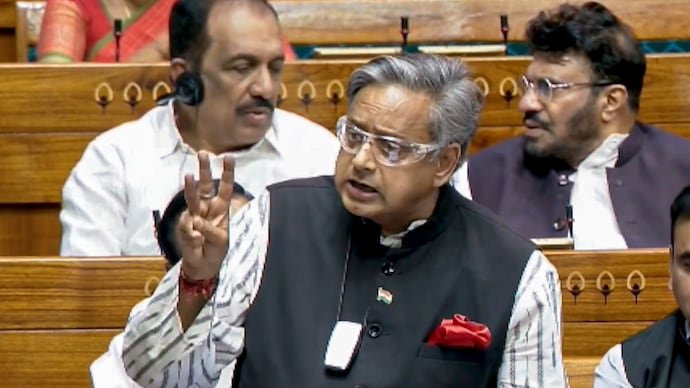
The debate over India’s long-awaited women’s reservation has taken a sharp turn, with congress MP Shashi Tharoor warning that linking its implementation to Delimitation could delay justice and disrupt the country’s political balance. His remarks in the lok Sabha have reignited a critical question: Should women’s representation depend on a complex and controversial electoral exercise?
Who: Shashi Tharoor and the Union government. What: Dispute over linking women’s quota to delimitation. When: During a parliamentary debate on new bills. Where: Lok Sabha. Why: Concerns over delay and political consequences. How: Through legislative changes tied to census and seat redistribution.
At the heart of the issue lies a tension between immediate gender justice and long-term political restructuring a trade-off that could reshape India’s democratic landscape.
What Is the Women’s Reservation Law?
The women’s reservation law aims to allocate 33% of seats in the Lok Sabha and state assemblies to women. It has long been seen as a transformative step toward gender equality in Indian Politics.
After decades of debate, the law finally gained political momentum, with broad consensus across parties. However, its implementation has been tied to three key conditions:
- Completion of the next Census
- Redrawing of constituencies through delimitation
- Expansion or restructuring of parliamentary seats
This linkage is precisely what critics like Tharoor are challenging.
What Is Delimitation and Why Is It Controversial?
Delimitation refers to the redrawing of electoral constituency boundaries based on population changes. While it may sound technical, its implications are deeply political.
Key Concerns Around Delimitation
- Shift in Political Power: States with higher population growth could gain more seats
- Federal Tensions: Southern states fear losing representation despite better population control
- Historical Sensitivity: Delimitation has been frozen in the past to maintain balance
Tharoor described it as a “demographic minefield”, emphasizing that it is far more than a bureaucratic exercise it is a potential reconfiguration of India’s political map.
Why Tharoor Calls the Linkage a Problem
1. Delays Immediate Implementation
Tharoor argues that women’s reservation is “ready for harvest” and should not be postponed for procedural reasons. By tying it to delimitation, the government risks delaying it by years.
2. Creates Unnecessary Complexity
Instead of implementing a widely supported reform, the linkage introduces multiple dependencies census data, boundary redrawing, and legislative adjustments.
3. Risks Political Fallout
By combining a consensus-driven reform with a contentious exercise, the government may trigger opposition that could have otherwise been avoided.
4. “Political Demonetisation” Warning
Drawing a striking parallel, Tharoor warned that delimitation could become “political demonetisation” a sudden, disruptive move with far-reaching consequences.
Timeline: Women’s Reservation and Delimitation Debate
| Phase | Development |
|---|---|
| Initial Proposal | Women’s reservation introduced as a constitutional amendment idea |
| Political Consensus | Broad agreement across parties on the need for quota |
| Legislative Action | New bills introduced linking quota to delimitation |
| Parliament Debate | Tharoor and others raise concerns over linkage |
Comparison: Immediate Implementation vs Linked Approach
| Aspect | Immediate Implementation | Linked to Delimitation |
|---|---|---|
| Timeline | Short-term | Long-term, uncertain |
| Complexity | Low | High |
| Political Risk | Minimal | Significant |
| Impact on Women | Immediate representation | Delayed benefits |
Broader Implications: Beyond Gender Representation
1. Federal Balance at Stake
Delimitation could alter the balance of power between states, raising concerns about fairness and representation.
2. Trust in Reform Processes
Linking a widely supported reform to a controversial process may erode public trust in policymaking.
3. Political Strategy vs Policy Priority
The debate highlights a deeper question: Is the linkage driven by Governance logic or political calculation?
Unique Insight: A Clash Between Two Types of Justice
This debate is not just political it is philosophical. It represents a clash between:
- Gender Justice: Immediate inclusion of women in governance
- Structural Justice: Rebalancing representation based on population
While both are important, combining them may create friction instead of progress. In policy design, timing can be as critical as intent.
What Happens Next?
Several possibilities lie ahead:
- Debate intensifies in Parliament
- Calls for a Joint Parliamentary Committee (JPC) gain traction
- Government may clarify or modify the implementation roadmap
The outcome will determine whether women’s reservation becomes a near-term reality or remains a deferred promise.
Conclusion: Reform at a Crossroads
The women’s reservation debate has reached a निर्णng moment. While there is near-universal agreement on the goal, the path to achieving it remains contested.
Shashi Tharoor’s criticism underscores a key concern: linking a widely supported reform to a complex and divisive process could delay progress rather than accelerate it.
In the end, the question is simple yet profound should justice wait for perfect conditions, or should it begin with what is already possible?
The answer will shape not just the future of women in politics, but the broader direction of India’s लोकतांत्रिक evolution.
For breaking news and live news updates, like us on Facebook or follow us on Twitter and Instagram. Read more on Latest India on thefoxdaily.com.






COMMENTS 0