- The Bigger Context: Why Tamil Nadu Is Different
- From Undercurrent to Wave: How the Vijay Surge Built Up
- Charisma as Currency: Why the “Face” Won the Election
- Comparison: Traditional Politics vs Vijay’s Model
- The Collapse of the Old Order
- The Youth Factor: A Silent Game-Changer
- Minimal Campaign, Maximum Impact
- A Unique Insight: The Rise of “Emotional Politics 2.0”
- Real-World Implications: What Happens Next?
- Prediction: Is This a One-Time Wave or a Long-Term Shift?
- Conclusion: A New Chapter, Not the Final Word
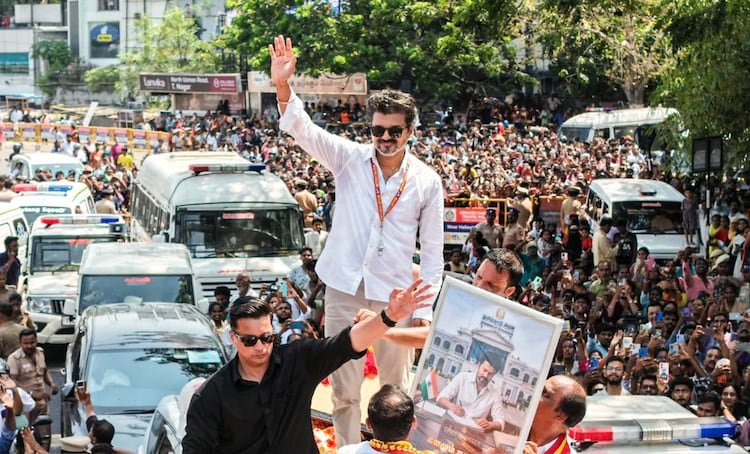
The Vijay landslide in Tamil Nadu is not just another election result it is a political moment that demands deeper decoding. In a state where Politics has historically blended ideology, identity, and personality, this verdict signals a rare disruption: the collapse of a long-standing duopoly and the rise of a new kind of political force.
Who made this happen? A film star turned political challenger. What exactly happened? A sweeping victory that redrew the political map. When did it unfold? In a tightly contested election cycle that few predicted would produce such a decisive outcome. Where did it matter most? Across regions long dominated by entrenched political structures. Why did it happen? A mix of voter fatigue, emotional connection, and generational change. And how did it unfold? Not through traditional campaign machinery but through recall, resonance, and a deeply embedded cultural presence.
This is not just a story of victory. It is a story of transformation.
The Bigger Context: Why Tamil Nadu Is Different
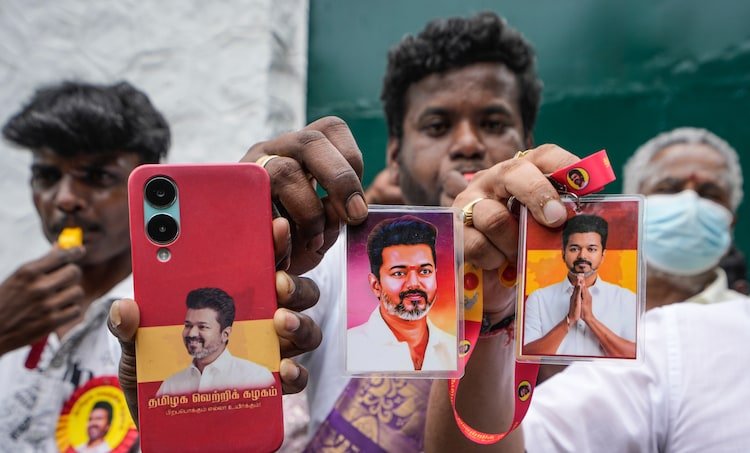
To understand the scale of this shift, one must first understand Tamil Nadu’s political DNA. For decades, the state has been shaped by Dravidian ideology, powerful regional narratives, and towering personalities. Elections here are rarely transactional they are emotional, symbolic, and often theatrical.
Leaders are not merely elected; they are embraced. Mandates are not just political they are cultural endorsements.
In such a landscape, breaking through is not just difficult it is almost unthinkable.
And yet, that is precisely what has happened.
From Undercurrent to Wave: How the Vijay Surge Built Up
What makes the Vijay landslide Tamil Nadu election unique is how quietly it began. There were no overwhelming signs early on no massive rallies dominating headlines, no traditional indicators pointing toward a sweeping victory.
Instead, the momentum built in subtle ways:
- Consistent crowd engagement without aggressive campaigning
- Organic social media amplification
- Strong emotional recall among voters
- Silent consolidation across regions
Then, almost suddenly, the undercurrent became a wave.
This wasn’t a gradual swing it was a decisive shift. Constituencies that had remained loyal for decades changed hands. Political strongholds fell. The map didn’t just tilt it flipped.
Charisma as Currency: Why the “Face” Won the Election
At the heart of this election lies a simple but powerful truth: recognition still wins votes in Tamil Nadu.
This was not an election driven purely by policy debates or manifesto comparisons. Instead, it revolved around something more fundamental familiarity.
Voters may not have memorized policy promises, but they recognized the leader. They connected with the persona. They trusted the face.
In many constituencies:
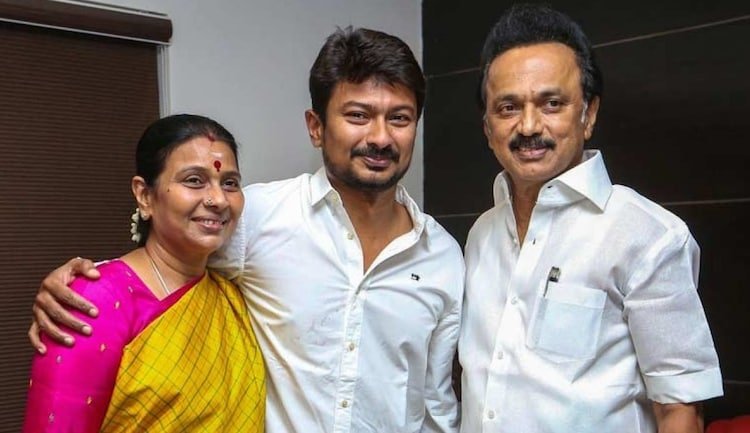
- The candidate mattered less than the party
- The party mattered less than the leader
- The leader became the entire message
This is both powerful and risky.
Because while charisma can win elections, it cannot govern alone.
Comparison: Traditional Politics vs Vijay’s Model
| Factor | Traditional Dravidian Model | Vijay’s Approach |
|---|---|---|
| Campaign Style | Mass rallies, cadre networks | Limited appearances, high recall |
| Core Strength | Organisation + ideology | Personality + emotional connect |
| Voter Engagement | Structured outreach | Organic, digital-driven influence |
| Political Identity | Movement-based | Leader-centric |
This shift is not just strategic it is structural.
The Collapse of the Old Order
No landslide is complete without a collapse somewhere else and in this case, the impact on established parties has been profound.
DMK: From Dominance to Disruption
The defeat is not just electoral it is psychological. A party that entered the contest with confidence has been forced to confront a new reality: its connection with voters has weakened.
Key factors behind this shift include:
- Perception of overconfidence
- Concerns about centralised power structures
- Disconnect with younger voters
- Failure to acknowledge emerging challengers
The lesson here is simple: ignoring a rising force does not make it disappear.
AIADMK: The Vanishing Alternative
While one party lost power, another lost relevance. Once a dominant force, the AIADMK struggled to position itself as a credible alternative.
The absence of a unifying personality and a compelling narrative left it overshadowed not just by the ruling party, but by the new entrant.
In politics, space never stays empty for long. And this time, that space was claimed decisively.
The Youth Factor: A Silent Game-Changer
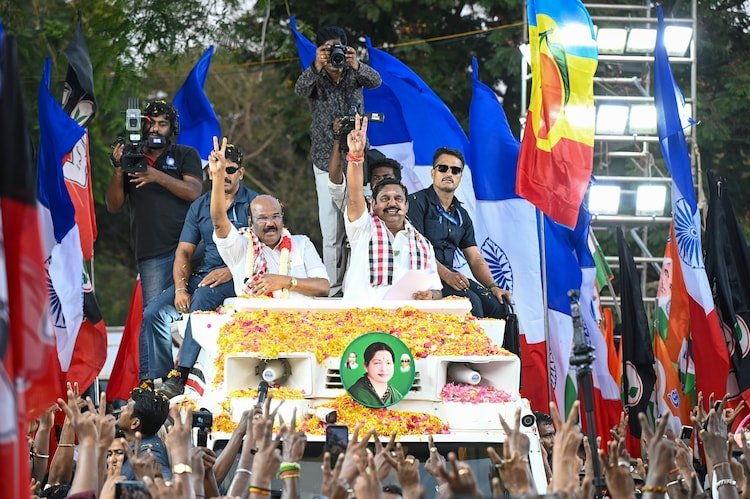
One of the most important and often underestimated drivers of this election was the youth vote.
This wasn’t just about numbers. It was about influence.
Younger voters:
- Amplified narratives through social media
- Influenced family voting decisions
- Shifted conversations from ideology to identity
In many households, the final vote was shaped not by traditional loyalties, but by new-age persuasion.
This marks a structural shift in how elections are fought and won.
Minimal Campaign, Maximum Impact
Perhaps the most fascinating aspect of this election is the imbalance between effort and outcome.
By conventional standards, the campaign was modest. Limited rallies. Controlled visibility. No overwhelming display of resources.
And yet, the impact was massive.
Why?
Because this election wasn’t fought only on the ground it was fought in memory.
The leader’s presence already existed in:
- Films and cultural narratives
- Social media ecosystems
- Fan communities
- Everyday conversations
The campaign didn’t need to create recognition. It only needed to activate it.
A Unique Insight: The Rise of “Emotional Politics 2.0”
This election introduces a new concept: Emotional Politics 2.0.
Unlike traditional charisma-driven politics, this version is:
- Digitally amplified
- Decentralised
- Driven by community networks rather than party structures
It blends nostalgia with modern communication, creating a powerful hybrid model that is difficult to counter using traditional strategies.
This could redefine elections not just in Tamil Nadu, but across India.
Real-World Implications: What Happens Next?
A landslide victory brings expectations and pressure.
Key challenges ahead include:
1. Building Institutional Strength
Turning a personality-driven movement into a structured Governance system.
2. Delivering Governance Outcomes
Meeting expectations in areas like Jobs, Infrastructure, and Public Services.
3. Managing Political Transition
Balancing emotional support with administrative discipline.
4. Sustaining Momentum
Ensuring that popularity translates into long-term credibility.
Prediction: Is This a One-Time Wave or a Long-Term Shift?
The biggest question is whether this victory represents a temporary surge or a lasting transformation.
There are two possible scenarios:
- Short-term wave: If governance fails to match expectations, the electorate could quickly shift again.
- Long-term realignment: If institutional strength is built, this could mark the beginning of a new political era.
History suggests that Tamil Nadu voters are both loyal and unforgiving. They reward performance, but they do not hesitate to withdraw support.
Conclusion: A New Chapter, Not the Final Word
The Vijay landslide Tamil Nadu moment is more than a political victory it is a cultural shift, a structural disruption, and a signal of changing voter priorities.
Tamil Nadu has not abandoned its political grammar. It has simply rewritten the script with a new lead character.
But as history repeatedly shows, the first act is often the easiest.
The real challenge begins now.
Because in politics, winning the spotlight is one thing holding it is another.
For breaking news and live news updates, like us on Facebook or follow us on Twitter and Instagram. Read more on Latest India on thefoxdaily.com.






COMMENTS 0