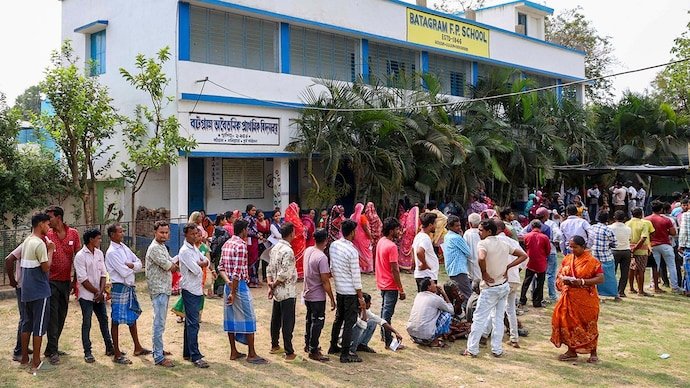
- Record Turnout: What Does 92% Voting Really Mean?
- Exit Polls: Why They Are So Deeply Divided
- BJP’s Aggressive Push: Strategy, Momentum, and Messaging
- Mamata Banerjee’s Enduring Appeal: The Power of Identity
- The Voter List Controversy: A Silent Influencer?
- A Polarised Contest: Geography, Identity, and Voting Patterns
- Peaceful Polling, But Questions Remain
- The Women Factor: A Potential Game Changer
- Key Battleground Constituencies to Watch
- A Unique Insight: This Election Is About “Layered Voting”
- Possible Outcomes: What to Expect
- Conclusion: Expect a Verdict That Defies Simplicity
The West Bengal election 2026 has delivered something rare in Indian Politics: a massive voter turnout paired with deep uncertainty about the outcome. With participation crossing 92% the highest in the state’s History this election has already broken records. But what it hasn’t delivered is clarity.
Exit Polls are sharply divided. Political rhetoric is intense. And on the ground, voter sentiment appears layered, cautious, and at times contradictory. As counting day approaches, one thing is clear: this is not a straightforward election it’s a test of competing political models, identities, and narratives.
Record Turnout: What Does 92% Voting Really Mean?
High voter turnout is often interpreted as a sign of strong public sentiment either for change or continuity. But in Bengal’s case, the story is more nuanced.
The jump from 84.72% in 2011 to over 92% in 2026 is not just a statistical milestone it fundamentally changes how analysts interpret the mandate.
Traditionally, high turnout can indicate:
- Strong anti-incumbency
- High political mobilisation
- Polarisation among voters
- Increased participation from silent or previously disengaged groups
In Bengal, it may be a mix of all four.
Crucially, women voters have outpaced men an important factor given their historical support for welfare-driven politics in the state.
Exit Polls: Why They Are So Deeply Divided
If you’re looking for clarity from exit polls, this election offers the opposite.
Some projections give a comfortable majority to the ruling party, while others suggest a strong surge by the opposition. The gap is not just wide it’s politically significant.
| Projection Type | Seat Range | Implication |
|---|---|---|
| Ruling Party Advantage | 177–187 | Comfortable victory |
| Opposition Surge | 138–175 | Possible regime change |
This divergence highlights a deeper issue: traditional polling methods may be struggling to capture the complexity of voter behavior in Bengal.
And there’s historical reason to be cautious previous Elections have seen exit polls significantly misread the final outcome.
BJP’s Aggressive Push: Strategy, Momentum, and Messaging
The Bharatiya Janata Party (BJP) entered this election with a clear objective: break through in Bengal.
Its campaign has been:
- Highly organised: Focus on booth-level mobilisation and cadre expansion
- Narrative-driven: Framing the election as a referendum on Governance
- Strategically timed: Building momentum after political gains elsewhere
The messaging has centered on themes such as governance, corruption, and political change. Leaders have consistently projected confidence some even predicting a decisive majority.
But confidence in politics is not always predictive it’s often performative.
Mamata Banerjee’s Enduring Appeal: The Power of Identity
Despite facing anti-incumbency, Mamata Banerjee remains a formidable political force.
Her strength lies not just in governance or policy but in perception.
For many voters, she represents:
- A strong regional identity
- A familiar leadership style
- A counterweight to national dominance
This “identity factor” is not symbolic it has historically translated into electoral resilience.
In close contests, emotional connection often outweighs political messaging.
The Voter List Controversy: A Silent Influencer?
One of the most under-discussed yet potentially decisive issues in this election is the revision of Electoral Rolls.
Millions of names were removed during the process, with significant concentrations in key districts.
This has led to sharply contrasting narratives:
- Opposition view: Necessary step to eliminate bogus voters
- Ruling party view: Targeted disenfranchisement of specific communities
What matters electorally is not just the action but how voters perceive it.
In several constituencies, the number of deletions exceeds previous victory margins making this a potentially decisive factor.
A Polarised Contest: Geography, Identity, and Voting Patterns
This election does not follow a uniform pattern. Instead, it appears segmented:
- Minority-dominated regions show signs of consolidation
- Hindu-majority belts indicate possible opposition gains
- Urban and semi-urban areas reflect mixed sentiment
This kind of polarisation makes outcomes harder to predict and increases the importance of swing constituencies.
Peaceful Polling, But Questions Remain
One of the most notable features of this election has been the relative absence of large-scale violence a significant departure from past trends.
However, a peaceful voting day does not automatically settle questions about fairness.
Competing claims have emerged:
- Allegations of voter intimidation by central forces
- Counterclaims of attempts at bogus voting
These narratives matter because they shape public trust and potentially, post-election reactions.
The Women Factor: A Potential Game Changer
Women voters have turned out in record numbers, surpassing male participation.
This is not just a demographic detail it’s a political signal.
In previous elections, women have played a decisive role, often influenced by:
- Welfare schemes
- Household economic concerns
- Local governance impact
If this trend reflects consolidation rather than just participation, it could tilt the balance in tightly contested seats.
Key Battleground Constituencies to Watch
While the overall numbers will decide the government, certain seats will act as indicators of broader trends:
- Urban vs rural voting behavior
- Identity-driven vs governance-driven choices
- Impact of local vs national narratives
These constituencies are less about individual winners and more about what they reveal about voter priorities.
A Unique Insight: This Election Is About “Layered Voting”
One insight often missed in conventional analysis is that Bengal voters are not voting on a single issue.
Instead, this election reflects layered decision-making:
- A voter may prefer one party for identity reasons
- Another for welfare benefits
- And yet another for national leadership
These overlapping considerations create outcomes that defy simple narratives and often surprise pollsters.
It’s less a wave election and more a mosaic of micro-decisions.
Possible Outcomes: What to Expect
Scenario 1: Opposition Breakthrough
A victory would mark a historic political shift and reshape Bengal’s alignment in national politics.
Scenario 2: Incumbent Retains Power
This would reinforce Mamata Banerjee’s reputation for defying political odds and maintaining voter loyalty.
Scenario 3: Narrow Mandate
A close result could lead to heightened political tension and prolonged post-election negotiations.
Conclusion: Expect a Verdict That Defies Simplicity
The West Bengal election 2026 is not defined by a single narrative. It is shaped by competing forces turnout, identity, governance, and perception all pulling in different directions.
While exit polls suggest possibilities, they do not capture the full complexity of voter behavior in the state.
Whether the result signals change or continuity, one thing is certain: this election will not produce an easy or predictable verdict.
In Bengal, the numbers may decide the winner but the story behind those numbers will define the future.
For breaking news and live news updates, like us on Facebook or follow us on Twitter and Instagram. Read more on Latest India on thefoxdaily.com.





COMMENTS 0