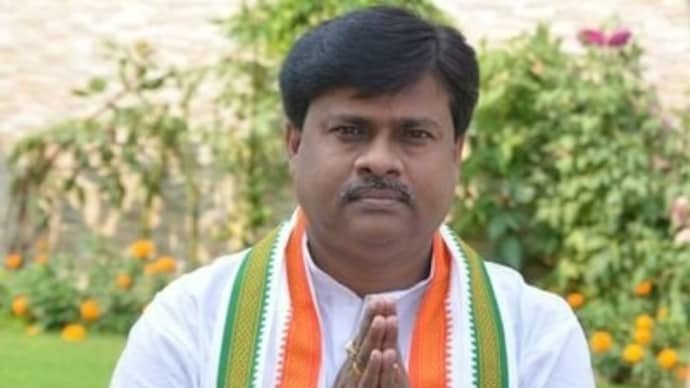
West Bengal politics witnessed another dramatic turn after Trinamool Congress MLA Dilip Mondal was arrested in Odisha’s Puri following weeks of evading authorities in connection with alleged threats against political opponents. The operation, conducted by the West Bengal Special Task Force (STF), comes at a politically sensitive time and only days after Mondal’s son, Arghya Mondal, was arrested in a separate firearms-related case.
The arrest has quickly become more than a routine criminal investigation. It has evolved into a wider political flashpoint involving allegations of intimidation, misuse of local influence, and the increasingly aggressive political atmosphere dominating parts of West Bengal.
For the ruling Trinamool Congress (TMC), the case presents another reputational challenge as opposition parties continue accusing local leaders of operating through fear and political pressure. For law enforcement agencies, the operation demonstrates a growing effort to show action against politically connected figures regardless of party affiliation.
Who Is Dilip Mondal and Why His Arrest Matters
Dilip Mondal is a Trinamool Congress MLA whose political influence extends across parts of South 24 Parganas and surrounding regions. Known for strong grassroots connections and local organizational control, Mondal has long been considered an influential regional political figure.
His arrest matters not only because he is an elected legislator but because it comes amid allegations involving political intimidation — an issue that has repeatedly surfaced in West Bengal’s highly competitive political environment.
According to investigators, complaints were filed accusing Mondal of threatening political rivals. Following those allegations, police conducted raids at properties linked to the MLA in the Pailan area in May. Authorities later described him as “absconding,” intensifying political speculation and media attention around the case.
The fact that he was eventually located in Odisha after remaining missing for weeks added another layer of controversy, with opposition parties questioning why a sitting legislator allegedly attempted to evade investigation.
The Puri Arrest and Cross-State Coordination
The arrest operation itself highlights how Indian law enforcement agencies increasingly coordinate across state boundaries in politically sensitive investigations.
West Bengal STF officials reportedly tracked Mondal to Puri, one of Odisha’s busiest religious and tourist destinations. Arresting high-profile political figures outside their home states often requires careful coordination to avoid procedural disputes and Political Controversy.
Cross-border arrests between Indian states have become more common in recent years as politicians, business figures, and criminal suspects frequently attempt to avoid local police pressure by relocating temporarily to neighboring regions.
In politically charged cases, however, such operations also carry symbolic value. Authorities often seek to demonstrate that political influence cannot indefinitely shield individuals from investigation.
The Firearms Case Involving Mondal’s Son
The controversy surrounding Dilip Mondal intensified significantly after the arrest of his son, Arghya Mondal, along with five others in the Bakkhali-Fraserganj area of South 24 Parganas.
Police alleged that the group was found in possession of firearms during a joint operation involving West Bengal Police and Diamond Harbour district police.
According to officials:
- Two pistols were seized during the raid
- Six mobile phones were recovered
- Six individuals were detained for questioning
- Authorities alleged threats against BJP workers in the region
The case immediately escalated political tensions because firearms allegations linked to politically connected individuals often trigger broader debates about political violence and local power networks in Bengal.
| Key Development | Details |
|---|---|
| Dilip Mondal Arrest | Arrested in Puri by West Bengal STF after weeks absconding |
| Main Allegation | Threatening political opponents |
| Arghya Mondal Arrest | Held with five others in firearms-related case |
| Items Seized | Two pistols and six mobile phones |
| Political Fallout | Renewed accusations of political intimidation in Bengal |
Political Violence Remains a Major Bengal Issue
West Bengal has long faced allegations of politically motivated violence cutting across party lines.
Whether involving the Trinamool Congress, BJP, Left parties, or regional factions, elections and local political rivalries in the state have frequently been accompanied by accusations of intimidation, clashes, and coercion.
The latest case has revived that debate once again.
Opposition leaders argue that political patronage networks in certain districts create an atmosphere where local strongmen wield excessive influence. TMC leaders, meanwhile, often accuse opposition parties of exaggerating incidents for political gain.
The reality is more complicated. West Bengal’s intense grassroots political culture means local rivalries are deeply tied to:
- Control of local Governance structures
- Access to welfare programs
- Rural influence networks
- Land disputes
- Employment opportunities
- Party organization dominance
As a result, criminal allegations involving political figures often carry broader electoral implications.
Why South 24 Parganas Is Politically Sensitive
The South 24 Parganas region has emerged as one of West Bengal’s most politically significant districts.
Stretching from Kolkata’s outskirts to coastal areas near the Sundarbans, the district combines dense population zones, strategic trade routes, tourism areas, and politically competitive constituencies.
The region has witnessed repeated political confrontations in recent years, particularly between the Trinamool Congress and the BJP.
Control over local influence in districts like South 24 Parganas matters enormously because these areas often shape broader state-level electoral momentum.
That explains why allegations involving threats, firearms, and political intimidation attract intense attention from both political parties and law enforcement agencies.
The Growing Role of Special Task Forces in Political Cases
The involvement of the West Bengal STF is itself noteworthy.
Special Task Forces are generally deployed in cases involving organized crime, interstate operations, extremist networks, or high-priority investigations. Their participation signals that authorities viewed Mondal’s disappearance and the associated allegations as serious enough to require specialized tracking and operational capabilities.
Across India, STF units are increasingly being used in politically sensitive investigations because they often possess:
- Better interstate coordination capacity
- Advanced intelligence resources
- Specialized surveillance capabilities
- Operational independence from local policing structures
However, opposition parties frequently accuse governments of selectively using such agencies against political rivals, making every major arrest politically contentious.
The BJP vs TMC Narrative Battle
The case is already feeding into the larger political narrative war between the BJP and the Trinamool Congress.
BJP leaders have repeatedly accused sections of the ruling party of fostering intimidation tactics against opposition workers, particularly in rural and semi-urban regions.
The Trinamool Congress, on the other hand, argues that the BJP routinely politicizes criminal investigations to damage the party’s image before elections.
These competing narratives have become central to Bengal politics over the past several years.
Every arrest, raid, or violence allegation now rapidly transforms into a political messaging battle across television debates, Social Media platforms, and public rallies.
In this environment, even local criminal cases can acquire statewide political significance within hours.
How Criminal Allegations Affect Public Trust in Politics
One important issue often overlooked in such cases is the long-term effect on public trust in democratic institutions.
Repeated allegations involving politicians and criminal activities can gradually erode voter confidence in governance systems.
When elected representatives face accusations involving intimidation or weapons possession, many citizens begin questioning whether political competition is being conducted fairly.
This creates several broader risks:
- Declining faith in political accountability
- Increased voter cynicism
- Normalization of aggressive political behavior
- Reduced confidence in law enforcement neutrality
For democratic systems, perception matters almost as much as legal outcomes.
The Legal Challenges Ahead for Dilip Mondal
Following his arrest, Dilip Mondal is expected to face multiple rounds of questioning related to the intimidation allegations and potential links investigators may attempt to establish with the separate firearms case involving his son.
Legal proceedings could involve:
- Custodial interrogation requests
- Review of phone and communication records
- Witness testimony examinations
- Analysis of alleged threat complaints
- Investigation into political network involvement
At this stage, allegations remain under investigation, and guilt has not been established in court.
However, politically high-profile cases often extend far beyond ordinary criminal proceedings because they influence party image, electoral messaging, and public perception simultaneously.
A Comparison With Earlier Political Crackdowns in Bengal
West Bengal has seen several major political crackdowns involving leaders across different parties over the years.
What distinguishes the current situation is the increasing overlap between traditional political rivalry and organized criminal allegations.
Earlier political clashes in Bengal were often localized and episodic. Today, however, allegations increasingly involve:
- Illegal arms networks
- Digital intimidation
- Financial investigations
- Interstate movements
- Coordinated police operations
This reflects how political Conflict itself is evolving in the digital and hyper-polarized era.
Could the Case Influence Future Bengal Elections?
Although the immediate legal process may take time, the political consequences could emerge much sooner.
Opposition parties are likely to use the arrest to reinforce narratives about alleged lawlessness and intimidation under TMC governance.
Meanwhile, the ruling party may attempt to distance itself from the controversy or frame the matter as an isolated legal issue rather than a systemic political problem.
The impact on future elections will largely depend on:
- How the investigation progresses
- Whether additional evidence emerges
- Public perception of fairness
- Media coverage intensity
- Opposition mobilization strategies
In modern Indian Politics, perception often evolves faster than court verdicts.
Conclusion: A Case That Reflects Bengal’s Deepening Political Polarization
The arrest of Trinamool Congress MLA Dilip Mondal from Odisha marks more than just another criminal investigation involving a political figure. It reflects the increasingly confrontational and high-stakes nature of West Bengal politics.
With allegations involving threats, firearms, interstate tracking operations, and political intimidation, the case has quickly become a symbol of the larger battle over governance, law enforcement credibility, and democratic competition in the state.
Whether the investigation ultimately results in convictions or not, the political fallout is already underway.
The episode also underscores a broader national trend: criminal allegations involving politicians now unfold in a highly charged environment where legal proceedings, media narratives, and electoral strategy operate simultaneously.
For West Bengal, the coming months will likely determine whether this remains an isolated controversy or evolves into another major political flashpoint capable of reshaping public discourse ahead of future elections.
For breaking news and live news updates, like us on Facebook or follow us on Twitter and Instagram. Read more on Latest India on thefoxdaily.com.





COMMENTS 0