- What Happened at the Event?
- Swift Security Response Prevents Escalation
- Trump’s Reaction: A Pattern of Threats
- The “Lone Wolf” Factor
- Security Gaps: A Wake-Up Call
- Comparison: Then vs Now Changing Nature of Threats
- The Psychological Impact: Fear Beyond the Event
- Political Tone: A Call for Calm
- What Happens Next?
- A Deeper Insight: Security Is No Longer Just Physical
- Conclusion: A Stark Reminder of Persistent Risks
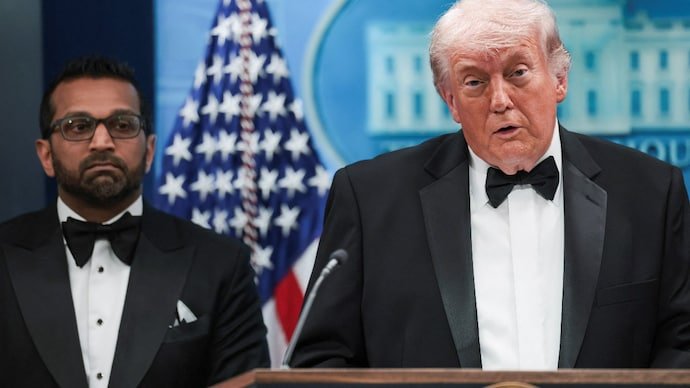
A night meant for speeches and political satire turned into a moment of fear when gunfire erupted near a major Washington event, prompting US President Donald Trump to reflect on a troubling possibility: that he may have been the intended target again.
Speaking after the incident, Trump said “I guess” when asked if the attacker was aiming for him. The remark, though brief, carries weight in the context of recent History. It comes after multiple threats and past assassination attempts, adding a deeper layer of concern to what might otherwise have been treated as an isolated Security breach.
What Happened at the Event?
The incident unfolded during a high-profile gathering attended by political leaders, journalists, and public figures. Moments of normalcy quickly gave way to chaos when loud bangs echoed through the venue.
Eyewitnesses described a scene of sudden panic:
- Guests diving under tables for safety
- Shouts of “Get down” spreading across the hall
- Security personnel rushing in with weapons drawn
Within seconds, the atmosphere shifted from formal to frantic, highlighting how quickly security situations can escalate even in controlled environments.
Swift Security Response Prevents Escalation
According to officials, the suspect attempted to breach a security checkpoint while armed with multiple weapons, including a shotgun. During the confrontation, shots were fired at a security agent.
Crucially, the agent was protected by body armor, preventing what could have been a fatal injury.
security forces acted rapidly:
- The suspect was subdued on-site
- Attendees were secured and evacuated
- Top officials, including Trump and the First Lady, were moved to safety
The quick response is widely seen as a key factor in preventing a potentially catastrophic outcome.
Trump’s Reaction: A Pattern of Threats
Trump’s comment about being a possible target cannot be viewed in isolation. It follows earlier assassination attempts during his political career, including a high-profile incident during a campaign rally where he sustained an injury.
This pattern raises an important question: Are threats against political leaders becoming more frequent, or simply more visible?
For Trump, the experience appears to reinforce a sense of ongoing vulnerability, even within heavily guarded environments.
The “Lone Wolf” Factor
Authorities have indicated that the suspect appears to have acted alone, with no immediate evidence of a larger network.
This classification often referred to as a “lone wolf” presents unique challenges for security agencies.
Why Lone Actors Are Hard to Stop
- Minimal communication: Fewer signals for intelligence agencies to detect
- Unpredictable behavior: Actions may not follow established patterns
- Rapid execution: Plans can be carried out quickly without coordination
This makes prevention significantly more difficult compared to organized threats.
Security Gaps: A Wake-Up Call
Despite multiple layers of protection, the attacker managed to reach a critical checkpoint while armed raising serious questions about event security protocols.
Trump himself pointed out that the venue was “not a particularly secure building,” suggesting that Infrastructure limitations may have contributed to the risk.
This has sparked discussions about enhancing security at high-profile events.
Potential Improvements Being Discussed
- Stronger perimeter screening systems
- Advanced surveillance technologies
- Reinforced physical infrastructure (bulletproof, drone-resistant)
- Improved coordination between agencies
In an era of evolving threats, traditional security measures may no longer be sufficient.
Comparison: Then vs Now Changing Nature of Threats
| Aspect | Past Threats | Current Threats |
|---|---|---|
| Type | Organized plots | Lone actors |
| Detection | Intelligence-based | Behavior-based |
| Execution | Coordinated | Rapid and unpredictable |
| Prevention | Network disruption | Individual monitoring |
This shift highlights why even advanced security systems can struggle to prevent incidents entirely.
The Psychological Impact: Fear Beyond the Event
While the physical threat was contained, the psychological impact lingers.
Events like this create a ripple effect:
- Increased anxiety among public figures
- Heightened security measures at future gatherings
- Public concern over political violence
For attendees, the experience of sudden danger in a controlled Environment can be deeply unsettling.
Political Tone: A Call for Calm
In the aftermath, Trump urged Americans to resolve differences peacefully a notable message given the charged political environment.
High-profile incidents often risk escalating tensions, especially when narratives form quickly. Calls for restraint aim to prevent further polarization.
However, whether such appeals translate into broader societal impact remains uncertain.
What Happens Next?
The Investigation is ongoing, led by federal agencies focusing on several key areas:
- Determining the suspect’s motive
- Analyzing weapons and ballistic evidence
- Reviewing security footage and witness accounts
- Assessing potential security lapses
Charges are expected to expand as more information becomes available.
A Deeper Insight: Security Is No Longer Just Physical
One critical takeaway from this incident is that modern security challenges extend beyond physical barriers.
Threat detection now requires:
- Behavioral analysis
- Digital monitoring
- Rapid response systems
The combination of physical and psychological factors makes security a constantly evolving field.
Conclusion: A Stark Reminder of Persistent Risks
The shooting near a major political event serves as a reminder that even the most protected spaces are not immune to sudden threats. Trump’s suggestion that he may have been the target adds another layer of seriousness to the incident.
While the immediate danger has passed, the broader implications remain raising questions about safety, preparedness, and the nature of modern threats.
Future Outlook: Expect tighter security protocols, deeper investigations, and continued debate over how to balance openness with protection in public life. As threats evolve, so too must the systems designed to prevent them.
For now, one thing is clear: the line between safety and risk is thinner than it appears even at the highest levels of power.
For breaking news and live news updates, like us on Facebook or follow us on Twitter and Instagram. Read more on Latest World on thefoxdaily.com.



COMMENTS 0