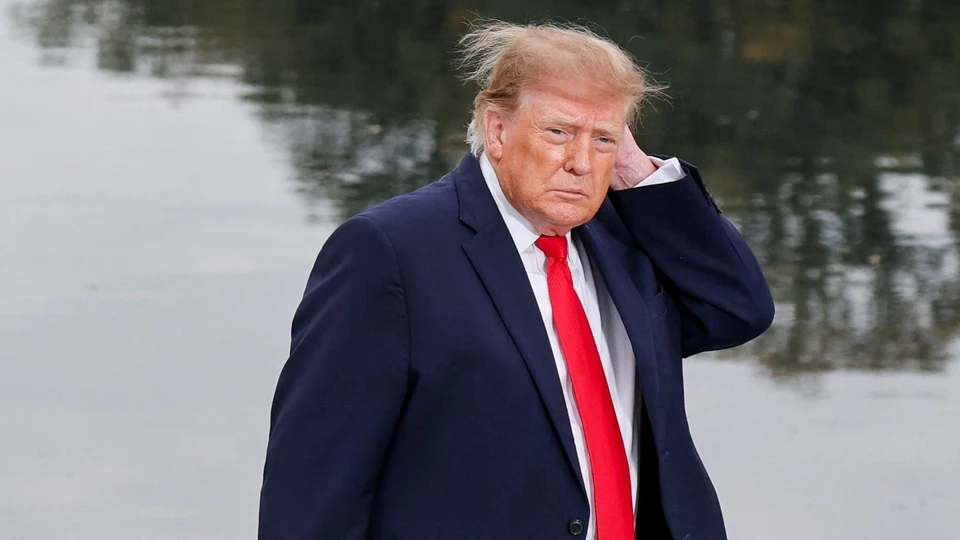
President Donald Trump repeatedly urged Americans to treat the 2026 midterm elections as a referendum on his presidency. Voters appeared to take that message seriously, delivering major victories to Democrats and putting Republican control of Congress under pressure.
Democratic candidates recorded important wins across New Hampshire, North Carolina, Ohio, Texas and South Carolina, challenging Republican candidates in both competitive battlegrounds and traditionally conservative states. The results also raised questions about Trump’s political influence and the effectiveness of his efforts to strengthen Republican support ahead of the elections.
According to the AP Voter Poll, roughly three-quarters of voters felt angry or dissatisfied with the direction of the country. Among voters who considered Trump when deciding how to vote, approximately twice as many wanted to express opposition to the Republican president as wanted to support him.
Economic dissatisfaction was another major factor. Around six in 10 voters said unusually high prices were more attributable to Trump’s policies. The findings also suggested that the Republican coalition had weakened, with young voters and Hispanic voters appearing to move towards Democrats after showing stronger support for Trump in 2024.
With Democrats gaining momentum in congressional and statewide contests, the election raised the possibility of a significant shift in Washington’s political balance.
1. The Trump Era Faces a Major Political Test
The Republican setbacks represented a significant challenge to Trump’s political standing, particularly because he had made the midterm elections a test of support for his administration.
Trump entered the election with low approval ratings, growing criticism over the war in Iran and widespread frustration about rising living costs. His influence over the Republican Party also meant that the performance of many Republican candidates became closely associated with his presidency.
The AP Voter Poll found that roughly six in 10 voters disapproved of Trump’s job performance. Around 70% wanted Congress to provide stronger checks and balances on presidential power. Approximately six in 10 also believed Trump placed his personal interests above the interests of the country.
These findings indicated that concerns about presidential leadership extended beyond specific policy disagreements. Many voters wanted Congress to exercise greater oversight over the administration.
Trump had expected his political coalition, which included white working-class voters and growing support among younger people and voters of colour, to help Republican candidates retain their positions. However, the exit polling indicated that some of these groups had shifted towards Democrats compared with the 2024 presidential election.
Young voters move towards Democratic candidates
Voters under the age of 30 showed a notable change in their reported voting preferences. In the 2024 presidential election, younger voters were approximately evenly divided between Trump and Democratic candidate Kamala Harris.
In the 2026 midterms, approximately seven in 10 voters under 30 nationally said they supported the Democratic candidate for the House of Representatives in their district.
The shift suggested that Republicans had struggled to maintain the level of support Trump received among younger voters during the previous presidential election.
Hispanic voters shift away from Republicans
Hispanic voters also appeared to move towards Democratic candidates. According to the AP Voter Poll, roughly six in 10 Hispanic voters supported Democratic candidates in their local House races.
Only about one-third said they voted for Republican House candidates. This represented a decline compared with the approximately four in 10 Hispanic voters who had supported Trump in the 2024 presidential election.
Economic dissatisfaction was particularly important among this group. Around seven in 10 Hispanic voters said Trump’s policies had worsened economic conditions in the United States.
The changing preferences among younger and Hispanic voters could have implications for both parties as they prepare for the 2028 presidential election.
2. Democrats Make Gains Across the Country and Move Closer to Controlling Congress
The 2026 midterm elections produced Democratic victories across several states, including areas that had supported Trump in the 2024 presidential election.
Historically, the House and Senate have changed party control simultaneously during a midterm election only three times since the Second World War: in 1946, 1994 and 2006. Democrats were approaching another opportunity to achieve the same outcome in 2026.
Among the major results highlighted in the election were:
- Georgia: Democrat Keisha Lance Bottoms won the governorship, while Senator Jon Ossoff secured re-election.
- North Carolina: Former Democratic Governor Roy Cooper won the Senate race.
- New Hampshire: Democrat Chris Pappas won his Senate election, becoming the only openly gay senator, according to the supplied report.
- Ohio: Former Senator Sherrod Brown flipped a Republican-held Senate seat, while former state health official Amy Acton defeated Vivek Ramaswamy in the gubernatorial contest.
- Kansas: Democrat Adam Hamilton defeated incumbent Republican Senator Roger Marshall.
- Texas: James Talarico won the Senate race, while Gina Hinojosa defeated three-term Governor Greg Abbott.
- South Carolina: Democrat Annie Andrews defeated the Republican candidate Darline Graham in the Senate contest described in the report.
These victories demonstrated the geographical breadth of Democratic gains. Several contests took place in states that had supported Trump by significant margins in 2024, making the results particularly important for the Republican Party.
Senate and House control remain central to the political battle
Before the election, Republicans held a 53-47 advantage in the Senate. Democrats needed to win seats in states carried by Trump in 2024 to take control of the chamber.
In the House of Representatives, Republicans began the current Congress with a narrow 220-215 majority. Democrats were targeting more than 60 congressional districts, including several where Trump had won by double-digit margins.
Strategists from both parties believed Democrats were on course to secure a House majority. Their Senate prospects also appeared stronger as they recorded victories in several Republican-held states.
Control of Congress would have major consequences for Trump’s ability to advance his legislative agenda. A Democratic majority in either chamber could increase scrutiny of administration decisions, complicate legislative negotiations and strengthen congressional oversight.
3. Democratic Party Still Faces Questions About Its Political Identity
Despite the Democratic victories, the election did not resolve questions about the party’s broader public image or its future political direction.
Democrats continued to face divisions between progressive lawmakers and the party’s liberal-to-moderate establishment. Both groups were likely to interpret the election results as evidence supporting their preferred approach to future campaigns.
The moderate wing recorded important victories, including the re-election of Pennsylvania Governor Josh Shapiro and Maryland Governor Wes Moore. Both politicians have been discussed as potential Democratic presidential contenders for 2028.
At the same time, progressive candidates also attracted attention during the election. Florida Democrat Angie Nixon, described in the supplied report as the only self-identified democratic socialist on a Senate ballot, was defeated despite performing better than expected.
In Michigan, progressive Senate candidate Abdul El-Sayed faced Republican Mike Rogers. El-Sayed was among the most prominent progressive candidates in the election, although he did not identify as a Democratic Socialists of America member and was not endorsed by the organisation.
A victory for El-Sayed would have been particularly significant for progressives because Michigan is a competitive state that supported Trump in two presidential elections.
The contrast between moderate and progressive candidates reflected the continuing debate over which political approach could help Democrats build a lasting national coalition.
Negative public opinion remains a challenge
The AP Voter Poll showed that Democrats still faced considerable public dissatisfaction. Approximately half of voters had a very or somewhat unfavourable opinion of the Democratic Party.
The Republican Party faced even greater criticism, with around six in 10 voters viewing the GOP negatively.
This suggests that Democratic victories were not necessarily accompanied by widespread approval of the party itself. Opposition to Trump and dissatisfaction with Republican policies appeared to be important elements of the electoral outcome.
4. Trump’s Gerrymandering Strategy May Have Backfired
Another important issue in the 2026 midterm elections was the battle over congressional district boundaries. Trump’s push to redraw congressional maps in Republican-controlled Texas triggered a wider political confrontation over redistricting.
Texas became the starting point of a national redistricting dispute after Trump encouraged the state to change its congressional boundaries. California Governor Gavin Newsom responded by persuading voters in his state to support a countermeasure.
Other Democratic- and Republican-controlled states subsequently became involved in the redistricting battle. The dispute also unfolded alongside a major legal development involving the US Supreme Court, which struck down part of the Voting Rights Act and allowed several Southern states to redraw districts that had previously been majority- or near-majority-Black.
Republican seat calculations face unexpected problems
On paper, the Republican redistricting strategy appeared capable of producing a net gain of nine congressional seats for the party.
However, the strategy involved distributing conservative voters across a greater number of districts. That approach created risks if the expected level of Republican support failed to materialise.
Republican plans in states such as Florida and Texas depended partly on maintaining support among Latino voters and other non-white groups that had backed Trump in 2024.
The early election results suggested that these voting patterns had changed. Democrats recorded victories in several districts that Republicans had redrawn with the intention of improving their chances of winning.
Democrats win key Florida districts
Florida provided some of the clearest examples of the difficulties facing the Republican redistricting strategy.
Democratic Representative Jared Moskowitz won the state’s 25th Congressional District. Democrat Pia Dandiya, a first-time candidate, won the 22nd District, while Representative Kathy Castor secured re-election in the 14th District.
Republicans had redrawn all three districts during the spring with the intention of improving their electoral position in the November midterms.
The Democratic victories suggested that changes to district boundaries alone could not guarantee Republican wins, particularly if voters were moving away from the party in response to national and economic concerns.
5. Economic Concerns and Rising Prices Shape Voter Decisions
Economic dissatisfaction was a recurring theme throughout the election. The AP Voter Poll found that approximately six in 10 voters believed higher-than-usual prices were more closely connected to Trump’s policies.
Rising household expenses created difficulties for voters dealing with the costs of food, fuel, housing-related expenses and other everyday necessities.
The economic situation also challenged one of the central strengths of Trump’s political appeal. His campaign had relied heavily on promises to improve the economy and address affordability concerns.
However, the polling results indicated that many voters were unhappy with the administration’s economic performance. This dissatisfaction appeared to influence voting decisions in both competitive states and Republican strongholds.
The economic issue also intersected with the changing preferences of Hispanic voters. Around seven in 10 Hispanic voters believed Trump’s policies had worsened economic conditions, according to the AP Voter Poll.
6. What the Midterm Results Could Mean for 2028
The 2026 midterm elections could influence the political environment ahead of the 2028 presidential contest. Although the next presidential election remains two years away, the results provide both parties with an indication of the issues and voter groups likely to shape the next national campaign.
For Republicans, the movement among younger and Hispanic voters presents a challenge. These groups had contributed to Trump’s 2024 victory, but the latest polling indicated that some of that support had weakened.
For Democrats, victories across states such as Texas, Ohio, Georgia and North Carolina provide opportunities to build on their electoral gains. However, the party still faces questions about its public image and the balance between moderate and progressive political positions.
The election also highlighted the importance of economic conditions, public confidence in government and dissatisfaction with presidential leadership.
If Democrats secure control of Congress, the new political balance could limit Trump’s ability to advance his agenda without facing opposition from lawmakers. It would also give Democrats greater influence over congressional investigations, legislation and oversight of the administration.
Conclusion: A Major Warning for Trump and Republicans
The 2026 US midterm elections delivered a significant warning to Trump and the Republican Party. Democratic victories across several states, changing support among younger and Hispanic voters, and widespread dissatisfaction with economic conditions exposed weaknesses in the Republican electoral coalition.
The results also showed that Trump’s personal involvement in the midterm campaign did not prevent Republican losses. His approval ratings, the war in Iran, immigration enforcement and rising prices remained major concerns among voters.
Democrats now face the challenge of converting their electoral momentum into a broader political coalition. While their victories have strengthened their position, negative public opinion of the party shows that opposition to Republicans alone may not guarantee long-term success.
For Trump, the results raise questions about his influence over the Republican Party during the remaining years of his presidency. For both parties, the election has set the stage for a closely watched political battle ahead of 2028.
For breaking news and live news updates, like us on Facebook or follow us on Twitter and Instagram. Read more on Latest World on thefoxdaily.com.






COMMENTS 0