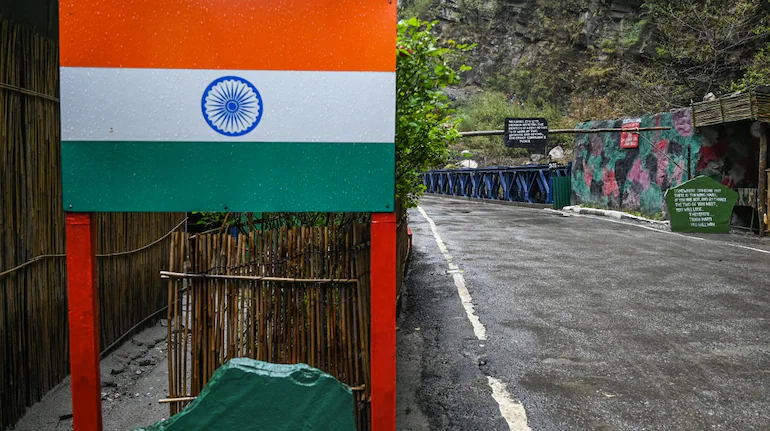
India and China have taken another step towards managing tensions along their disputed Himalayan border after military representatives completed an intensive 10-day round of talks. The discussions reportedly resulted in a sharp reduction in active face-off points, where troops from the two countries had been confronting each other, alongside fresh instructions intended to prevent local incidents from escalating.
The latest engagement is significant because the Line of Actual Control remains one of the most sensitive areas in India-China Relations. Although both countries have continued diplomatic and military discussions to maintain stability, disagreements over the boundary, troop deployment and patrolling rights have repeatedly created friction.
According to sources cited by CNN-News18, the number of active face-off points, which had previously increased to double digits, has fallen considerably following the latest discussions. The two sides have also introduced new Standard Operating Procedures (SOPs) for their troops to reduce misunderstandings and avoid confrontations.
However, the reported progress does not mean that every border dispute has been resolved. A disagreement over the limits of patrolling at one disputed location remains unsettled. Military representatives are expected to consult their respective higher authorities before deciding how to address the issue, with another meeting likely after a date is finalised.
What Has Changed Along the India-China LAC?
The latest military discussions have focused on reducing direct confrontations and creating clearer procedures for troops operating in sensitive border areas. The reported changes involve fewer active face-off points, updated instructions for frontline personnel and continued consultations over unresolved patrolling arrangements.
- Fewer active face-off points: The number of locations experiencing direct troop confrontations has reportedly declined sharply from the earlier double-digit level.
- Fresh military SOPs: Both sides have issued updated procedures intended to prevent friction and reduce the risk of accidental confrontations.
- Patrolling disagreement remains: The limits of patrolling at one disputed location have not yet been settled.
- Further consultations planned: Military representatives are expected to meet again after receiving guidance from their respective higher authorities.
- Winter restrictions approaching: Snowfall and difficult terrain are expected to limit troop movement across several sensitive locations.
These developments indicate an effort to manage the immediate security situation rather than resolve the broader boundary dispute. The distinction is important: reducing the number of face-off points can lower the likelihood of direct encounters, but it does not automatically settle competing territorial claims or establish a mutually accepted border.
Why the 10-Day Corps Commander-Level Talks Matter
The latest discussions were conducted at the Corps Commander level, involving senior military representatives responsible for managing operational matters along the border. Such meetings provide a channel for addressing problems that arise from troop deployments, patrol movements and differences in how the two sides interpret arrangements along the LAC.
The 10-day engagement took place in Arunachal Pradesh as India and China sought to stabilise the ground situation before the onset of harsh winter conditions. The talks followed diplomatic discussions between senior officials from both countries in Beijing earlier in the year.
Military-level negotiations are particularly important because the LAC is not a mutually demarcated international boundary. India and China maintain different perceptions of where the line runs in several areas. As a result, patrols can enter locations that both sides regard as falling within their respective areas, creating the possibility of face-offs.
When troops encounter each other in such locations, the absence of an agreed boundary can make even routine patrol activity sensitive. Communication between commanders, agreed procedures and established meeting mechanisms therefore play an important role in preventing local disagreements from turning into larger military incidents.
The reported decline in active face-off points suggests that the latest discussions have helped address some immediate operational concerns. However, the unresolved patrolling issue shows that differences over access and movement remain part of the wider border management challenge.
What Are Face-Off Points Along the Line of Actual Control?
Face-off points are locations where Indian and Chinese troops encounter one another while operating in areas claimed or patrolled by both countries. These encounters can occur because the two sides do not share an identical understanding of the LAC’s alignment.
Unlike a clearly demarcated international border, the LAC is a line separating the areas controlled by India and China following the 1962 war. Its alignment has not been jointly clarified across the entire frontier. This leaves several stretches where the two countries maintain different perceptions of the boundary.
Patrolling is one way both sides maintain their presence in areas they consider part of their territory. When patrols from opposing forces meet in a disputed area, soldiers may challenge each other’s presence, resulting in a face-off.
Such encounters do not necessarily involve gunfire. Border management arrangements have historically relied on communication, physical disengagement and procedures intended to prevent the use of firearms. Nevertheless, prolonged face-offs can increase tension, require additional troop deployment and create the risk of escalation if soldiers misinterpret each other’s actions.
Reducing the number of active face-off points can therefore improve the immediate security environment. But the number alone does not provide a complete picture of the border situation. The location of remaining confrontations, the duration of troop deployments, patrol access and the implementation of disengagement arrangements also matter.
Patrolling Limits Remain the Biggest Unresolved Issue
Despite the reported progress, the two countries have not settled every operational disagreement. Sources cited by CNN-News18 said the limits of patrolling at one disputed point remain unresolved, with both sides expected to consult their higher authorities before taking further decisions.
Patrolling rights are particularly sensitive because they are connected to how each country maintains its presence in areas it claims. If one side believes that the other is restricting access to a location where it previously conducted patrols, the disagreement can become a source of sustained tension.
Even when troops are not directly confronting each other, restrictions on movement can affect the practical ability of a country to monitor an area. This is why discussions over patrol routes, access points and the frequency of patrols can be as important as arrangements for withdrawing troops from face-off locations.
The unresolved issue also demonstrates the limits of military-level negotiations. Commanders can discuss practical arrangements and recommend measures to prevent incidents, but some decisions may require political or diplomatic approval from higher authorities.
According to the reported outcome, the military representatives will consult their respective leadership before deciding the next steps. Another round of discussions is expected once both sides agree on a date.
How Winter Could Change Troop Movement Along the LAC
The approaching winter season is expected to influence military activity along several stretches of the India-China border. Heavy snowfall, freezing temperatures and difficult terrain can restrict movement, particularly in high-altitude areas where access depends on mountain roads and exposed routes.
According to the sources cited by CNN-News18, officials expect troop movement to decline during the harsh winter months. Some locations that have experienced friction could become naturally inaccessible as snowfall increases.
Winter conditions can affect both routine patrols and the movement of supplies, equipment and personnel. At high altitudes, military logistics become more demanding because roads may close, visibility can deteriorate and extreme temperatures can make operations difficult.
For troops deployed along the LAC, maintaining a presence during winter requires careful planning. Supplies, accommodation, heating arrangements, communications and medical support become essential to sustaining personnel in remote areas.
However, a seasonal reduction in movement should not be confused with a permanent settlement. If a disputed location becomes inaccessible because of snow, the immediate possibility of a face-off may decline, but the underlying disagreement can remain. Once conditions improve, patrol activity could resume unless both countries have reached an agreed arrangement.
Winter may therefore provide a period of reduced operational activity, but lasting stability will depend on whether the two sides continue implementing their commitments and address unresolved questions through dialogue.
Who Led the Latest India-China Military Talks?
The Indian delegation was led by Lieutenant General Girish Kalia, General Officer Commanding of the Army’s III Corps, also known as the Spear Corps. The formation is headquartered at Rangapahar near Dimapur in Nagaland and is responsible for a significant portion of the eastern frontier.
Chinese military representatives, including the Indian commander’s counterpart and other officers, participated in the discussions. An official from India’s Ministry of External Affairs (MEA) was also present, reflecting the importance of coordinating military arrangements with broader diplomatic efforts.
The latest round followed an earlier Corps Commander-level meeting held on September 6 and 7, 2026, at the Wacha-Damai Border Personnel Meeting point in the Kibithoo sector of Arunachal Pradesh. That meeting took place after reports of tensions in the Taksing area of Upper Subansiri district.
The two rounds form part of a series of efforts to address friction in the eastern sector. Their focus has been on communication between troops, engagement procedures and preventing local encounters from developing into prolonged standoffs.
Ajit Doval and Wang Yi’s August Talks Set the Diplomatic Framework
The military discussions are part of a broader diplomatic process that gained momentum following the 25th round of Special Representatives’ talks between India’s National Security Adviser Ajit Doval and Chinese Foreign Minister Wang Yi in Beijing on August 25, 2026.
The two representatives discussed the boundary question and wider bilateral relations, reaching an eight-point consensus aimed at improving border management and advancing negotiations towards a boundary settlement.
The agreement reaffirmed the importance of maintaining peace and tranquillity along the border while continuing discussions under the 2005 Agreement on Political Parameters and Guiding Principles for the Settlement of the India-China Boundary Question.
The 2005 framework provides broad principles for resolving the boundary dispute. It does not, by itself, establish a final border or settle the competing territorial claims. The latest consensus instead seeks to advance discussions on delimitation and border management through dedicated working groups.
The August discussions also recognised that situations arising on the ground should be addressed promptly through existing diplomatic and military channels. These include the Working Mechanism for Consultation and Coordination on India-China Border Affairs (WMCC), local commander-level meetings and other agreed mechanisms.
This approach is relevant to the latest Arunachal Pradesh discussions. Military commanders can address immediate operational problems, while diplomatic channels provide a mechanism for handling issues that require decisions beyond the authority of local commanders.
Eight-Point Consensus: What India and China Agreed to Do
The August 2026 Special Representatives’ meeting produced a series of practical measures intended to strengthen communication and keep the boundary question under discussion. The main areas of agreement include:
- Maintaining peace along the border: Both countries reaffirmed their commitment to maintaining peace and tranquillity in border areas to support stable bilateral relations.
- Continuing boundary negotiations: They agreed to advance discussions on a framework for settling the boundary question in line with the 2005 agreement and subsequent understandings.
- Working groups on delimitation and management: The Expert Group on Boundary Delimitation and the Working Group on Border Management were tasked with pursuing an early and substantial outcome in their respective areas.
- Using existing communication channels: Both sides agreed to address situations on the ground through diplomatic and military mechanisms to reduce misunderstandings and miscalculations.
- Two additional military meeting points: The countries agreed to establish two more points for meetings involving senior military commanders.
- Additional military hotlines: Two new border military hotline channels were agreed upon for the eastern and middle sectors.
- Resuming cross-border cooperation: The sides welcomed progress in border trade and the Kailash-Manasarovar pilgrimage, while agreeing to strengthen cooperation and maintain communication on trans-border river issues.
- Next Special Representatives’ meeting: The 26th round of boundary talks is scheduled to take place in India in 2027.
These commitments are designed to improve the mechanisms through which India and China manage disagreements. Additional meeting points and hotlines can make communication between military authorities more accessible, while working groups can continue discussions on the longer-term boundary settlement.
However, the agreements should not be interpreted as a final resolution of the border dispute. They establish channels and objectives for further engagement rather than confirming that both countries have accepted a common boundary alignment.
Why New Military Hotlines and Meeting Points Matter
Communication failures can increase the risk of confrontation when troops operate in areas where the boundary is disputed. A patrol encountering soldiers from the other side may need to communicate quickly with commanders to clarify the situation and prevent an incident from escalating.
Military hotlines provide a direct communication channel between designated authorities. They can help senior officers exchange information during tense situations, clarify developments and coordinate responses without relying entirely on slower diplomatic processes.
Additional meeting points can also make it easier for commanders to hold face-to-face discussions in different sectors. This matters because the LAC stretches across diverse geographical regions, from high-altitude areas in Ladakh to the mountainous frontier in Arunachal Pradesh.
The August consensus proposed two additional meeting points and two new hotline channels in the eastern and middle sectors. These measures complement existing communication arrangements rather than replacing the wider diplomatic process.
For the latest Arunachal Pradesh talks, the importance of such mechanisms is clear. The immediate objective is to prevent patrol encounters from turning into prolonged confrontations. Regular communication can help commanders manage incidents before they require intervention at higher political levels.
Why Arunachal Pradesh Remains a Sensitive Part of the India-China Border Dispute
Arunachal Pradesh occupies a central position in the eastern sector of the India-China boundary dispute. India administers the state as part of its territory, while China claims large parts of it and refers to the region as Zangnan or South Tibet.
China’s position is closely connected to its rejection of the McMahon Line, which forms the basis of the boundary between Arunachal Pradesh and Tibet under the 1914 Simla Convention. India recognises the line as the basis of its eastern boundary, while China does not accept it as a legitimate border.
The disagreement over the McMahon Line is one reason why the two countries maintain different perceptions of the LAC in the eastern sector. These competing positions can create disputes over patrol routes, territorial claims and the presence of troops in sensitive locations.
Arunachal Pradesh Chief Minister Pema Khandu has repeatedly highlighted the continuing friction arising from China’s position on the McMahon Line. His remarks reflect the state government’s concerns about the unresolved boundary question and the strategic importance of the region.
The dispute is not limited to disagreements over maps. It also affects how both countries manage their military presence, infrastructure development and access to remote border areas. Roads, bridges, logistics facilities and forward deployments can influence the ability of each side to maintain its presence along the frontier.
For India, maintaining administrative control and infrastructure in Arunachal Pradesh is part of its broader border management approach. China, meanwhile, continues to assert its territorial claims. These competing positions mean that local military arrangements must operate alongside a larger diplomatic effort to address the boundary question.
What the Latest Talks Do Not Resolve
Although the reported reduction in face-off points is a notable development, several major issues remain beyond the scope of the latest military discussions.
The final boundary remains unsettled. India and China have not reached a comprehensive agreement defining their entire border. The LAC continues to be based on differing perceptions in several areas, making a final settlement dependent on sustained political and diplomatic negotiations.
Patrolling rights remain disputed. The unresolved disagreement over patrolling limits at one location demonstrates that both sides have not settled every operational question. The issue requires further consultation and decisions from higher authorities.
Military deployments remain important. A reduction in face-off points does not necessarily mean that both armies have withdrawn from every sensitive area or reduced their overall presence. The latest reports do not provide a detailed account of troop numbers, deployments or any comprehensive disengagement arrangement.
Implementation needs to be monitored. New SOPs can help prevent misunderstandings, but their effectiveness depends on how consistently troops follow them on the ground. The measures discussed during negotiations must translate into practical behaviour along the frontier.
Political disagreements continue. The competing positions over Arunachal Pradesh and the McMahon Line remain unresolved. Military-level arrangements can reduce immediate friction, but they cannot independently settle these broader territorial claims.
These limitations explain why the latest talks should be viewed as an effort to manage the border situation rather than a breakthrough in the final settlement of the dispute.
How the 2020 Border Crisis Still Shapes India-China Relations
The current efforts to reduce friction along the LAC take place against the background of the serious military confrontation that began in 2020. The Galwan Valley clash in eastern Ladakh, which resulted in fatalities on both sides, marked a major deterioration in relations between the two countries.
The confrontation led to a prolonged military standoff, large-scale troop deployments and a series of diplomatic and military negotiations. The crisis demonstrated how quickly disagreements along an undemarcated boundary could affect broader relations between two major Asian powers.
In October 2024, India and China reached an agreement on patrolling arrangements and disengagement in the Depsang and Demchok areas of eastern Ladakh. The understanding was followed by steps towards reducing tensions and restoring some border-related activities.
That process did not settle the entire boundary dispute. Instead, it provided a basis for managing specific friction points and restarting broader diplomatic engagement.
The latest developments in Arunachal Pradesh show that the challenge is not confined to eastern Ladakh. Different sectors of the LAC have their own geographical and operational sensitivities, and progress in one area does not automatically resolve problems elsewhere.
The experience since 2020 has also reinforced the importance of reliable communication between the two militaries. Preventing a local confrontation from escalating is now a central part of the border management process.
Will the Latest Agreements Improve India-China Relations?
The reduction in active face-off points could help create a more stable environment along the Arunachal Pradesh frontier, particularly if the updated SOPs are implemented consistently. Fewer direct confrontations may also reduce the need for repeated emergency negotiations between local commanders.
However, the broader relationship between India and China depends on more than the immediate military situation. The unresolved boundary dispute, strategic competition, trade relations and wider regional developments continue to influence bilateral ties.
The August 2026 consensus offers a framework for maintaining dialogue through military hotlines, additional meeting points and working groups. The planned 26th round of Special Representatives’ talks in India in 2027 provides another opportunity to advance the boundary discussions.
Progress will depend on whether both sides follow through on these commitments and whether the mechanisms produce practical results. The unresolved patrolling issue in Arunachal Pradesh will be one important test of the ability of military and diplomatic channels to address disagreements.
Winter may temporarily reduce movement across some sensitive locations, but seasonal restrictions cannot provide a permanent solution. Once weather conditions improve, the same questions about patrol access and the alignment of the LAC could return unless the two countries reach workable arrangements.
India-China LAC Talks: What Happens Next?
The immediate next step is expected to involve consultations by military representatives with their respective higher authorities over the unresolved patrolling issue. Another round of military discussions may follow once a date is finalised.
At the same time, the two countries will need to translate the new operating procedures into clear instructions for frontline troops. The effectiveness of these arrangements will depend on whether soldiers and commanders can use established communication channels quickly when patrols encounter each other.
The diplomatic commitments made in Beijing will also remain relevant. Additional military hotlines, new commander-level meeting points and working groups on boundary delimitation and management are intended to provide a more structured way of handling future disagreements.
The next major diplomatic milestone is the 26th round of Special Representatives’ talks, planned for India in 2027. That meeting is expected to continue the wider discussion on the boundary question, although the outcome remains uncertain.
For now, the reported fall in active face-off points represents progress in managing immediate tensions along the eastern LAC. But the unresolved patrolling disagreement, competing territorial claims and absence of a mutually agreed boundary show why the India-China border remains sensitive.
The central test will be whether the latest military protocols can maintain stability beyond the winter season. A lasting improvement will require consistent implementation on the ground, effective communication between commanders and continued diplomatic engagement between New Delhi and Beijing.
For breaking news and live news updates, like us on Facebook or follow us on Twitter and Instagram. Read more on Latest World on thefoxdaily.com.






COMMENTS 0