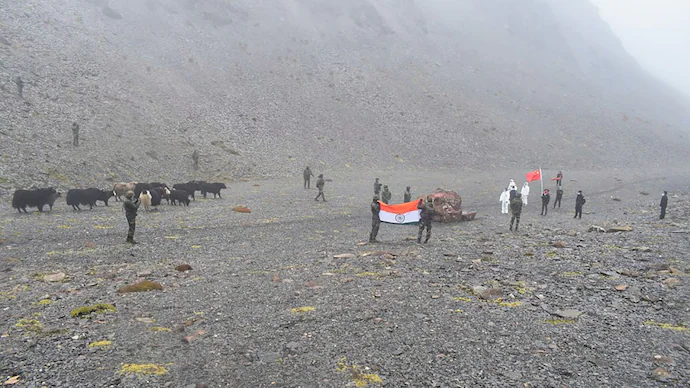
Two sensitive border pockets in Arunachal Pradesh‘s Taksing Circle, Asaphila and Longju, continue to experience friction linked to differing Indian and Chinese perceptions of the Line of Actual Control (LAC), but the overall ground situation remains stable, according to defence sources cited by India Today.
Indian and Chinese patrols periodically encounter each other in the areas during routine operations. However, the sources reported no violent clashes between military personnel, saying local commanders were maintaining restraint and operational control.
The situation highlights a continuing challenge along the India-China border: when the two countries disagree over the alignment of the LAC, patrols operating in the same areas can encounter one another even without a new confrontation or a change in the overall security situation.
Established military communication channels, including flag meetings and hotline contacts, are being used to manage local face-offs. At the same time, infrastructure projects in remote frontier areas are intended to improve connectivity for security forces and local residents, with potential benefits for essential services and economic activity.
Defence sources have also pointed to the importance of sustained military and diplomatic engagement in managing unresolved boundary differences. Although improved connectivity could eventually support controlled border trade and greater cross-border contact, such possibilities remain dependent on security conditions and agreement between India and China.
Why Asaphila and Longju remain sensitive along the India-China border
Asaphila and Longju are located within Taksing Circle in Arunachal Pradesh, in India’s northeastern frontier region. Their sensitivity stems from differing perceptions of the LAC, the line that separates areas of Indian and Chinese military control pending a final settlement of the boundary dispute.
The LAC should not be confused with a mutually agreed international boundary. India and China have not reached a final settlement of their boundary dispute, and differing perceptions of the line in certain sectors can create situations in which patrols from both sides operate in areas each considers part of its own patrolling territory.
These differences can make routine patrol activity difficult to manage. When personnel from the two sides meet in areas where their perceived lines do not coincide, the encounter can require immediate communication and restraint to prevent a local disagreement from escalating.
According to the defence sources cited in the report, such encounters occur periodically in Asaphila and Longju. They described the situation as stable and under control, with no reported violent clashes between personnel from the two countries.
That distinction is important when interpreting reports about sensitive border areas. A patrol encounter or face-off does not automatically mean that fighting has broken out, that a new territorial agreement has been reached or that control of an area has changed. Each development must be assessed on the basis of the available information.
Military communication mechanisms help manage border face-offs
According to the defence sources, local encounters in Asaphila and Longju are being managed through established military-to-military communication mechanisms. These include flag meetings and hotline communications designed to help commanders address immediate concerns and reduce the risk of escalation.
Flag meetings provide an opportunity for military representatives to discuss issues arising along the border. Direct communication channels can also help clarify the circumstances surrounding an encounter before a local disagreement develops into a wider confrontation.
India and China have developed several mechanisms for maintaining communication along the LAC. These include meetings between border personnel, discussions between military commanders and diplomatic consultations through the Working Mechanism for Consultation and Coordination on India-China Border Affairs.
The Border Defence Cooperation Agreement signed by the two countries in October 2013 also provides a framework for military contacts and cooperation in managing situations arising from differing perceptions of the LAC.
Such arrangements are particularly relevant in sectors where the line has not been mutually delineated. When patrols operate according to their respective perceptions, communication becomes an important means of preventing misunderstandings and maintaining control over local encounters.
The sources also highlighted a Corps Commander-level interaction conducted in the Northeast, describing it as a significant step towards institutionalising high-level dialogue in the region.
Regular contact at different levels serves a practical purpose: it gives both sides channels through which to raise concerns, communicate their positions and seek ways to prevent local tensions from spreading. However, these mechanisms do not by themselves settle the underlying boundary dispute.
Why the LAC dispute remains difficult to resolve
The India-China boundary question involves several sectors and longstanding differences over where the border should lie. The absence of a mutually agreed alignment of the LAC in certain areas creates challenges for both patrol management and the broader effort to maintain peace along the frontier.
In practical terms, the problem is not limited to the physical presence of troops. It also involves the different territorial perceptions that guide patrol activity. An encounter can therefore occur even when neither side describes its actions as a departure from its own understanding of the line.
Local military arrangements can help manage these encounters, but a lasting resolution of the boundary question requires broader diplomatic engagement. The defence sources emphasised the importance of continued negotiations alongside military communication.
This distinction explains why a border sector can remain sensitive even when no violent clashes are reported. Stability depends not only on the absence of fighting but also on the ability of both sides to manage competing claims, communicate effectively and prevent incidents from escalating.
For residents of remote frontier areas, maintaining that stability is also important for everyday life. Security concerns can affect the environment in which infrastructure is built, essential services are delivered and economic activities are developed.
Border infrastructure development in remote Arunachal Pradesh
Alongside military preparedness and communication, infrastructure development is an important part of efforts to improve conditions in remote border regions. Defence sources said initiatives in frontier areas include all-weather roads, bridges, telecommunications networks and civic amenities.
These facilities serve both security personnel and local communities. Better roads can improve access to settlements and help essential supplies reach remote areas, while telecommunications can make it easier for residents to maintain contact with public services and the outside world.
In mountainous frontier regions, connectivity can be particularly important because difficult terrain and weather conditions may complicate travel. Reliable transport links can support the movement of personnel and supplies while making healthcare, education and other services more accessible to residents.
Infrastructure can also influence local economic opportunities. Improved transport and communication links may make it easier for residents to access markets, obtain supplies and participate in economic activities beyond their immediate villages.
However, the benefits depend on the quality, reliability and long-term maintenance of these facilities. Building a road or telecommunications link is only one part of improving connectivity; communities also need services and economic opportunities that make effective use of the infrastructure.
Could improved connectivity support border trade?
The defence sources said better infrastructure could eventually facilitate controlled border trade and greater people-to-people contact. These possibilities remain conditional on security requirements and diplomatic agreement between India and China.
Trade across a sensitive international frontier requires more than physical connectivity. Authorities would need appropriate arrangements for security, customs, movement of people and goods, and the management of cross-border activities.
Similarly, greater contact between communities would depend on mutually agreed access arrangements. Roads and telecommunications can improve local connectivity without automatically creating permission for people to cross the international frontier.
For this reason, border infrastructure should be understood as an enabling factor rather than a guarantee of future trade or exchanges. Its immediate value lies in improving access and supporting communities, while wider cross-border opportunities depend on political and security conditions.
Tsari pilgrimage circuit highlights the region’s cultural significance
Beyond its strategic importance, the region has cultural and religious connections that extend across the border. The defence sources highlighted the historic Tsari pilgrimage circuit, which is sacred to Buddhist communities on both sides of the frontier.
Religious sites and pilgrimage traditions can maintain cultural connections between communities even when modern political boundaries and security arrangements restrict movement. The Tsari circuit is an example of the historical and spiritual significance associated with the wider frontier region.
The sources said sustained stability could create opportunities to explore cross-border pilgrimage access in the future. Any such arrangement would depend on security conditions and agreement between the two countries.
That qualification is important. The existence of a shared religious tradition does not itself establish a right of access across the border, nor does it mean that a pilgrimage route can be opened without official arrangements.
Nevertheless, the possibility of religious exchanges illustrates how border management can involve considerations beyond military security. Where conditions permit, carefully managed access to culturally significant sites could support religious practice and contact between communities.
How civil-military cooperation supports remote communities
Defence sources also highlighted the contribution of the armed forces to civil-military initiatives in frontier areas. These activities include healthcare camps, emergency evacuations, school construction and employment opportunities for local residents.
In remote tribal communities, access to essential services can be affected by distance, terrain and limited connectivity. Healthcare camps may provide an additional route to medical assistance, while emergency evacuation support can be important when difficult conditions make ordinary transport challenging.
School construction and other community initiatives can contribute to improving access to basic services. Employment opportunities associated with local activities may also provide residents with additional sources of income.
These efforts are intended to strengthen engagement between security personnel and local communities while addressing practical needs. Their effectiveness, however, depends on the availability of services, continuity of support and the specific requirements of each settlement.
For border management, engagement with residents also has a broader community dimension. People living in frontier villages have a direct interest in reliable infrastructure, access to services and a stable security environment. Development that responds to these needs can help improve everyday conditions alongside the operational requirements of Border Security.
What happens next in Asaphila and Longju?
The immediate priority identified by the defence sources is to maintain stability in the two sensitive pockets through continued monitoring, restraint and established communication channels. No violent clashes between Indian and Chinese military personnel were reported in the account provided by the sources.
However, the absence of reported clashes does not mean that the underlying territorial differences have been resolved. Periodic patrol encounters may continue as long as the two sides maintain differing perceptions of the LAC in the relevant areas.
The next developments will depend on the situation on the ground and the effectiveness of military and diplomatic engagement. Continued communication between commanders can help manage local encounters, while negotiations are necessary to address the wider boundary question.
Infrastructure development and civil-military initiatives remain relevant to the longer-term situation because they affect connectivity, essential services and economic opportunities in remote frontier communities. Potential developments involving border trade or pilgrimage access would require separate security and diplomatic arrangements.
For now, the central message from the defence sources is that Asaphila and Longju remain sensitive but that the situation is being managed through established channels. Maintaining stability will require continued restraint, effective communication and sustained attention to both security concerns and the needs of people living in Arunachal Pradesh’s remote border areas.
For breaking news and live news updates, like us on Facebook or follow us on Twitter and Instagram. Read more on Latest India on thefoxdaily.com.






COMMENTS 0