The 2026 US midterm elections have delivered a significant political setback for President Donald Trump and the Republican Party, as Democratic candidates secured victories across the country, flipped several Republican-held seats and regained control of both chambers of Congress.
The results, described by political observers as a major Democratic wave, reflect growing voter dissatisfaction with the administration’s handling of domestic and international issues. Rising living costs, inflation, concerns about political corruption and the economic consequences of the Iran war featured prominently in the election debate.
Democratic victories in states such as Texas, Maine, Michigan, Kansas, North Carolina and South Carolina have also demonstrated the geographical breadth of the party’s gains. Several candidates succeeded in contests that Republicans had previously expected to remain competitive or retain.
For Democrats, the election presents an opportunity to reshape the national political agenda. Regaining control of Congress gives the party greater influence over legislation, government spending, congressional investigations and the confirmation of presidential nominees.
However, the challenge now moves beyond winning elections. Democratic leaders must demonstrate that their campaign promises can translate into policies that address the economic pressures and public concerns that contributed to the Republican losses.
Eleven prominent Democratic figures, including elected officials, incoming lawmakers and former president Barack Obama, offered different messages following the results. Their remarks provide an indication of the priorities and political direction the party wants to establish after its sweeping electoral gains.
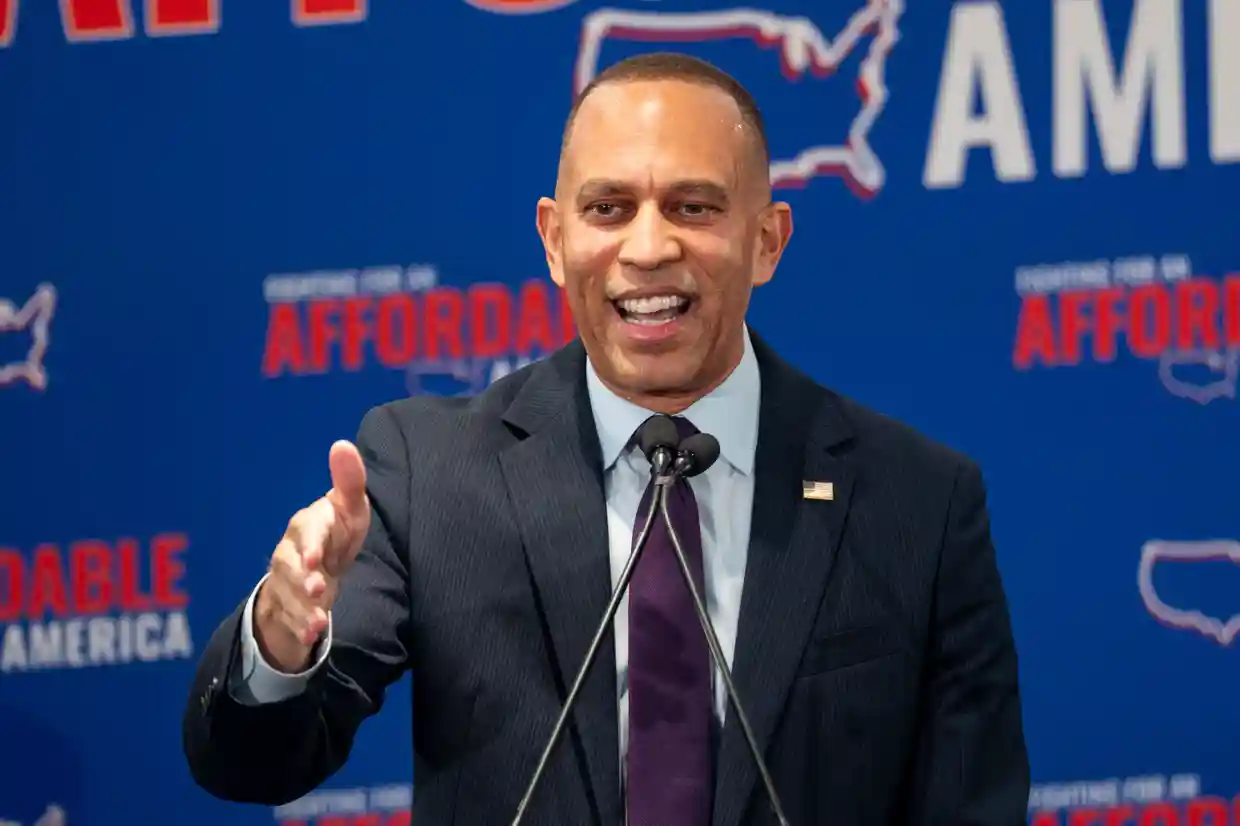
1. Hakeem Jeffries Promises Affordability and Government Accountability
House Democratic leader Hakeem Jeffries emerged as one of the central political figures following the party’s victory in the House of Representatives.
With Democrats set to take control of the chamber, Jeffries is positioned to become the next Speaker of the House, making his election night remarks particularly significant for the party’s legislative direction.
Speaking at an election night gathering in Washington DC, the New York Democrat said the results demonstrated that voters wanted substantial changes in the country’s political priorities.
He promised that House Democrats would focus on making the United States more affordable for ordinary Americans and ensuring that Congress prioritised public interests.
Jeffries also emphasised government accountability, arguing that public officials should not use positions of power to enrich themselves, their relatives, associates or political donors.
His remarks suggest that Democratic leadership intends to place two issues at the centre of its congressional agenda: the cost of living and scrutiny of the Trump administration.
With control of the House, Democrats will also gain greater influence over congressional committees, investigations and legislative priorities. Whether these efforts produce meaningful changes will depend on negotiations within Congress and the president’s response.
2. Chuck Schumer Celebrates a Generational Change in the Senate
Senate Democratic leader Chuck Schumer described the election results as a historic transformation of the political landscape.
The New York senator said American voters had effectively dismantled the Republican advantage in several key Senate contests, creating what he called a generational remake of the Senate map.
Democrats’ victories in traditionally Republican states have particular significance because they expand the geographical reach of the party’s Senate representation.
Winning seats in states such as Maine, Texas, Kansas and South Carolina suggests that Democratic candidates were able to attract support beyond the party’s established strongholds.
Control of the Senate gives Democrats influence over the chamber’s legislative schedule, committee leadership and consideration of presidential nominations.
The outcome also creates a different political environment for the remaining years of Trump’s presidency. Republican proposals will face stronger opposition, while Democratic lawmakers will have greater opportunities to investigate administration policies and demand explanations from federal officials.
For Schumer, the immediate challenge will be maintaining party unity while turning the electoral gains into a workable legislative programme.
3. Barack Obama Says Voters Want Unity and Practical Solutions
Former US president Barack Obama welcomed the Democratic victories, describing the results as a message from voters demanding a different approach to American politics.
Obama said Americans wanted political leaders who could bring people together rather than deepen divisions. He also emphasised the importance of practical solutions to the problems facing communities across the country.
He credited the election outcome to candidates who contested races in different parts of the United States, including regions that had previously been considered difficult for Democrats to win.
According to Obama, these candidates represented different backgrounds and political perspectives but shared a commitment to public service and the interests of their communities.
His remarks highlight an important aspect of the Democratic performance: the party’s success was not limited to major metropolitan areas or traditionally Democratic states.
Victories in conservative-leaning states required candidates to communicate their positions to voters with different political priorities and concerns.
Obama’s emphasis on unity also reflects a broader challenge for the party. While opposition to Trump helped mobilise Democratic voters, governing a politically divided country will require a message that extends beyond criticism of the Republican administration.
4. Troy Jackson Defeats Susan Collins in Maine
One of the significant Senate victories for Democrats came in Maine, where Troy Jackson defeated longtime Republican senator Susan Collins.
Collins had sought another term in office, but Jackson’s victory delivered Democrats an important Senate gain in a state that has frequently attracted national attention during closely contested elections.
Speaking after the result, Jackson made clear that he intended to operate independently of wealthy political donors and powerful figures in Washington.
He said Donald Trump and billionaires should understand that he did not owe them anything.
The statement reflected a campaign message centred on political independence and the influence of money in American politics.
Jackson’s victory also carries significance for the Senate’s changing composition. Defeating an established Republican senator provides Democrats with an additional seat and strengthens their ability to shape the chamber’s agenda.
His comments indicate that he wants to present himself as a representative of ordinary voters rather than powerful financial interests.
5. James Talarico Says Texas Voters Rejected Billionaire Influence
James Talarico’s victory in Texas was among the most closely watched developments of the 2026 midterm elections.
The Democratic candidate secured a Senate victory in a state that has remained an important Republican stronghold in presidential politics. His success represents a major breakthrough for Democrats and expands their presence in the Senate.
Addressing supporters at an election night gathering in Austin, Talarico argued that the result demonstrated the power of ordinary voters against wealthy political donors.
He said financial resources alone could not overcome the collective influence of Texas voters.
Talarico also presented his victory as a rejection of divisive political tactics, arguing that a politics based on bringing people together could challenge the influence of money and established political interests.
His remarks placed economic inequality and political influence at the centre of his post-election message.
The Texas result could have wider implications for future Senate contests. It demonstrates that Democrats can compete successfully in states where Republican candidates have traditionally enjoyed substantial electoral advantages.
However, maintaining that support will require addressing the priorities of Texas voters, including employment, economic opportunities, healthcare, energy and the cost of living.
6. Abdul El-Sayed: ‘We Want Our Taxes Spent Here’
Abdul El-Sayed delivered one of the most prominent statements of the election night by focusing on how American tax revenue should be used.
The Democratic candidate won Michigan’s Senate race, defeating Republican opposition and securing another important seat for his party.
Speaking at a victory rally in Detroit, El-Sayed called for public money to be directed towards domestic priorities, including schools, healthcare and infrastructure.
He argued that American taxpayers wanted their contributions invested in communities across the country rather than directed towards overseas conflicts.
His statement included criticism of US involvement in international conflicts and the country’s policies concerning apartheid, genocide and war.
The remarks reflect a broader debate within American politics about foreign policy spending and domestic economic priorities.
Why El-Sayed’s Tax Spending Message Matters
Government spending has become an increasingly important issue in discussions about affordability and economic pressure on American households.
Federal budgets must account for several competing responsibilities, including national defence, healthcare, education, infrastructure, social programmes and international commitments.
El-Sayed’s position places greater emphasis on domestic investment and raises questions about how policymakers should balance overseas involvement with spending needs at home.
His remarks may also resonate with voters who believe that federal resources should deliver more visible benefits to their communities.
During his victory speech, El-Sayed also addressed Vice-President JD Vance with a humorous reference to his constitutional responsibility to administer the Senate oath of office in January.
The comment added a lighter moment to a speech otherwise focused on economic priorities and foreign policy disagreements.
7. Amy Acton Wins Ohio Governorship With a Message of Public Service
Democrat Amy Acton secured victory in the Ohio gubernatorial election, giving the party another important state-level breakthrough.
Speaking to supporters in Columbus, Acton described her campaign as a movement driven by ordinary people and their expectations of public leadership.
She said her victory was dedicated to Ohio residents who wanted public servants capable of solving problems rather than creating additional difficulties.
Acton also emphasised kindness, arguing that compassion should not be mistaken for weakness in political leadership.
Her message focused on the relationship between government and citizens, particularly the expectation that elected officials should concentrate on practical problems affecting communities.
The Ohio result is significant because gubernatorial elections influence state-level decisions on education, healthcare, infrastructure, taxation and economic development.
Unlike congressional victories, which affect federal policymaking, a governor’s responsibilities directly shape the administration of state programmes and public services.
Acton’s success therefore expands Democratic influence beyond Washington and gives the party another important platform for implementing its domestic policy priorities.
8. Deb Haaland Declares a New Political Opportunity for New Mexico
Deb Haaland’s victory in the New Mexico gubernatorial election adds another historic dimension to the Democratic gains.
Haaland, who previously served as US Interior Secretary, won the governorship and is set to become the first Native American woman elected governor of a US state.
Her victory speech focused on the economic difficulties facing New Mexico residents, particularly families who continue to struggle despite working hard and meeting their responsibilities.
Haaland criticised the Trump administration, arguing that its policies had made conditions more difficult for people in the state.
She accused the president of enriching himself while contributing to circumstances that left New Mexicans poorer, hungrier and less healthy.
Her remarks placed economic security and public welfare at the centre of her political message.
The result is also significant for representation in American politics. Haaland’s election marks a major milestone for Native American political participation at the highest levels of state government.
As governor, she will face the challenge of translating campaign promises into policies addressing employment, healthcare, education, infrastructure and the economic needs of New Mexico communities.
9. Adam Hamilton Promises a Politics Based on Compassion
Adam Hamilton’s victory in Kansas added another Republican-held state to the Democratic Senate column.
The pastor-turned-politician defeated Republican opposition and used his election night speech to criticise what he described as unkindness and cruelty in Washington.
Hamilton also referred to the political uncertainty surrounding the Trump administration, arguing that Americans were tired of the chaos associated with national politics.
Drawing on the biblical parable of the Good Samaritan, he presented public service as an opportunity to demonstrate compassion and help people facing difficulties.
He said he intended to use his six-year Senate term to promote a politics centred on loving boldly, serving joyfully and leading courageously.
Hamilton’s religious background was particularly visible in the language of his victory speech.
His message offers a different approach to the Democratic post-election narrative. While several other candidates focused on billionaires, economic inequality and foreign policy, Hamilton emphasised compassion, public responsibility and the moral expectations of political leadership.
His victory also demonstrates how Democrats were able to make gains in states where Republican candidates had previously enjoyed strong electoral support.
10. Roy Cooper Says He Is Going to Washington to Deliver Results
Former North Carolina governor Roy Cooper won the state’s Senate race, giving Democrats another major victory in a traditionally competitive political battleground.
Cooper’s success was particularly important because North Carolina had remained difficult territory for Democratic Senate candidates for several election cycles.
Speaking to supporters after the result, Cooper said he was not entering Washington simply to hold political office but to accomplish something meaningful.
He also highlighted the role of ordinary voters in creating political change, arguing that collective participation had made the victory possible.
Cooper’s background as a former governor gives him experience in state-level administration, but his transition to the Senate will involve a different set of responsibilities.
As a senator, he will participate in federal legislation, oversight of the executive branch and decisions involving national spending and appointments.
His victory also strengthens the Democratic position in the Senate and adds another experienced state-level political figure to the incoming congressional majority.
11. Annie Andrews Makes History With South Carolina Senate Victory
Annie Andrews secured a significant Democratic victory in South Carolina, defeating Darline Graham and helping the party expand its Senate representation in a traditionally Republican state.
The pediatrician used her victory speech to emphasise independence from established political interests and the importance of allowing local voters to determine their state’s political future.
Andrews argued that South Carolina had demonstrated that political divisions, personal attacks and the influence of wealthy donors could be challenged through public participation.
She also said the Senate seat belonged to the people of South Carolina rather than one political family, party or Washington-based interest group.
Her comments reflected a campaign message focused on political accountability and the relationship between elected representatives and their constituents.
Andrews’ victory carries additional significance because she is set to become the first woman elected to the US Senate from South Carolina.
The result also demonstrates the extent of Democratic gains in the 2026 elections. Winning a Senate contest in a state with a long history of Republican strength represents a major change in the political landscape.
What the 2026 Midterm Results Mean for Donald Trump
The Democratic victories represent a major shift in the balance of power in Washington during the second half of Trump’s presidential term.
With Democrats taking control of both the House and Senate, the administration will face a more difficult legislative environment.
Republicans will no longer have the same control over congressional proceedings, while Democratic lawmakers will gain greater authority over committees and investigations.
Several important consequences could follow:
- Greater congressional oversight: Democratic committee leaders will have more opportunities to investigate federal agencies, administration decisions and government spending.
- Challenges to presidential legislation: Republican-backed proposals will face greater resistance, while Democrats will have more influence over negotiations on major bills.
- Influence over appointments: Senate control will give Democrats greater authority over the consideration and confirmation of presidential nominees.
- Renewed debate over federal spending: Affordability, healthcare, education, infrastructure and overseas military commitments are likely to feature prominently in congressional discussions.
- Political implications for 2028: The results could influence the strategies of both parties as they begin preparing for the next presidential election cycle.
However, Democratic control of Congress does not automatically mean that every campaign promise will become law. The president retains executive authority, including the ability to veto legislation, and disagreements within Congress could complicate efforts to pass major proposals.
Affordability and the Iran War Emerge as Major Political Issues
One of the most important themes connecting the Democratic victory speeches was the emphasis on the everyday financial pressures facing American households.
Jeffries focused on affordability, Haaland discussed economic difficulties in New Mexico, and El-Sayed argued for greater domestic investment in public services.
These messages reflect the importance of economic conditions in determining how voters evaluate the performance of national leadership.
Rising prices, household expenses and concerns about economic stability can influence voting decisions even when political campaigns are dominated by national security or ideological disagreements.
The Iran war also emerged as an important issue in the election debate, particularly because of its economic implications and the broader question of American involvement overseas.
El-Sayed’s remarks provided one of the clearest examples of the argument that government resources should be prioritised for domestic needs rather than international conflicts.
For the incoming Democratic majority, the challenge will be balancing these demands while addressing national security responsibilities and the economic consequences of international developments.
What Happens Next After the Democratic Election Sweep?
The immediate task for Democratic leaders will be preparing for the transition to congressional control and establishing priorities for the next legislative session.
Hakeem Jeffries is positioned to lead the House majority, while Chuck Schumer will guide the Senate Democratic majority. Their ability to coordinate legislative priorities will be important as the party moves from campaigning to governing.
The incoming lawmakers will also need to manage differences within their own party. Democratic victories came from states with different political cultures, economic interests and voter expectations.
A candidate who wins in Texas or Kansas may face different political pressures from one representing New York or California. Maintaining a unified national agenda without ignoring local concerns will therefore be an important leadership challenge.
For Trump, the election results create a period of divided government in which major policy proposals are likely to face stronger congressional scrutiny.
The coming months will show whether Democrats can turn their electoral success into tangible improvements in affordability, public services and government accountability.
The 2026 midterms have given the party a significant opportunity to influence the direction of American politics. But as the victory speeches from these 11 Democratic figures demonstrate, voters will now expect more than campaign promises. They will expect elected representatives to deliver results on the issues that shaped the election.
For breaking news and live news updates, like us on Facebook or follow us on Twitter and Instagram. Read more on Latest World on thefoxdaily.com.






COMMENTS 0