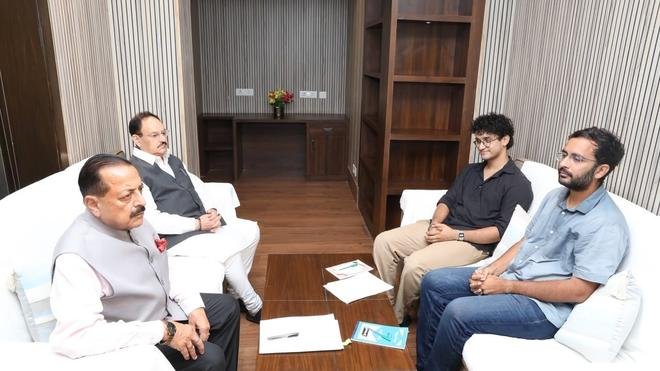
The Cockroach Janta Party (CJP) protest withdrawal marks a significant turning point in one of the most closely watched student-led movements in recent times. After three rounds of negotiations with the Centre, CJP leaders announced that their core demands had been accepted, prompting an immediate call for protesters to disperse peacefully.
The announcement came during a joint press conference with Union Ministers, where CJP national spokesperson Ashutosh Ranka confirmed that the government had responded positively to their concerns. The protest, centred around examination issues and accountability, had drawn national attention and sparked widespread debate.
What Happened: A Quick Breakdown (5W1H)
- Who: Cockroach Janta Party (CJP), Union government representatives
- What: Withdrawal of ongoing protest after demands accepted
- When: July 25, 2026
- Where: New Delhi, primarily Jantar Mantar
- Why: Government acceptance of key protest demands
- How: Through three rounds of formal discussions
Key Demands and Government Response
The protest revolved around three major demands, all of which, according to CJP, have now been addressed.
| Demand | Status |
|---|---|
| Resignation of Education Minister | Accepted |
| Withdrawal of FIRs against protesters | Accepted |
| Compensation for affected families | Accepted |
One of the most significant developments was the resignation of the Education Minister, which CJP described as a major victory for the movement.
Behind the Scenes: How the Breakthrough Happened
Unlike many protests that end in prolonged stalemates, the CJP movement saw relatively swift resolution. The breakthrough came after three structured rounds of dialogue between protest leaders and government officials.
This highlights an important shift in how modern protests are handled—moving from confrontation to negotiation within a defined timeframe.
Factors That Accelerated Resolution
- Clear and specific demands
- Centralised leadership within the protest
- Government willingness to engage early
- High public and media attention
Why This Matters: Beyond the Protest
The end of the CJP protest is not just about one movement—it reflects broader trends in governance, student activism, and public accountability.
1. A Win for Structured Dialogue
The resolution reinforces the idea that negotiation can be more effective than prolonged confrontation. Both sides demonstrated that dialogue, when taken seriously, can lead to tangible outcomes.
2. Rising Power of Student Movements
This protest once again highlights how student-led activism is shaping national conversations, especially around education and fairness.
3. Accountability in Public Institutions
The acceptance of demands—including a high-profile resignation—signals that public pressure can influence decision-making at the highest levels.
Comparison: Protests That Escalate vs Protests That Resolve
| Factor | Escalating Protests | Resolved Protests (Like CJP) |
|---|---|---|
| Demands | Broad or unclear | Specific and measurable |
| Communication | Limited dialogue | Active negotiations |
| Outcome | Prolonged unrest | Time-bound resolution |
The CJP case demonstrates how clarity and communication can significantly influence outcomes.
The Unique Insight: The “Negotiation Window” in Modern Protests
One key insight emerging from this development is the concept of a “negotiation window”—a limited period during which governments are most responsive to public pressure.
In the CJP protest:
- Momentum built quickly
- Public attention peaked early
- Negotiations began before fatigue set in
This suggests that timing, not just intensity, plays a crucial role in the success of modern movements.
Real-World Impact: What Happens Next?
With the protest withdrawn, attention now shifts to implementation.
Immediate Outcomes
- Protesters returning home peacefully
- De-escalation of tensions in Delhi
- Focus shifting to policy execution
Long-Term Implications
- Greater scrutiny of examination systems
- Stronger expectations for government accountability
- Increased confidence in peaceful protest mechanisms
Prediction: A Template for Future Movements?
The CJP protest could serve as a blueprint for future civic movements in India:
- Define clear, achievable demands
- Engage in structured dialogue
- Leverage public visibility strategically
If replicated, this model could lead to faster resolutions and more constructive outcomes in future protests.
Conclusion: A Turning Point in Protest Politics
The CJP protest withdrawal is more than just the end of a demonstration—it is a case study in how modern protests can achieve results through clarity, timing, and negotiation.
While the immediate demands have been met, the real test lies ahead in implementation and long-term reforms. For now, the peaceful conclusion offers a rare moment of consensus in a landscape often marked by conflict.
In a democracy, the ability to protest matters—but the ability to resolve matters even more.
For breaking news and live news updates, like us on Facebook or follow us on Twitter and Instagram. Read more on Latest Entertainment on thefoxdaily.com.





COMMENTS 0