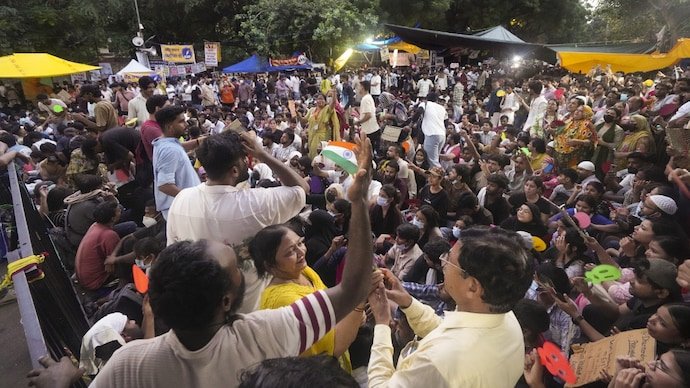
The ongoing standoff between the Centre and the Cockroach Janata Party (CJP) over the NEET examination controversy has reached a critical stage, with both sides preparing for a third round of talks that could shape the government’s response to one of India‘s biggest Education-related Protests in recent years. While the government has accepted several demands aimed at improving examination integrity and supporting affected students, the demand for Union Education Minister Dharmendra Pradhan‘s resignation continues to be the principal point of disagreement.
The negotiations come after weeks of demonstrations at Delhi’s Jantar Mantar, nationwide solidarity protests, and growing public concern over examination transparency. Alongside political discussions, the government has already announced major administrative reforms, proposed stricter anti-Paper Leak legislation, and initiated changes within the National Testing Agency (NTA).
Whether the latest talks produce a breakthrough or prolong the deadlock, the outcome is likely to influence future examination reforms, student confidence, and public trust in India’s competitive testing system.
Why Are the CJP and the Centre Holding Talks?
The negotiations stem from protests surrounding alleged irregularities in competitive examinations, particularly NEET. Student groups and supporters have called for stronger accountability, institutional reforms, and action against those responsible for examination-related failures.
The CJP launched its protest movement at Delhi’s Jantar Mantar in June, arguing that examination integrity directly affects the educational and professional future of millions of students.
Over time, the demonstrations expanded beyond examination concerns to include broader discussions on governance, accountability, transparency, and institutional responsibility.
Why Is Dharmendra Pradhan’s Resignation the Main Sticking Point?
The most contentious issue remains the demand for Union Education Minister Dharmendra Pradhan to step down.
CJP leaders argue that ministerial accountability is necessary following the controversy surrounding competitive examinations. According to the protesters, leadership changes would demonstrate responsibility for systemic failures and help restore public confidence.
However, government sources have indicated that the Centre does not support the resignation demand.
Officials have reportedly argued that replacing the minister would not, by itself, resolve structural issues affecting examination administration. Instead, the government’s focus remains on institutional reforms and strengthening existing systems.
Government Signals Reform Instead of Resignation
Rather than accepting the resignation demand, the Centre has announced several measures aimed at addressing concerns raised by students and education experts.
Key initiatives include:
- Comprehensive reforms within the National Testing Agency.
- Administrative restructuring.
- Review of outsourcing mechanisms.
- Strengthening examination security.
- Improving institutional accountability.
Officials maintain that long-term reforms are more effective than symbolic leadership changes in preventing future examination irregularities.
What Has the Government Already Agreed To?
Although disagreement continues over the minister’s resignation, previous rounds of talks produced important developments.
The Centre has reportedly accepted two significant demands made by the CJP:
- No FIRs against peaceful participants involved in the July 20 “Chalo Sansad” protest.
- Financial assistance of ₹1 crore for families of students who reportedly died by suicide in connection with the examination controversy.
These decisions indicate that negotiations have yielded some common ground even as major political disagreements remain unresolved.
Major Overhaul of the National Testing Agency
The National Testing Agency has become the primary focus of administrative reforms following the examination controversy.
Authorities have initiated one of the agency’s most significant restructuring exercises, including the termination of dozens of officials and a review of operational procedures.
The proposed reforms are expected to strengthen:
- Question paper security.
- Vendor oversight.
- Digital monitoring systems.
- Examination logistics.
- Internal accountability mechanisms.
The objective is to improve public confidence in future national-level entrance examinations.
New Anti-Paper Leak Law Explained
One of the government’s most significant responses has been approval of draft legislation proposing stricter punishment for organised examination paper leak networks.
According to the proposed law:
| Proposed Provision | Details |
|---|---|
| Minimum imprisonment | 5 years |
| Maximum imprisonment | 10 years |
| Maximum financial penalty | ₹10 crore |
| Investigation timeline | Within 3 months |
| Trial mechanism | Fast-track courts |
The legislation is intended to deter organised examination fraud while ensuring quicker Investigation and prosecution of offenders.
Prime Minister Modi’s Outreach to Students
Prime Minister Narendra Modi has also sought to engage directly with young people during the controversy.
Through social media messages, he thanked students for sharing suggestions and emphasized continued dialogue regarding examination reforms.
The outreach reflects the government’s recognition that restoring confidence among students is essential alongside administrative and legislative changes.
Security Tightened Across Delhi
Authorities have implemented extensive security arrangements in anticipation of continued demonstrations.
Several precautionary measures include:
- Closure of 18 Delhi Metro stations in central Delhi.
- Deployment of additional Delhi Police personnel.
- Cancellation of routine police leave.
- Restrictions around key government areas.
- Early closure of liquor shops based on security assessments.
Officials say the measures are intended to ensure public safety while managing large gatherings in sensitive parts of the national capital.
Sonam Wangchuk Ends Hunger Strike
Environmentalist and education reform advocate Sonam Wangchuk recently concluded his 26-day hunger strike after receiving assurances from the Centre regarding continued dialogue and consideration of key demands.
Following criticism over ending the fast, Wangchuk stated that his decision should not diminish the seriousness of the movement or the physical challenges he endured during the protest.
His participation significantly increased national attention on the examination controversy and helped bring additional focus to student concerns.
Timeline of the NEET Protest Movement
| Date / Phase | Key Development |
|---|---|
| June | CJP launches indefinite protest at Jantar Mantar. |
| Following weeks | Student demonstrations expand nationwide. |
| July | Sonam Wangchuk and student activists begin hunger strike. |
| July 20 | “Chalo Sansad” march intensifies public attention. |
| Recent developments | Government begins negotiations and announces reforms. |
| Current stage | Third round of Centre-CJP talks scheduled. |
Why Examination Reform Matters
India’s competitive entrance examinations influence the educational opportunities of millions of students every year.
Families often invest years of preparation, coaching expenses, Travel costs, and emotional commitment toward these examinations.
As a result, concerns regarding examination integrity extend beyond academic administration—they affect career planning, financial stability, and public confidence in merit-based selection systems.
Comparison: Protest Demands vs Government Response
| CJP Demand | Government Position |
|---|---|
| Resignation of Dharmendra Pradhan | No indication of acceptance. |
| No action against peaceful protesters | Accepted. |
| Support for affected families | Accepted with ₹1 crore compensation announcement. |
| Examination reforms | Comprehensive NTA overhaul announced. |
| Stronger action against paper leaks | Draft legislation proposing tougher penalties approved. |
Expert Analysis: Why the Resignation Demand Is Politically Significant
Ministerial resignations during major public controversies often carry symbolic as well as political significance. Supporters may view resignation as an acknowledgment of accountability, while governments sometimes argue that institutional reform is more effective than leadership changes alone.
In this case, the disagreement reflects two different approaches to restoring public confidence: one emphasizing political accountability and the other focusing on administrative restructuring.
The outcome of the negotiations may influence how future governments respond to similar controversies involving national examinations.
What Happens Next?
The third round of talks is expected to determine whether additional compromises are possible.
Key issues likely to dominate discussions include:
- The Centre’s final position on the resignation demand.
- Implementation timeline for NTA reforms.
- Progress of proposed anti-paper leak legislation.
- Future engagement between the government and student representatives.
- Measures to restore confidence in national examinations.
Future Outlook
Regardless of the immediate outcome of negotiations, the controversy has already accelerated discussions on examination reforms in India. Administrative restructuring, stronger legal penalties, and increased public scrutiny of testing agencies are likely to remain priorities in the months ahead.
If implemented effectively, these reforms could strengthen examination security and improve institutional transparency. However, rebuilding trust among students will depend not only on new policies but also on consistent implementation and open communication.
Conclusion
As the Centre and the Cockroach Janata Party prepare for another crucial round of negotiations, the resignation of Union Education Minister Dharmendra Pradhan remains the central unresolved issue. While the government has accepted several demands relating to examination reforms and student welfare, it continues to oppose calls for ministerial resignation, arguing that systemic improvements offer a more sustainable solution.
The coming discussions are likely to shape not only the future of the current protest movement but also the broader direction of education governance and examination reforms in India. With legislative changes, institutional restructuring, and ongoing dialogue already underway, the focus now shifts to whether both sides can bridge their remaining differences and restore confidence in one of the country’s most important public institutions.
For breaking news and live news updates, like us on Facebook or follow us on Twitter and Instagram. Read more on Latest India on thefoxdaily.com.






COMMENTS 0