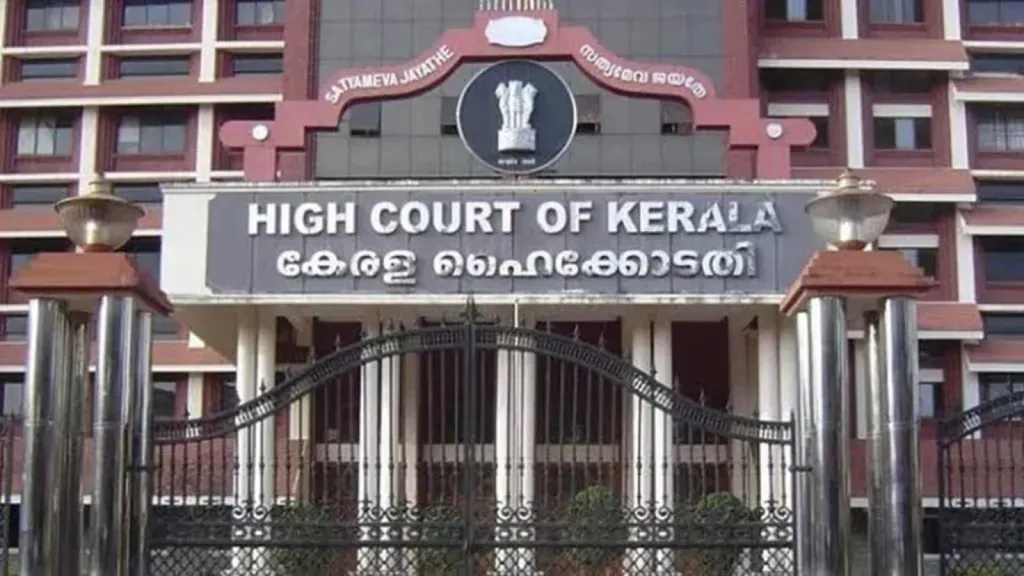
The Kerala High Court has observed that political activities such as dharnas, hunger strikes and Satyagraha have no place in constitutional democracy, particularly within educational institutions. The court made the remarks while setting aside a single-bench order that had permitted suspended students of Sree Sankaracharya University of Sanskrit in Ernakulam district to appear for their semester examinations.
A division bench comprising Justices Anil K Narendran and S Muralee Krishan held that the single bench had erred in granting the students permission to write the examinations without sufficient evidence establishing that they met the university’s eligibility requirements.
The dispute involved 16 suspended students belonging to the Students’ Federation of India (SFI), the student wing of the CPI(M). They had been suspended following a protest and the staging of a street play in August, which allegedly insulted university Vice Chancellor Ciza Thomas.
During their agitation, the students had raised demands for better infrastructure and improved academic facilities at the university. However, they subsequently approached the High Court after being suspended and sought permission to appear for their semester examinations despite not meeting the mandatory attendance requirements.
Why did the Kerala High Court set aside the single-bench order?
Earlier, a single bench of the Kerala High Court had allowed the 16 suspended students to pay their examination fees and appear for their semester examinations. The permission was granted with the condition that it would not create any legal right or equity in their favour and would remain subject to the final outcome of the writ petition.
The university challenged this directive through an appeal filed on October 30, arguing against the decision to allow the suspended students to take the examinations.
On Tuesday, the division bench examined the matter and found that the suspended students had not placed sufficient evidence before the court to establish their eligibility to appear for the examinations.
The judges noted that the writ petition lacked the necessary pleadings and supporting material regarding compliance with the university’s academic requirements. These included minimum attendance, passing internal examinations and submitting applications for condonation of attendance shortages in accordance with university regulations.
Without evidence establishing that the students fulfilled these conditions, the single bench should not have granted them permission to sit for the semester examinations, the division bench held.
‘Political activities have no place in constitutional democracy’
While setting aside the earlier order, the division bench referred to observations made in previous High Court judgments concerning political activities in educational institutions.
The court stated that demonstrations, hunger strikes and other forms of political agitation were incompatible with the academic environment and could attract disciplinary consequences for students participating in such activities.
Quoting from earlier verdicts, the bench observed:
“We would like to observe that political activities like dharna, hunger strikes and other practices like Sathyagrah have no place in a constitutional democracy, much less in academic institutions. Anyone indulging in the said activities in an educational institution would make himself liable to be expelled and/or rusticated.”
The judges also emphasised that educational institutions must remain focused on providing education rather than becoming platforms for political activities.
“Educational institutions are meant for imparting education and not politics. By their political ambition, the political parties cannot hold to ransom the educational institution or the right of the civilized students to receive education.”
The observations highlighted the court’s position that political organisations should not be allowed to disrupt academic activities or interfere with the right of other students to receive education.
University regulations and attendance requirements at the centre of the dispute
A key issue in the case was whether the suspended students were eligible to appear for their examinations under the university’s existing academic regulations.
The division bench pointed out that the students had not provided adequate information or supporting documents to demonstrate that they had fulfilled the minimum attendance requirements. The petition also lacked material establishing whether they had passed their internal examinations or applied for condonation of attendance shortages as required under the rules.
The court held that these requirements could not be overlooked merely because the students had approached the judiciary seeking permission to write their examinations.
It also referred to Supreme Court directives stating that courts cannot grant relief that would require an authority to act contrary to statutory provisions or applicable regulations.
According to the division bench, allowing students to take examinations without meeting mandatory academic requirements would undermine the regulatory framework governing universities. It could also weaken disciplinary measures imposed by educational institutions.
Academic discipline must be maintained, says division bench
The Kerala High Court emphasised that universities have a responsibility to maintain academic discipline and enforce their regulations consistently. Students seeking permission to appear for examinations must satisfy the eligibility conditions prescribed by their institutions.
The bench also highlighted the consequences of suspension, including possible ineligibility to sit for examinations, and said such disciplinary measures must be upheld in accordance with institutional rules.
The ruling places emphasis on the distinction between students’ demands concerning campus facilities and their obligation to follow academic and disciplinary regulations. While the suspended students had raised issues relating to infrastructure and academic facilities, the court’s decision focused on their eligibility to appear for the semester examinations.
By setting aside the single-bench order, the division bench reinforced the requirement that judicial relief must remain consistent with university regulations and statutory obligations.
The court’s observations also reiterate its position that educational institutions should function primarily as centres of learning, with academic discipline and the right of students to receive education protected from disruptions caused by political activities.
For breaking news and live news updates, like us on Facebook or follow us on Twitter and Instagram. Read more on Latest India on thefoxdaily.com.






COMMENTS 0