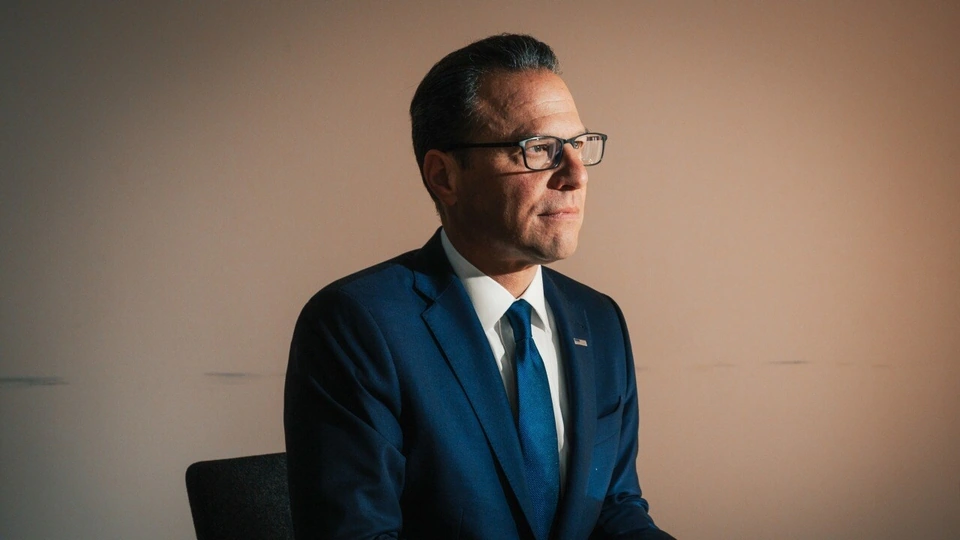
Pennsylvania Governor Josh Shapiro has opened a significant debate over the future of Democratic foreign policy by criticising former President Joe Biden and President Donald Trump for failing to use American leverage to restrain Israeli Prime Minister Benjamin Netanyahu during the Gaza war. While defending the strategic relationship between Washington and Israel, Shapiro argued that Netanyahu’s decisions damaged both countries and that American military support should come with clearer conditions on how weapons are used.
His remarks are particularly important because Shapiro is increasingly discussed as a potential Democratic presidential contender for 2028. He has not announced a campaign and says he has not made a decision about his political future with his family. However, his recent comments on Israel, Iran, Russia, Ukraine and America’s international alliances suggest he is beginning to articulate a broader foreign-policy position that could become relevant in a national campaign.
The Israel issue could prove especially challenging. Democrats remain divided over whether Washington should maintain its traditional security partnership with Israel, impose stricter conditions on military assistance or reconsider the relationship more fundamentally. Shapiro is attempting to defend the alliance while arguing that American presidents must be willing to challenge Israeli leadership when its actions conflict with US interests and values.
What Josh Shapiro Said About Biden, Trump and Netanyahu
In an interview, Shapiro said neither Biden nor Trump did enough to use the influence of the United States to constrain Netanyahu during the conflict in Gaza. He criticised the Israeli prime minister’s leadership and described the direction in which he had taken Israel as dangerous.
“Netanyahu is a failed leader,” Shapiro said. “He’s led Israel down a dangerous, dark, isolated path.”
The governor’s criticism does not amount to a rejection of Israel or the US-Israel alliance. Instead, he is drawing a distinction between supporting Israel’s security and endorsing every decision made by its government. His argument is that Washington can remain committed to Israel’s defence while demanding accountability for how Israeli military operations are conducted.
Shapiro also questioned whether successive American administrations had used their influence effectively. The United States is a major security partner of Israel and provides military assistance, equipment and diplomatic support. That relationship gives Washington channels through which it can communicate expectations and influence decisions, although the extent to which American pressure can change Israeli policy remains a matter of political debate.
Shapiro believes that influence was not used effectively enough. He said American weapons should be accompanied by clear guidance about the circumstances in which they can be deployed.
“I don’t think that either the current president or President Biden used the leverage of the United States of America effectively to make sure that the weapons were being used in ways that comport with American values,” he said.
The comments place responsibility on both administrations rather than treating the Gaza war as a problem created exclusively during Biden’s presidency. They also suggest that Shapiro wants future Democratic leaders to take a more conditional and accountable approach to security assistance without abandoning the underlying alliance.
Shapiro Supports the US-Israel Alliance but Wants Clearer Limits on Weapons
Shapiro’s position reflects a difficult balance within the Democratic Party. He has consistently defended Israel’s right to exist and its right to protect itself against attacks. At the same time, he has advocated a two-state solution and argued that Israeli government decisions should be subject to scrutiny, particularly when they affect Palestinian civilians and the wider stability of the region.
The governor said Israel had a right to defend itself following the October 7, 2023, attacks that triggered the Gaza war. However, he argued that the way Israel conducted its military response undermined both Israeli and American interests in the region.
His proposed approach focuses on the distinction between defensive and other forms of military assistance. Shapiro said Israel should be able to purchase defensive weapons, but those weapons should come with clear guidance on how and when they can be used.
“Israel should have the ability, as our other allies do, to purchase defensive weapons, weapons that come with very clear guidance on how and when they can be used,” he said.
This position leaves several important questions open. It does not specify a complete list of weapons that should be restricted, establish a detailed enforcement mechanism or explain exactly what consequences should follow if an ally violates American conditions. Nevertheless, it indicates that Shapiro believes security cooperation should involve more than supplying military equipment and expecting the recipient government to make every subsequent decision independently.
For a potential presidential candidate, this distinction could become central to explaining how he would manage the relationship. He would need to address how Washington could protect Israel from external threats while also responding to concerns about military conduct, civilian casualties and the long-term political consequences of the Gaza conflict.
Why Israel Could Become a Major Issue in the 2028 Democratic Primary
Israel policy has become one of the most divisive foreign-policy questions inside the Democratic Party. The debate intensified during the Gaza war, when President Biden’s support for Israel drew criticism from progressive Democrats, some younger voters and sections of the party’s wider coalition.
Democratic disagreements extend beyond criticism of Netanyahu. They include questions about military financing, arms transfers, diplomatic protection, civilian harm and the future of a two-state solution. Some lawmakers have called for restrictions on particular forms of military assistance, while others argue that maintaining Israel’s security remains a central American interest.
The divisions have also become visible in Congress. In July, more than 100 House Democrats supported an amendment seeking to cut off military financing for Israel. The proposal did not pass, but the vote provided an indication of the growing willingness among Democratic lawmakers to challenge aspects of the traditional US approach.
That political environment could make the issue particularly difficult for candidates seeking the Democratic presidential nomination in 2028. A candidate who strongly defends military cooperation with Israel may face pressure from voters demanding a fundamental change in American policy. A candidate who supports major restrictions may encounter criticism from Democrats who consider the alliance essential to regional security.
Shapiro’s position attempts to occupy space between those competing arguments. He supports Israel’s security and a continuing alliance, but he also says Washington must be prepared to use its leverage when Israeli government decisions conflict with American expectations.
Whether that approach satisfies different parts of the Democratic coalition remains uncertain. Its political reception may depend on how Shapiro explains the practical meaning of accountability, particularly if the debate moves from broad principles to specific decisions about military assistance.
Shapiro’s Jewish Background and His Longstanding Position on Israel
Shapiro’s relationship with Israel is also shaped by his personal and religious background. He is an observant Jew, keeps kosher and has written about the importance of living his faith openly. He and his four children attended Jewish day school, and his memoir describes his commitment to expressing his religious identity publicly.
His background is relevant to understanding why he has consistently defended Israel’s right to exist while also criticising decisions made by its political leadership. However, his policy positions should be assessed through his public statements and political record rather than treated as automatic consequences of his religious identity.
Shapiro has long supported a two-state solution, under which Israelis and Palestinians would have separate states. He has also rejected arguments that Israel has no right to exist, warning that denying its legitimacy would contribute to permanent conflict rather than create a path towards peace.
His criticism of Netanyahu therefore fits into a broader position: support for Israel as a state and security partner does not require unconditional support for its government. That distinction could become a central part of his response to questions about whether a Democratic administration should continue the same level of military cooperation.
For Shapiro, the challenge will be explaining how a two-state solution could become politically achievable amid continuing mistrust, security concerns and disagreements over the future of Gaza and the wider Israeli-Palestinian conflict.
How Shapiro’s Position Compares With the Growing Democratic Debate
The emerging Democratic foreign-policy debate is not limited to Israel. It also concerns how the United States should use military power, negotiate with adversaries and rebuild relationships with traditional allies. Shapiro’s recent comments suggest that he wants to connect these questions to a wider argument about American leadership.
On Israel, he supports the alliance but wants greater accountability over weapons use. On Ukraine, he advocates stronger American assistance and continued pressure on Russia. On NATO, he argues that the United States should maintain its commitments and rebuild confidence among partners.
These positions place importance on alliances, but they also suggest that Shapiro wants American foreign policy to be judged by its results rather than by diplomatic slogans. His argument is that partnerships should protect American security and economic interests while requiring governments on both sides to meet their responsibilities.
That approach could appeal to Democrats who want to restore international cooperation without simply returning to the policies of the Biden administration. However, it could also expose him to criticism from progressives who believe the party needs a more substantial change in its approach to military intervention and arms transfers.
Shapiro Criticises Trump Over Iran War and Calls for Hegseth’s Removal
Shapiro’s criticism of American foreign policy extends well beyond the Gaza conflict. He has also challenged Trump’s handling of the war in Iran, arguing that the administration entered the conflict without adequately explaining its objectives to the American public or establishing a credible path towards ending it.
He said Trump needed to bring the war to an end and remove Defense Secretary Pete Hegseth from his position. Shapiro argued that the president, Hegseth and Vice President JD Vance had failed to demonstrate a clear strategy for leaving the conflict.
“Trump decided to go it alone. Didn’t explain to the American people why he was doing it, and clearly, he and Hegseth and Vance have no idea how to get out,” Shapiro said.
The criticism focuses on two questions that often shape public support for military action: why a conflict was started and what conditions would allow it to end. Shapiro’s argument is that the administration has not adequately explained either point.
He also criticised Trump’s negotiations with Russia, describing the American approach as an embarrassment. The governor believes Washington needs to rebuild its credibility with allies and avoid giving adversarial governments the impression that the United States is negotiating from a position of weakness.
These comments are part of a wider effort to present foreign policy as an issue that affects ordinary Americans. Conflicts abroad can influence energy prices, supply chains, national security and the cost of living, making international decisions relevant to voters far beyond Washington’s diplomatic and defence communities.
Why Shapiro Wants Stronger US Support for Ukraine
Ukraine is another major part of Shapiro’s foreign-policy agenda. The governor has argued that the United States should increase support for Kyiv, share intelligence and weapons, and help negotiate an end to Russia’s invasion without giving Moscow the outcome it wants.
“Share intelligence. Share the weaponry, and help negotiate an end to this war that doesn’t give Russia what they want,” he said.
Shapiro’s position is influenced in part by Pennsylvania’s large Ukrainian-American community. The state is home to one of the country’s largest Ukrainian-American populations, making the war a significant issue for many residents. He has previously welcomed Ukrainian President Volodymyr Zelensky to a Pennsylvania munitions factory, where workers were producing equipment for Ukraine’s defence.
At a public event in Philadelphia organised by the Atlantic Council and supported by NATO, Shapiro accused Trump of undermining Zelensky while showing excessive accommodation towards Russian President Vladimir Putin.
He also criticised the broader damage to America’s relationships with international partners, arguing that simply promising to restore the country’s global reputation would not be enough. In his view, rebuilding confidence will require sustained action across multiple administrations.
“I’m not convinced that the next president alone can repair the damage Trump has done, and I think the reality is that it’s going to take multiple generations to earn the trust of our allies again,” he said.
His position reflects a foreign-policy approach that places continued support for Ukraine alongside the need for negotiations. The central condition is that an eventual settlement should not reward Russian aggression or leave Ukraine without meaningful security guarantees.
Shapiro Targets JD Vance and Marco Rubio as Potential Republican Rivals
Shapiro has also used his recent interviews to criticise two Republicans who could become important figures in the 2028 presidential contest: Vice President JD Vance and Secretary of State Marco Rubio.
He argued that both politicians remain closely associated with Trump and would struggle to separate their political identities from the president’s record.
“Both have the stink of Donald Trump on them. It’s real hard to wash clean of that,” Shapiro said.
The remark signals that Shapiro is already framing the political choices that could confront voters in the next presidential cycle. Rather than treating Vance and Rubio as independent political alternatives, he is attempting to connect their potential campaigns to the current administration’s foreign-policy decisions.
However, Shapiro has not confirmed that he will run for president. His comments should be understood as criticism of possible Republican successors, not as evidence that a formal Democratic campaign has begun.
Shapiro’s 2026 Re-Election Strengthens Speculation About 2028
Shapiro’s national profile has grown following his re-election victory in Pennsylvania. He won by a 22-point margin, a result that has added to speculation about his potential ambitions beyond the governorship.
Pennsylvania is a particularly important state in presidential politics because of its competitive electoral position and influence in national elections. A governor who can demonstrate strong support there may attract attention from party leaders, donors and voters looking for a candidate capable of competing in battleground states.
His recent focus on international affairs has further encouraged discussion about a possible presidential bid. Governors do not normally control American foreign policy, which is primarily directed by the federal government, but they can use public speeches, international relationships and national interviews to explain their views on global issues.
Shapiro’s appearance at the Atlantic Council event in Philadelphia on November 20, 2026, was one example. He used the platform to outline his vision for American leadership, NATO, Ukraine, Iran and relations with other major powers.
Despite the growing speculation, he has said that he and his family have not decided what comes next. Any assessment of his 2028 plans therefore remains uncertain until he makes a formal announcement or takes concrete steps towards a campaign.
Why Shapiro’s Foreign-Policy Message Matters Beyond the 2028 Election
The debate Shapiro is entering could influence how Democrats define their approach to international relations after the next presidential election. The party faces questions about the future of military assistance to Israel, support for Ukraine, relations with NATO partners and the use of American economic power against strategic competitors.
His criticism of Biden is particularly notable because it challenges the idea that a Democratic administration necessarily represents a sufficient departure from Trump’s approach. By arguing that both presidents failed to use American leverage effectively against Netanyahu, Shapiro is presenting accountability as a requirement that should apply regardless of party.
That message could also create pressure on other potential Democratic candidates to explain their positions in greater detail. Broad declarations of support for Israel or concern about Palestinian civilians may not be enough if voters want specific answers about military assistance, conditions on weapons and diplomatic pressure.
At the same time, Shapiro’s continued support for the US-Israel alliance means he is unlikely to satisfy every progressive demand for a fundamental break with existing policy. His challenge will be to show how the alliance can continue while American influence is used more forcefully to shape decisions that Washington considers unacceptable.
Key Facts About Josh Shapiro’s Israel and Foreign-Policy Position
| Issue | Shapiro’s stated position |
|---|---|
| Benjamin Netanyahu | Described the Israeli prime minister as a failed leader and criticised his handling of the Gaza war. |
| Joe Biden and Donald Trump | Argued that neither president used American leverage effectively to constrain Netanyahu. |
| US-Israel alliance | Supports the alliance and Israel’s right to defend itself. |
| Military assistance | Supports defensive weapons accompanied by clear guidance on their use. |
| Palestinian statehood | Supports a two-state solution. |
| Ukraine | Wants stronger military and intelligence support and a settlement that does not reward Russia. |
| Iran | Calls for Trump to end the war and remove Defense Secretary Pete Hegseth. |
| 2028 presidential election | Has not announced a presidential campaign or made a decision about his political future. |
What Comes Next for Shapiro and the Democratic Party?
Josh Shapiro’s criticism of Biden and Trump over Netanyahu marks an important moment in the debate over how Democrats should approach Israel. He is defending the security relationship while arguing that American support should carry clearer expectations and that Israeli leadership must face accountability for decisions made during the Gaza war.
Whether that position becomes a central part of a 2028 presidential campaign remains unknown. Shapiro still has not announced his political plans, and the Democratic field could change considerably before the next presidential election.
But the questions he has raised are unlikely to disappear. Democrats will continue to face pressure to explain what military support for Israel should look like, how Washington should respond to civilian harm and whether the traditional alliance can be maintained alongside stronger conditions on weapons use.
For Shapiro, the political test will be whether he can turn his position into a clear and consistent foreign-policy programme that appeals to voters across the Democratic coalition. His argument is that supporting an ally and holding its government accountable are not mutually exclusive. The debate over whether that balance is achievable could become one of the defining foreign-policy questions of the 2028 Democratic presidential race.
For breaking news and live news updates, like us on Facebook or follow us on Twitter and Instagram. Read more on Latest India on thefoxdaily.com.






COMMENTS 0